Last Updated: 04/02/2026

Abstract
In the public perception, the wind resistance of garden sheds is often directly associated with the thickness of the materials used. However, actual structural performance indicates that shed failure is primarily attributable to deficiencies in the structural system, rather than insufficient strength of the enclosure materials.
This paper analyses the key factors influencing the wind resistance of garden sheds from three perspectives: structural loading, wind action mechanisms and environmental exposure. These factors include the frame structure, joint connections, anchoring methods and wind-exposed area. Furthermore, a selection methodology based on the intended usage environment is proposed to guide users in choosing the appropriate shed type for different scenarios.
This paper analyses the key factors influencing the wind resistance of garden sheds from three perspectives: structural loading, wind action mechanisms and environmental exposure. These factors include the frame structure, joint connections, anchoring methods and wind-exposed area. Furthermore, a selection methodology based on the intended usage environment is proposed to guide users in choosing the appropriate shed type for different scenarios.
Keywords
Garden Shed Wind Resistance; Structural Stability; Anchoring System; Wind Load; Outdoor Storage; Shed Design;
1. Introduction
With the growing demand for garden storage, lightweight metal and timber sheds have become widely used in residential settings. However, there have been frequent instances of shed structures failing under strong winds or extreme weather conditions.
Existing users commonly fall into the following misconceptions:
- Treating material thickness as the primary indicator of stability
- Overlooking the importance of foundation anchoring and structural connections
- Underestimating the impact of environmental exposure on wind loads
It is therefore necessary to conduct a systematic analysis of the wind resistance of sheds from a structural engineering perspective.
Existing users commonly fall into the following misconceptions:
- Treating material thickness as the primary indicator of stability
- Overlooking the importance of foundation anchoring and structural connections
- Underestimating the impact of environmental exposure on wind loads
It is therefore necessary to conduct a systematic analysis of the wind resistance of sheds from a structural engineering perspective.
2. Failure Mechanisms of Sheds Under Wind Loads
2.1 Forms of Wind Loads
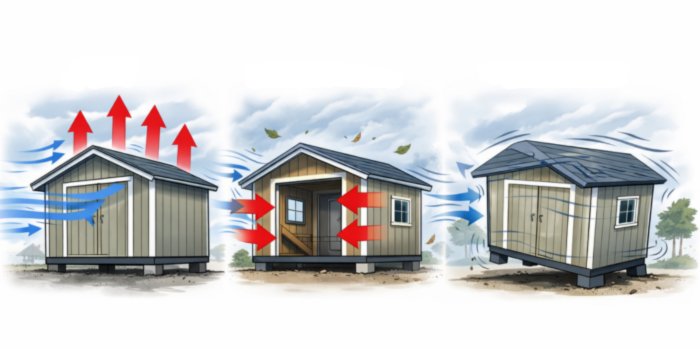
Contrary to the conventional understanding of ‘lateral thrust’, the primary forms of wind action on sheds include:
- Uplift: Acts on the roof, generating an upward force on the structure
- Internal Pressure: Thrust exerted on walls during storms, hurricanes or severe convective weather
- Dynamic Load: Fatigue of fasteners caused by continuous vibration under strong wind conditions
- Uplift: Acts on the roof, generating an upward force on the structure
- Internal Pressure: Thrust exerted on walls during storms, hurricanes or severe convective weather
- Dynamic Load: Fatigue of fasteners caused by continuous vibration under strong wind conditions
2.2 Typical Failure Pathways
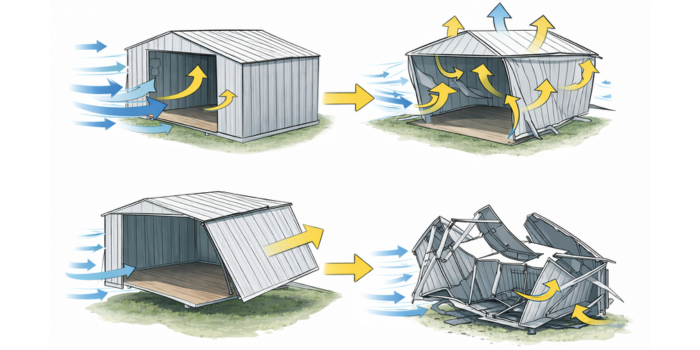
Failure of sheds typically follows the following sequence:
- Wind enters through the base or gaps > Internal pressure rises > Uplift forces are generated on the roof
- Unanchored base → Overall lifting/displacement
- Loosening of joints → Structural collapse
- Wind enters through the base or gaps > Internal pressure rises > Uplift forces are generated on the roof
- Unanchored base → Overall lifting/displacement
- Loosening of joints → Structural collapse
2.3 Limitations of Self-Weight in Wind Resistance
Both experiments and experience indicate that:
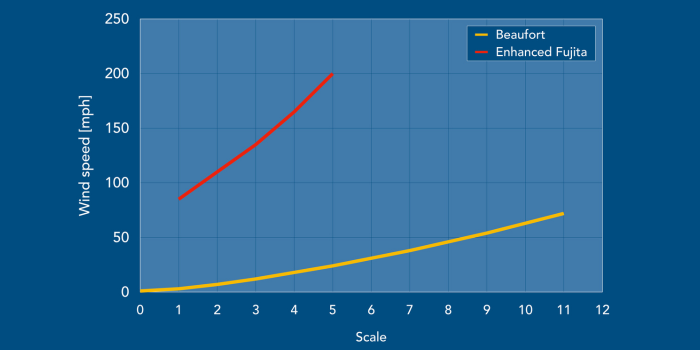
- The self-weight of lightweight sheds (approximately 30–80 kg) is generally insufficient to counteract the lift generated by high-intensity winds
- In the absence of anchoring or wind protection provided by a wall, winds of force 6 or higher may cause displacement and uplift
- The self-weight of lightweight sheds (approximately 30–80 kg) is generally insufficient to counteract the lift generated by high-intensity winds
- In the absence of anchoring or wind protection provided by a wall, winds of force 6 or higher may cause displacement and uplift
3. Key Structural Factors Affecting Wind Resistance
3.1 Frame System
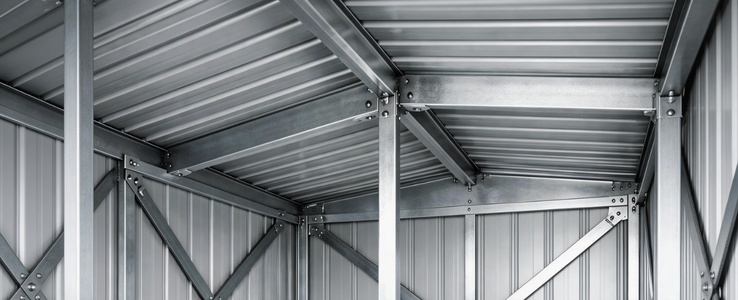
The frame is the primary load-bearing system, determining the overall resistance to deformation and the load transfer paths.
👉 improvement Strategies
① Add cross and longitudinal bracing
Install ‘X-shaped bracing’ on side walls or rear walls
Enhance overall resistance to lateral deformation
② Reinforce the roof structure
Add intermediate support beams
To prevent stress concentration in long-span roofs
③ Form a closed structural loop
Ensure all four sides are connected to form a complete frame
To avoid ‘single-sided support’ structures
👉 improvement Strategies
① Add cross and longitudinal bracing
Install ‘X-shaped bracing’ on side walls or rear walls
Enhance overall resistance to lateral deformation
② Reinforce the roof structure
Add intermediate support beams
To prevent stress concentration in long-span roofs
③ Form a closed structural loop
Ensure all four sides are connected to form a complete frame
To avoid ‘single-sided support’ structures
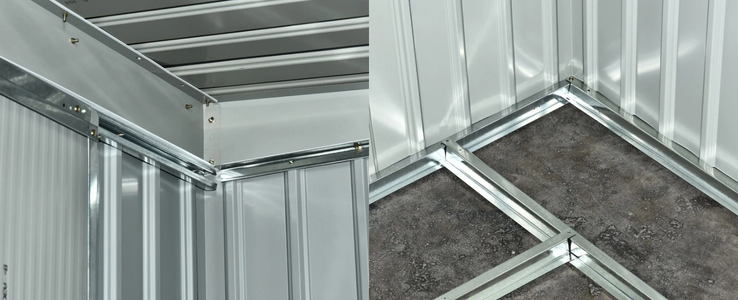
3.2 Joints & Connections
Joints determine whether a structure can maintain its integrity and are the most vulnerable points.
👉 Improvement Strategies
① Upgrade Fasteners
Use higher-strength bolts (e.g. stainless steel, carbon steel or reinforced screws) (*AOSOM primarily uses carbon steel screws)
Replace existing low-strength fasteners
② Increase Fixing Points
Reduce screw spacing to minimise ‘stress gaps’
③ Install corner reinforcements (Corner Brackets)
Add L-shaped or triangular reinforcements at the four corners (*Some AOSOM products include these as standard fittings), to distribute stress and prevent tearing
④ Regular inspection and maintenance (Maintenance Strategy)
Check for loose screws before the windy season to prevent ‘dynamic fatigue failure’
👉 Improvement Strategies
① Upgrade Fasteners
Use higher-strength bolts (e.g. stainless steel, carbon steel or reinforced screws) (*AOSOM primarily uses carbon steel screws)
Replace existing low-strength fasteners
② Increase Fixing Points
Reduce screw spacing to minimise ‘stress gaps’
③ Install corner reinforcements (Corner Brackets)
Add L-shaped or triangular reinforcements at the four corners (*Some AOSOM products include these as standard fittings), to distribute stress and prevent tearing
④ Regular inspection and maintenance (Maintenance Strategy)
Check for loose screws before the windy season to prevent ‘dynamic fatigue failure’
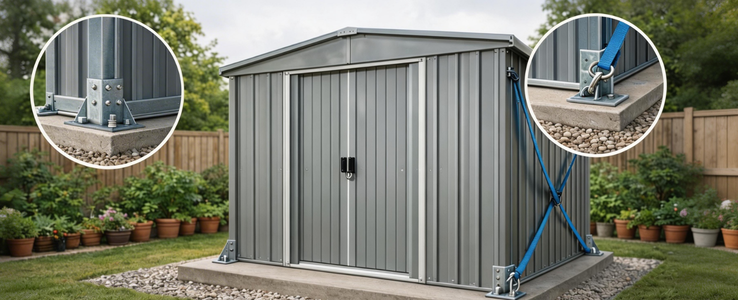
3.3 Anchoring System
Anchoring is used to counteract uplift forces and forms the core of the wind-resistance system.
👉 Improvement Strategies
① Ground anchoring is essential
No anchoring → Risk increases exponentially
② Select the correct solution based on the ground conditions
*Soil/Grass: The ground must be levelled in advance, e.g. by laying gravel
③ Incorporate an ‘Anti-Uplift Design’
Use tie-down straps to create a ‘tension loop’ between the roof and the ground
④ Base Platform Enhancement
Add a concrete base or weighted platform to improve overall stability and resistance to slippage
👉 Improvement Strategies
① Ground anchoring is essential
No anchoring → Risk increases exponentially
② Select the correct solution based on the ground conditions
*Soil/Grass: The ground must be levelled in advance, e.g. by laying gravel
③ Incorporate an ‘Anti-Uplift Design’
Use tie-down straps to create a ‘tension loop’ between the roof and the ground
④ Base Platform Enhancement
Add a concrete base or weighted platform to improve overall stability and resistance to slippage
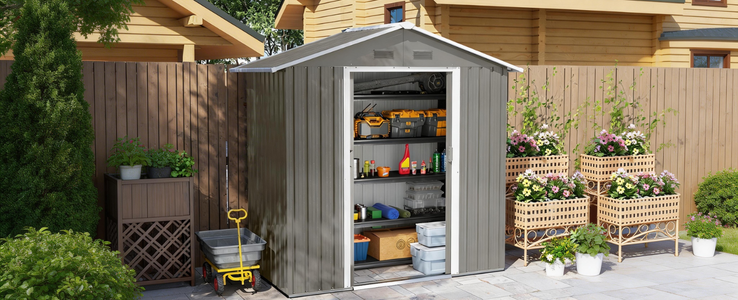
3.4 Wind Exposure and Geometry
Determines the magnitude of wind loads; acts as an ‘external input variable’.
👉 Improvement Strategies
① Reduce Profile
Lower structures are less susceptible to wind effects
② Prioritise Pitched Roofs
Allow wind to ‘slide off’ rather than ‘bear down’
③ Strategic Placement
Adjacent to walls / buildings
Avoid wind tunnels (between buildings)
④ Utilise the environment to reduce wind speed (Wind Buffering)
Fences / hedges / walls, creating ‘leeward zones’
👉 Improvement Strategies
① Reduce Profile
Lower structures are less susceptible to wind effects
② Prioritise Pitched Roofs
Allow wind to ‘slide off’ rather than ‘bear down’
③ Strategic Placement
Adjacent to walls / buildings
Avoid wind tunnels (between buildings)
④ Utilise the environment to reduce wind speed (Wind Buffering)
Fences / hedges / walls, creating ‘leeward zones’
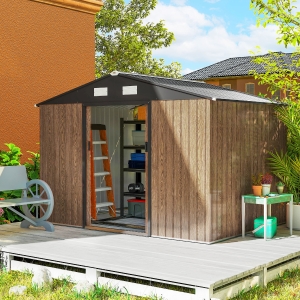
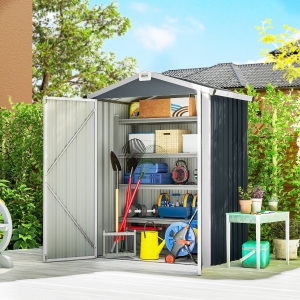
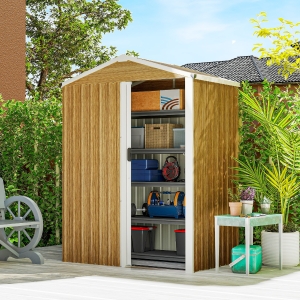
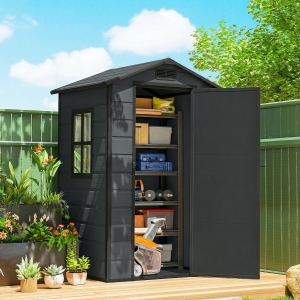
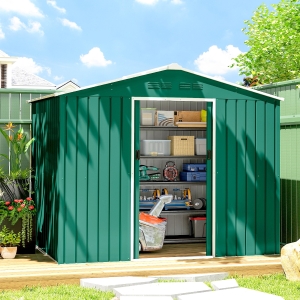
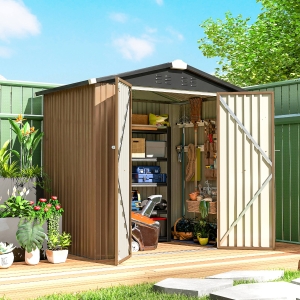
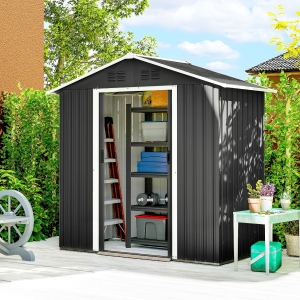
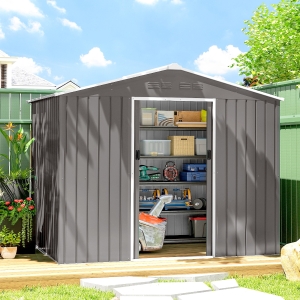
Garden sheds collection
4. The Influence of Environmental Factors on Wind Resistance
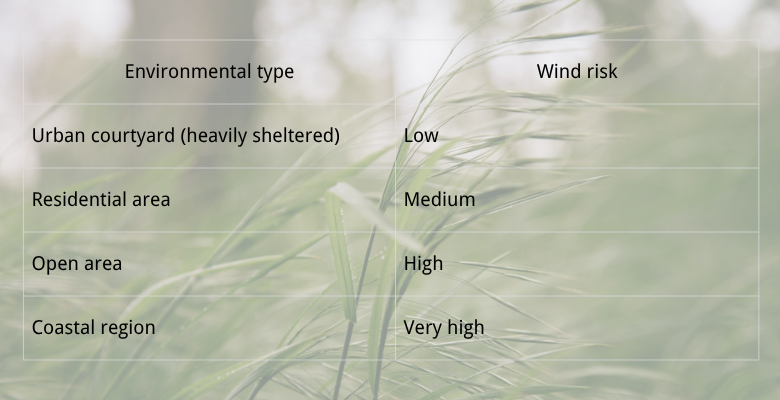

The stability of a shed depends not only on the structure itself but is also closely related to its surrounding environment.
4.1 Regional Wind Conditions
4.2 Local Exposure Conditions
Key influencing factors include:
- The presence or absence of surrounding walls or buildings providing shelter
- Whether the structure is situated in a wind corridor
- Whether the terrain is open
- The greater the degree of environmental exposure, the more significant the wind loads.
4.2 Local Exposure Conditions
Key influencing factors include:
- The presence or absence of surrounding walls or buildings providing shelter
- Whether the structure is situated in a wind corridor
- Whether the terrain is open
- The greater the degree of environmental exposure, the more significant the wind loads.
5. Conclusion
This study demonstrates that:
The wind resistance of a shed is primarily determined by its structural system rather than the thickness of the materials.
Key influencing factors include:
- Frame structure (load-bearing capacity)
- Joint connections (overall stability)
- Anchoring system (resistance to uplift)
- Environmental exposure (magnitude of wind loads)
Therefore, when selecting a shed, priority should be given to assessing the structural and installation conditions rather than focusing solely on individual material parameters.
The wind resistance of a shed is primarily determined by its structural system rather than the thickness of the materials.
Key influencing factors include:
- Frame structure (load-bearing capacity)
- Joint connections (overall stability)
- Anchoring system (resistance to uplift)
- Environmental exposure (magnitude of wind loads)
Therefore, when selecting a shed, priority should be given to assessing the structural and installation conditions rather than focusing solely on individual material parameters.
References
1. National Research Council Canada. (2020).National Building Code of Canada 2020: Division B, Part 4 - Structural Design (Wind Loads).Ottawa, ON: NRC Publications Archive.
2. CSA Group. (2019).CSA S136-16 (R2021): North American specification for the design of cold-formed steel structural members.Toronto, ON: Canadian Standards Association.
3. FPInnovations. (2021).Canadian Wood Design Manual: Wind and Snow Load Provisions for Accessory Buildings.Quebec, QC: FPInnovations.
4. BC Housing. (2022).Illustrated Guide: Seismic and Wind Retrofit for Low-Rise Buildings.Vancouver, BC: Licensing and Consumer Services.
5. Environment and Climate Change Canada. (2023).Design Value Explorer: Wind Frequency and Extreme Gust Data for Canadian Municipalities.Ottawa, ON: Government of Canada.
2. CSA Group. (2019).CSA S136-16 (R2021): North American specification for the design of cold-formed steel structural members.Toronto, ON: Canadian Standards Association.
3. FPInnovations. (2021).Canadian Wood Design Manual: Wind and Snow Load Provisions for Accessory Buildings.Quebec, QC: FPInnovations.
4. BC Housing. (2022).Illustrated Guide: Seismic and Wind Retrofit for Low-Rise Buildings.Vancouver, BC: Licensing and Consumer Services.
5. Environment and Climate Change Canada. (2023).Design Value Explorer: Wind Frequency and Extreme Gust Data for Canadian Municipalities.Ottawa, ON: Government of Canada.
About the Author
Dr. Gordon Sinclair
Dr. Gordon Sinclair is a Canadian professional engineer and consultant specializing in Structural Stability and Building Envelope Performance. His research focuses on the behavior of lightweight modular structures under extreme environmental loads, specifically the high-wind and heavy-snow conditions characteristic of the Canadian Prairies and coastal regions.
With over 30 years of experience, Dr. Sinclair has collaborated with national building research councils and municipal planning boards to develop safety standards for residential accessory buildings. He is a prominent advocate for "Systemic Anchoring"—a structural philosophy that prioritizes integrated load paths and ground-force resistance over static material mass. His expertise in practical installation strategies has made him a leading voice in ensuring the long-term durability and safety of domestic storage systems in North America’s most challenging climates.
Dr. Gordon Sinclair is a Canadian professional engineer and consultant specializing in Structural Stability and Building Envelope Performance. His research focuses on the behavior of lightweight modular structures under extreme environmental loads, specifically the high-wind and heavy-snow conditions characteristic of the Canadian Prairies and coastal regions.
With over 30 years of experience, Dr. Sinclair has collaborated with national building research councils and municipal planning boards to develop safety standards for residential accessory buildings. He is a prominent advocate for "Systemic Anchoring"—a structural philosophy that prioritizes integrated load paths and ground-force resistance over static material mass. His expertise in practical installation strategies has made him a leading voice in ensuring the long-term durability and safety of domestic storage systems in North America’s most challenging climates.