Last Updated: 04/02/2026

Abstract
Consumers often compare the installation of garden sheds to assembling furniture, assuming the difficulty lies in the number of parts and the complexity of steps. However, a shed is essentially a modular lightweight structure, where the core of the installation process focuses on base levelling, structural alignment, and node coordination, rather than mere assembly. This article explores key factors that influence installation difficulty and long-term stability, from structural assembly logic, error transmission mechanisms, to foundation design. A systematic comparison of different foundation types (concrete, paving slabs, wooden decks) and their applicable scenarios is also provided.
Keywords
Garden Shed Installation, Shed Base, Leveling, Structural Alignment, Outdoor Storage, Foundation Design
1. Introduction
Common installation issues that users face include:
- Doors that won’t close or align properly.
- Roofs that won’t fit or have gaps.
- Structures that "lean" after use.
These issues are often misinterpreted as "product defects", but from a structural perspective, the root causes are typically:
Uneven foundation and insufficient alignment during installation lead to gradually amplified errors.
- Doors that won’t close or align properly.
- Roofs that won’t fit or have gaps.
- Structures that "lean" after use.
These issues are often misinterpreted as "product defects", but from a structural perspective, the root causes are typically:
Uneven foundation and insufficient alignment during installation lead to gradually amplified errors.
2. Shed Installation: It's About "Structural Alignment" Not Just Assembly
2.1 Why the Difficulty Is Not in the "Number of Parts"
- Furniture Assembly Logic: Each component is relatively independent, and errors don’t significantly accumulate.
- Shed Installation Logic: The structure closes incrementally.
Base → Frame → Walls → Roof → Doors
Each step relies on the precision of the previous one.
2.2 How Errors Get Amplified
Typical Error Chain:
- Uneven ground (±5mm)
- Slanted base
- Distorted frame
- Misaligned door frame
- Door won't close
Key Conclusion: Shed installation is not about "just putting things together", it’s about "aligning everything into the correct position."
- Furniture Assembly Logic: Each component is relatively independent, and errors don’t significantly accumulate.
- Shed Installation Logic: The structure closes incrementally.
Base → Frame → Walls → Roof → Doors
Each step relies on the precision of the previous one.
2.2 How Errors Get Amplified
Typical Error Chain:
- Uneven ground (±5mm)
- Slanted base
- Distorted frame
- Misaligned door frame
- Door won't close
Key Conclusion: Shed installation is not about "just putting things together", it’s about "aligning everything into the correct position."
3. Why Doors Don't Align: It's Often Not the Door Itself
3.1 Doors Are the "Result," Not the "Cause"
The door's alignment depends on:
- The door frame (frame opening).
- The overall structure’s squareness.
3.2 Common Misjudgments
Users often believe:
- The door is poorly made.
- The hinges are faulty.
In reality:
If the structure is not square, the door will never align properly, regardless of the door's quality.
3.3 How to Identify the Problem's Source
Simple Method: Measure the Diagonal.
If they don’t match, the structure isn’t square.
Key Conclusion: If the frame isn’t square, the door will never align.
The door's alignment depends on:
- The door frame (frame opening).
- The overall structure’s squareness.
3.2 Common Misjudgments
Users often believe:
- The door is poorly made.
- The hinges are faulty.
In reality:
If the structure is not square, the door will never align properly, regardless of the door's quality.
3.3 How to Identify the Problem's Source
Simple Method: Measure the Diagonal.
If they don’t match, the structure isn’t square.
Key Conclusion: If the frame isn’t square, the door will never align.
4. The Impact of Base Conditions on Installation and Stability
4.1 Levelling: The First Requirement for Installation
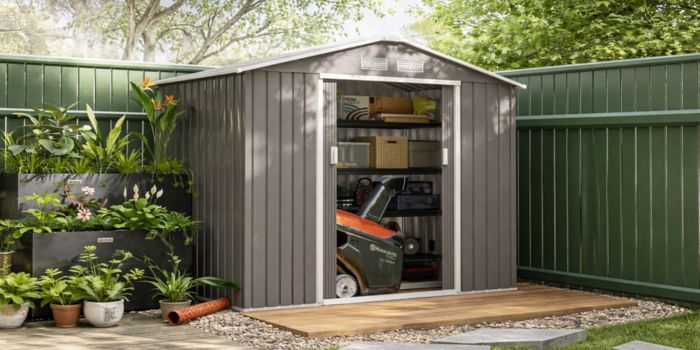
A high-quality installation begins with a base that meets three non-negotiable criteria:
- Level: The surface must be perfectly horizontal to prevent the structure from leaning.
- Stable: The foundation must support the shed’s weight plus snow and storage loads without shifting.
- Well-drained: Effective drainage is the primary defense against "frost heave"—where freezing groundwater expands and heaves the foundation upward.
- Level: The surface must be perfectly horizontal to prevent the structure from leaning.
- Stable: The foundation must support the shed’s weight plus snow and storage loads without shifting.
- Well-drained: Effective drainage is the primary defense against "frost heave"—where freezing groundwater expands and heaves the foundation upward.
4.2 Problems Caused by Poor Foundations
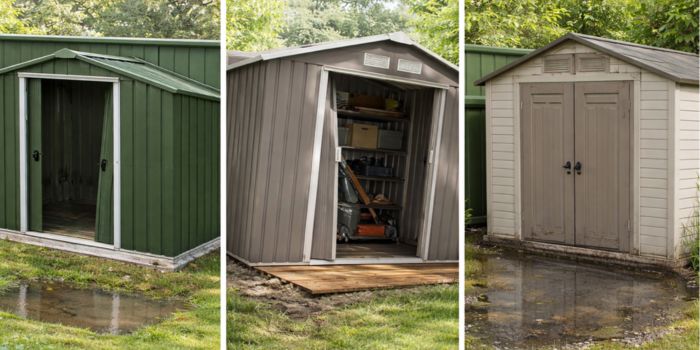
Skipping base prep leads to failures that are nearly impossible to fix later:
- Uneven Ground → Geometric Distortion: An unlevel base forces the frame into a "parallelogram" shape, causing misaligned screw holes and roof leaks.
- Loose Ground → Sinking & Stress: Uncompacted soil settles unevenly, creating stress points that lead to metal fatigue and cracked joints.
- Poor Drainage → Accelerated Decay: Standing water creates a high-humidity zone, triggering rapid metal corrosion and wood rot at the base.
- Uneven Ground → Geometric Distortion: An unlevel base forces the frame into a "parallelogram" shape, causing misaligned screw holes and roof leaks.
- Loose Ground → Sinking & Stress: Uncompacted soil settles unevenly, creating stress points that lead to metal fatigue and cracked joints.
- Poor Drainage → Accelerated Decay: Standing water creates a high-humidity zone, triggering rapid metal corrosion and wood rot at the base.
5. Why a Base Is Essential for Shed Installation
5.1 Why Most Sheds Don’t Include a Base
- Reduces shipping volume.
- Adapts to different ground conditions.
- Provides installation flexibility.
- Adapts to different ground conditions.
- Provides installation flexibility.
5.2 The Real Role of the Base (Far Beyond "Raising It Up")
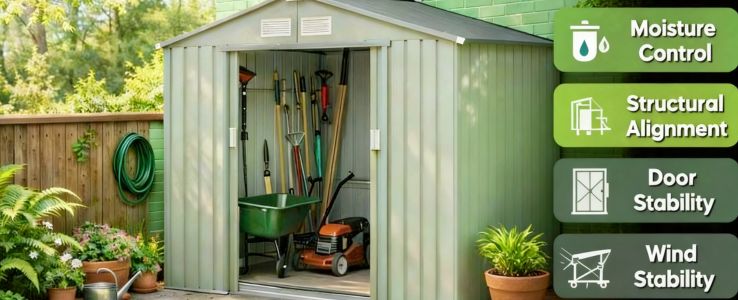
① Moisture Control: Blocks ground moisture, preventing corrosion and mould.
②Structural Alignment: Provides a stable plane for installation, preventing frame distortion.
③Door Stability: Prevents door frame distortion, extending its lifespan.
④Wind Resistance: Facilitates anchoring and provides overall rigidity.
②Structural Alignment: Provides a stable plane for installation, preventing frame distortion.
③Door Stability: Prevents door frame distortion, extending its lifespan.
④Wind Resistance: Facilitates anchoring and provides overall rigidity.
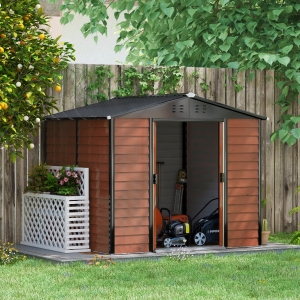
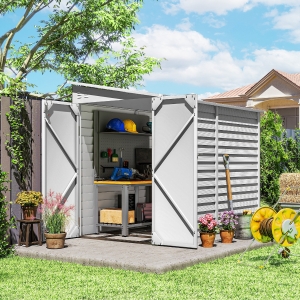
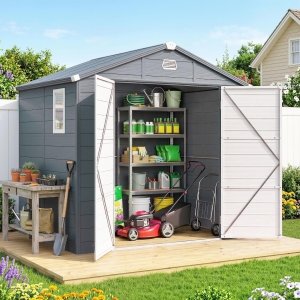
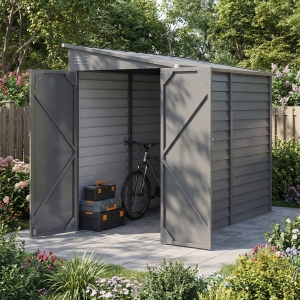
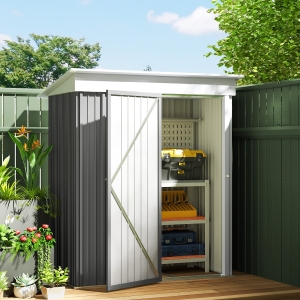
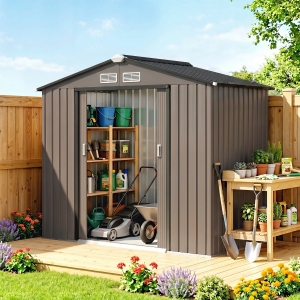
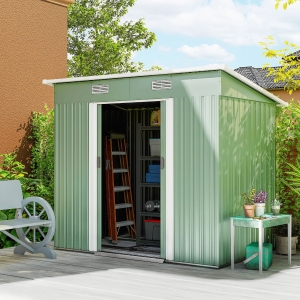
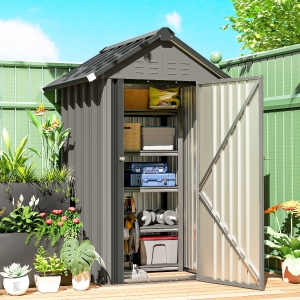
Aosom Sheds with Built-in Bases
6. A Comparison of Foundation Types
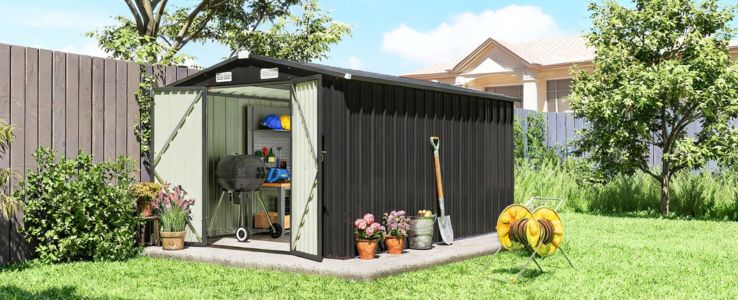
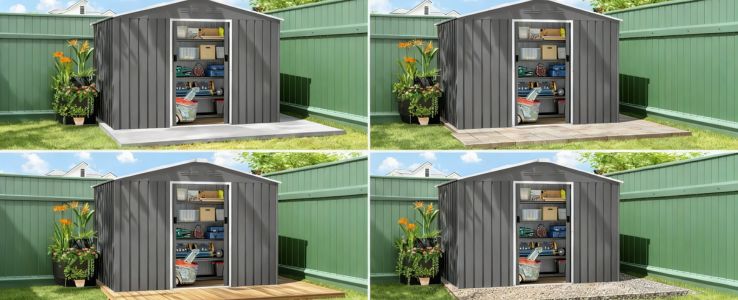
6.1 Concrete Slab
Characteristics: Most stable, most durable.
Suitable for: Long-term use, large sheds, and areas with strong winds.
Suitable for: Long-term use, large sheds, and areas with strong winds.
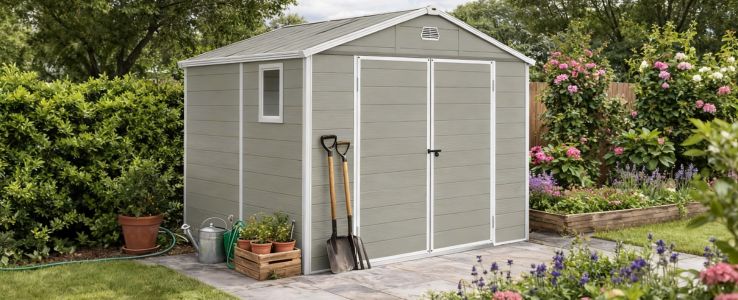
6.2 Paving Slabs
Characteristics: Flexible installation, moderate cost.
Suitable for: Medium to small sheds, standard gardens.
Suitable for: Medium to small sheds, standard gardens.
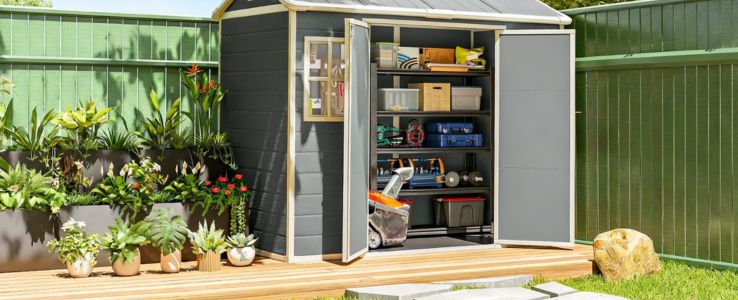
6.3 Wooden Deck
Characteristics: Elevates the structure, good drainage.
Suitable for: Wet environments, irregular ground.
Suitable for: Wet environments, irregular ground.
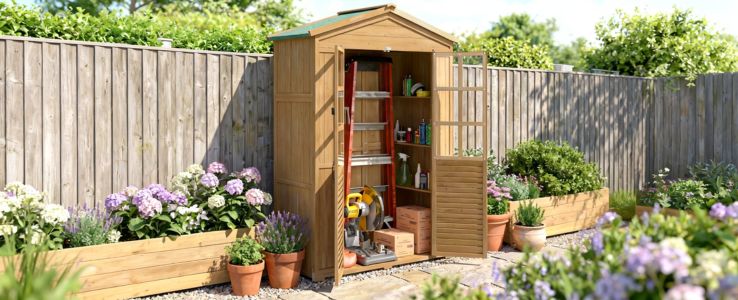
6.4 Gravel Base
Characteristics: Good drainage, low cost.
Suitable for: Temporary use, light sheds.
Suitable for: Temporary use, light sheds.
7. Conclusion
This article demonstrates that the key difficulty in shed installation lies not in assembly complexity, but in structural alignment and foundation quality. Key influencing factors include:
- Ground levelling precision.
- Frame alignment.
- Installation sequence control.
- Foundation structure choice.
- Ground levelling precision.
- Frame alignment.
- Installation sequence control.
- Foundation structure choice.
References
1. National Research Council Canada (NRC). (2020). National Building Code of Canada 2020. Ottawa, ON: NRC Publications Archive.
2. City of Toronto. (2022).Building a Shed: Structural and Zoning Requirements for Accessory Structures. Toronto, ON: Building Division.
3. Canadian Wood Council (CWC). (2021).Introduction to Wood Design: Durability and Foundation Systems for Small Structures. Ottawa, ON: CWC.
4. University of Guelph - Ontario Agricultural College. (2019).Ground Preparation and Drainage for Rural and Urban Outbuildings. Guelph, ON: OAC Research Press.
5. Landscape Ontario. (2023).Best Practices for Hardscape Foundations: Paving Slabs and Aggregates. Milton, ON: Landscape Ontario Press.
2. City of Toronto. (2022).Building a Shed: Structural and Zoning Requirements for Accessory Structures. Toronto, ON: Building Division.
3. Canadian Wood Council (CWC). (2021).Introduction to Wood Design: Durability and Foundation Systems for Small Structures. Ottawa, ON: CWC.
4. University of Guelph - Ontario Agricultural College. (2019).Ground Preparation and Drainage for Rural and Urban Outbuildings. Guelph, ON: OAC Research Press.
5. Landscape Ontario. (2023).Best Practices for Hardscape Foundations: Paving Slabs and Aggregates. Milton, ON: Landscape Ontario Press.
About the Author
Dr. Robert "Bob" MacKenzie
Dr. Robert MacKenzie is a structural engineer specializing in lightweight modular structures and cold-climate foundation engineering. With an advanced doctorate in structural mechanics, his research focuses on the structural integrity of outdoor accessory buildings under extreme environmental conditions, specifically regarding frost heave and snow load distribution. Dr. MacKenzie has served as a technical consultant for the revision of accessory structure safety standards within national building codes and is a frequent contributor to international civil engineering journals on the topics of foundation stabilization and structural alignment mechanisms.
Dr. Robert MacKenzie is a structural engineer specializing in lightweight modular structures and cold-climate foundation engineering. With an advanced doctorate in structural mechanics, his research focuses on the structural integrity of outdoor accessory buildings under extreme environmental conditions, specifically regarding frost heave and snow load distribution. Dr. MacKenzie has served as a technical consultant for the revision of accessory structure safety standards within national building codes and is a frequent contributor to international civil engineering journals on the topics of foundation stabilization and structural alignment mechanisms.