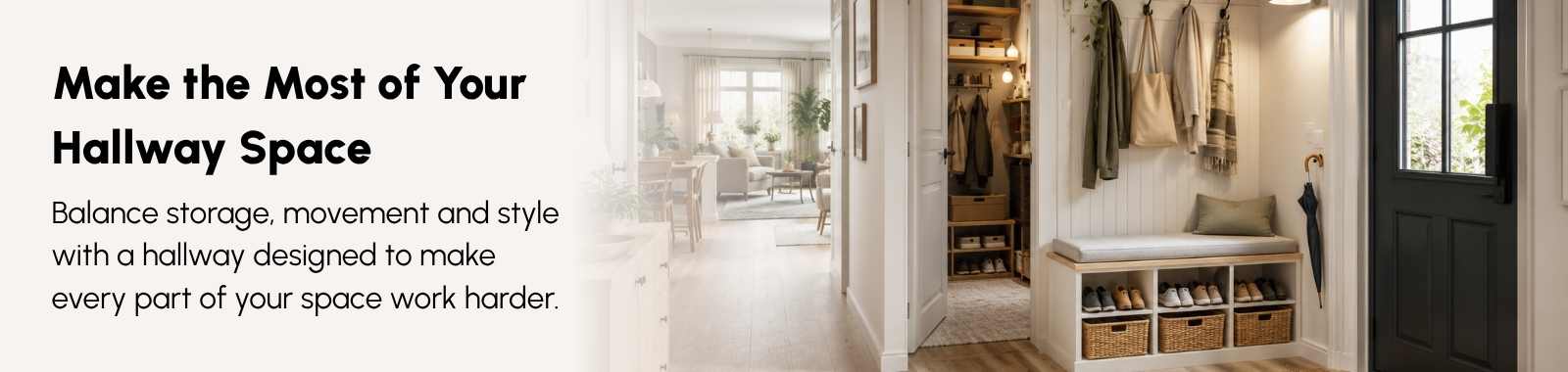
Plan the Space Before You Fill It
A well-planned hallway starts with understanding how the space needs to work.
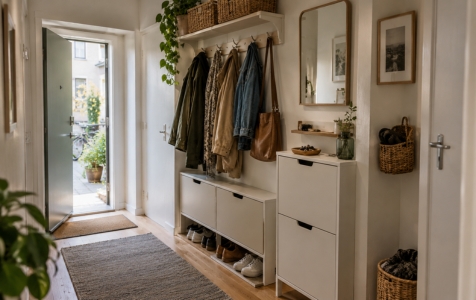
Give Everything a PlaceCombine storage pieces to keep daily essentials organised and easy to find.
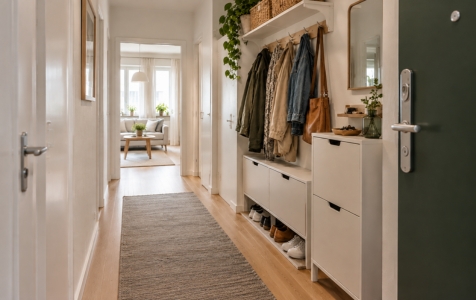
Make Movement Feel NaturalA clear walkway helps your hallway feel more comfortable and easier to use.
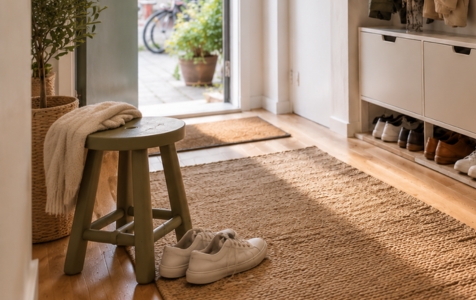
Keep Space to AdaptLeave room for everyday moments, from putting down bags to adding personal décor.
Get More from Every Piece of Furniture
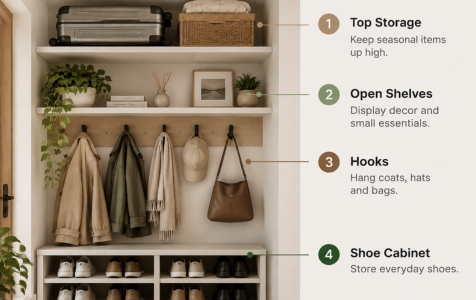
Go TallUse Vertical Space
Make use of your hallway height with tall cabinets, shelves and hooks. Store less frequently used items higher up while keeping everyday essentials within easy reach.
Make use of your hallway height with tall cabinets, shelves and hooks. Store less frequently used items higher up while keeping everyday essentials within easy reach.
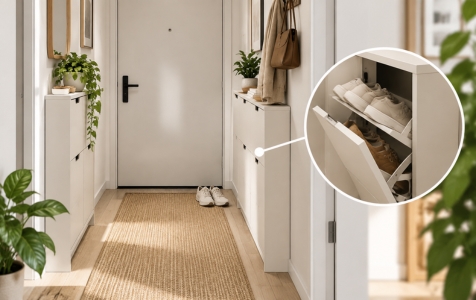
Go SlimChoose Furniture That Fits Your Space
Select storage based on your hallway depth. Slim shoe cabinets and shallow storage units add function without blocking movement, while thoughtful interior layouts help maximise every inch.
Select storage based on your hallway depth. Slim shoe cabinets and shallow storage units add function without blocking movement, while thoughtful interior layouts help maximise every inch.
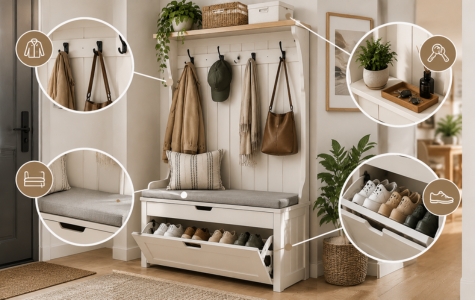
Choose Multi-Purpose PiecesLet One Piece Do More
Choose furniture that supports multiple routines. A storage bench can provide seating, shoe storage and a place to pause, while hall trees and console cabinets combine everyday functions in one solution.
Choose furniture that supports multiple routines. A storage bench can provide seating, shoe storage and a place to pause, while hall trees and console cabinets combine everyday functions in one solution.
Create Space by Grouping Functions
Keep everyday essentials in the main entryway, and move bulkier or less-used items into nearby secondary storage.
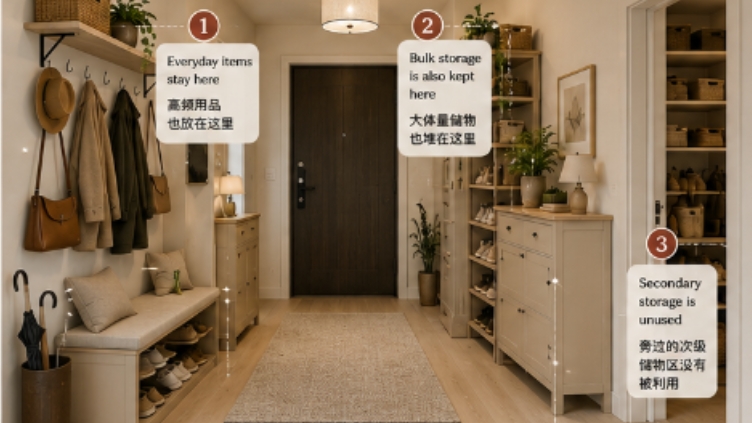


Everyday items stay here
Daily essentials are kept near the entrance.
Daily essentials are kept near the entrance.
Bulk storage stays here too
Large and less-used items take up valuable entryway space.
Large and less-used items take up valuable entryway space.
Secondary storage is underused
Nearby storage areas are not helping share the load.
Nearby storage areas are not helping share the load.

The space says:
"I can store a lot, but I feel crowded."
All Storage Is Concentrated at the Entrance
- Everyday essentials and bulky storage are kept in the same area
- Furniture spreads across the entryway and divides the space
- The walkway feels interrupted by multiple storage points
- The entrance looks organised, but still feels visually full
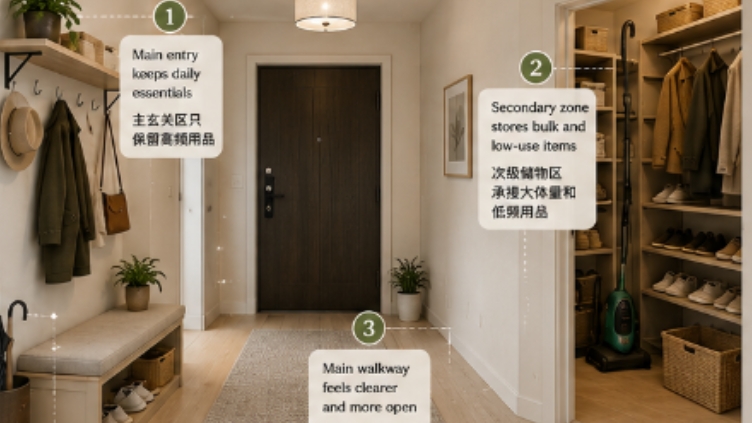


Keep daily essentials in the main entryway
Store frequently used items where they are easiest to reach.
Store frequently used items where they are easiest to reach.
Move bulk storage to a secondary zone
Use nearby areas for seasonal items and larger belongings.
Use nearby areas for seasonal items and larger belongings.
Keep the main walkway clear
A lighter layout makes the entrance feel more open and comfortable.
A lighter layout makes the entrance feel more open and comfortable.

The space says:
"I still have everything I need, but the space feels lighter."
Let Each Area Do Its Job
- Keep frequently used items close to the entrance
- Move bulky and low-use belongings into secondary storage nearby
- Use the same amount of storage while keeping the main pathway clearer
- Create a smoother connection between the entryway and the rest of your home
Different Hallways, Smarter Use of Space
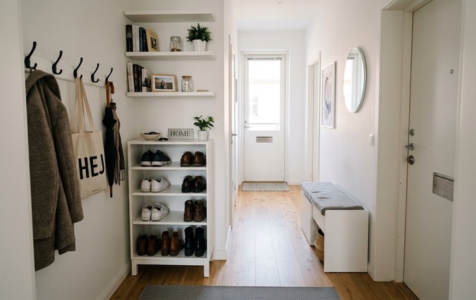
Compact HallwayMake the most of limited space with tall storage and slim furniture. Keep everyday essentials organised while leaving enough room to move.
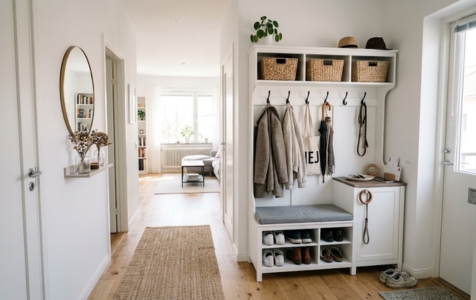
Standard HallwayCreate an efficient entryway with multifunctional furniture that combines seating, storage and daily essentials in one place.
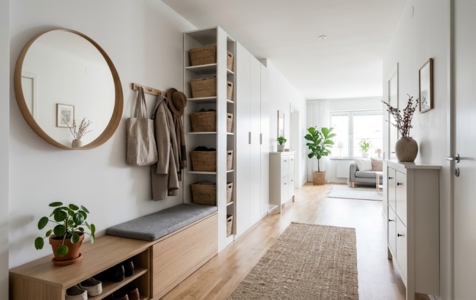
Spacious HallwayUse dedicated storage areas for more capacity while keeping the hallway open, comfortable and easy to navigate.