




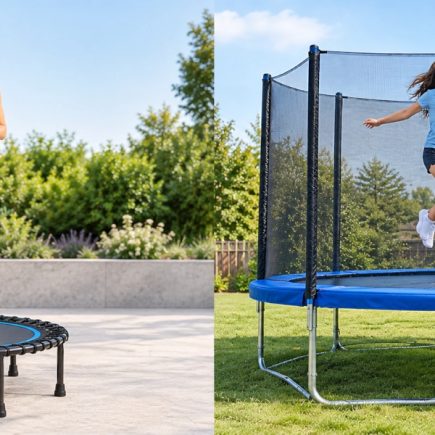



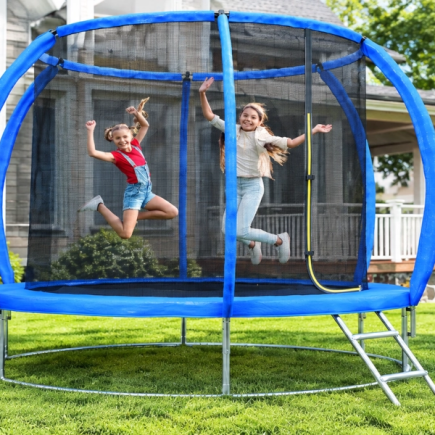

Rebounder or trampoline? They look alike, but they serve different purposes. A rebounder is built for indoor fitness, while a trampoline is made for backyard fun. One fits in a corner of your living room, the other needs a good-sized yard. One works all year, the other is best from spring to fall.
In this article, we’ll compare size, benefits, safety, and cost to help you choose the right one for your home.
Rebounder vs Trampoline: Key Differences at a Glance
Here’s a quick side-by-side look at how the two compare, so you can see which one fits your needs.
| Feature | Rebounder | Trampoline |
| Main purpose | Fitness and exercise | Recreation and play |
| Size | Small and compact | Large |
| Where to use | Indoors | Backyard |
| Space needed | A corner of a room | A good-sized yard |
| Bounce style | Low and controlled | High and energetic |
| Impact on joints | Low | Moderate |
| Safety risk | Low | Higher, needs supervision |
| Storage | Easy, many models fold | Needs winter storage or care |
| Best for | Adults, seniors, fitness users | Kids and families |
| Year-round use in Canada | Yes | Mostly spring to fall |
In short, a rebounder is a piece of exercise equipment, while a trampoline is primarily a piece of recreational equipment.
What Is a Rebounder?
A Rebounder, often called a mini trampoline, is a small, personal trampoline designed mainly for exercise.
Size: Most are about 90 to 125 cm (36 to 50 inches) across and sit just 20 to 30 cm off the ground. They’re small enough to slide under a bed or fit in a closet, making them ideal for condos and apartments.
What It’s Used For
- Low-impact cardio workouts.
- Balance and core training.
- Gentle bouncing to get the blood moving.
- Physical rehabilitation, in some cases.
Types of Rebounders
- Spring-Based Rebounder: Uses metal springs for a firmer, snappier bounce. More affordable, but louder and a bit harder on the joints.
- Bungee-Cord Rebounder: Uses elastic cords for a softer, quieter bounce. Costs more, but it’s easier on the joints, and your downstairs neighbours will thank you.
What Is a Trampoline?
A Trampoline is the full-size backyard version most of us grew up with, or at least envied at a friend’s place.
Size: Backyard trampolines usually range from about 2.4 metres (8 feet) to over 4.5 metres (15 feet) across and stand close to a metre off the ground.
Common Shapes
- Round: The most popular choice for families. It naturally guides jumpers toward the centre.
- Rectangular: Gives a stronger, more even bounce. Preferred for gymnastics and tricks.
- Oval: A mix of both, with extra room for more than one user.
Recreational vs Gymnastics: Backyard trampolines are made for fun, while gymnastics trampolines are professional equipment used in training facilities under supervision.
Health and Fitness Benefits
Both rebounders and trampolines get your heart rate up, but they deliver their benefits in different ways.
Rebounder Benefits: A rebounder is designed for steady, controlled exercise. The low bounce works your legs, glutes, and core while being gentle on your knees, hips, and ankles. It’s a great option for low-impact cardio, improving balance, and supporting healthy circulation. Because it’s used indoors, you can work out daily, follow along with fitness videos, and stay active all winter long.
Trampoline Benefits: A trampoline offers a more energetic, full-body workout. Higher jumps build leg strength, coordination, and endurance, and burn plenty of energy in the process. For kids, it’s a fun way to develop balance, motor skills, and confidence while spending time outdoors. For families, it turns exercise into playtime that everyone can enjoy together.
So Which Gives the Better Workout? For structured fitness, the rebounder wins. It’s built for regular, focused workouts you can do any time. A trampoline is better for active play, making it ideal for kids and families who want to stay fit while having fun.
If you have a medical condition or are recovering from an injury, check with your doctor or physiotherapist before starting any new exercise routine.
Space and Storage Considerations
Space is often the deciding factor, especially in cities where homes and yards are getting smaller.
Rebounder: A rebounder fits comfortably in a living room, spare bedroom, or basement. Just check your ceiling height, since you’ll need enough clearance above your head while bouncing. Many models fold in half or have removable legs, so you can store them in a closet or under a bed. That makes them a great choice for condos and apartments.
Trampoline: A backyard trampoline needs a flat, open area with plenty of room around it. Keep it well away from fences, trees, decks, and other structures. A typical suburban yard can usually fit one, but townhouses or homes with small yards may find it a squeeze. You’ll also need space in a garage or shed to store the mat, net, and padding over the winter.
Safety Considerations
Both rebounders and trampolines are safe and fun when used the right way. Here’s what to keep in mind.
Rebounder: Thanks to its low height and controlled bounce, a rebounder carries less risk. Place it on a flat surface with clear space around it, and check that you have enough ceiling clearance. A stability handlebar is a smart add-on for seniors, beginners, or anyone with balance concerns. Start slow and build up as you get comfortable.
Trampoline: Backyard trampolines need a bit more care, especially with kids. Most injuries happen when more than one person is jumping at a time, so one jumper at a time is the golden rule. Always supervise children, avoid flips unless properly coached, and keep very young children off full-size trampolines. Choose a model with an enclosure net, thick padding, and a sturdy frame. Health Canada offers helpful trampoline safety tips worth reviewing before you set one up.
Check with your insurer: Some Canadian home insurance providers see backyard trampolines as a liability risk. A quick call to your insurer before setup can save you surprises later.
Cost and Value
Prices vary depending on size, features, and quality, but here’s what to expect.
Rebounder: Rebounders are generally the more budget-friendly option. Spring models tend to be the most affordable, while bungee-cord rebounders cost a bit more but offer a softer, quieter bounce. Fitness-grade models with sturdier frames and longer warranties sit at the higher end.
Trampoline: Trampolines usually cost more because of their size. Prices go up with larger frames, safety enclosures, and premium designs. It’s also worth budgeting for extras like anchor kits, ladders, and weather covers.
In short, a rebounder is the more affordable choice, while a trampoline is a bigger investment for family fun.
Weather and Seasonal Use in Canada
This is where the rebounder really shines for Canadians.
Rebounder: Since it’s used indoors, a rebounder works all year round. Whether it’s a sunny July afternoon or a February blizzard, you can keep up your routine. For anyone trying to stay active through the cold, dark months, that’s a big advantage.
Trampoline: A backyard trampoline needs some winter planning. Heavy snow can strain the mat and frame, freeze-thaw cycles can wear down materials, and strong winds can move an unanchored trampoline. If you leave it up, anchor it securely and clear snow off the mat regularly. Many families simply take down the mat, net, and padding in late fall and put them back up in spring.
Depending on where you live, most Canadians get the best use out of a backyard trampoline from spring through early fall.
Who Should Choose a Rebounder?
A rebounder is likely your best bet if you want a convenient, low-impact way to exercise at home. It’s a great fit for busy professionals who want a quick workout before or after work, seniors looking for gentle, joint-friendly movement, condo and apartment dwellers with limited space, and anyone who wants to stay active all winter long without braving the cold.
Who Should Choose a Trampoline?
A backyard trampoline makes more sense if your main goal is recreation. It’s ideal for families with active kids who need to burn off energy, homes with a spacious, level yard, and anyone looking for an outdoor gathering spot during the warmer months. Just go in with a solid safety plan and a strategy for winter.
Where to Buy Rebounders and Trampolines in Canada
Aosom Canada is a great place to shop for rebounders and trampolines online. You’ll find a wide selection of both, making it simple to compare features and choose what works best for your space. Whether you want a compact rebounder for indoor workouts or a family-sized trampoline for the backyard, you’ll find options to suit your needs.
So, Which One Should You Bounce On?
There’s no single winner, just the right choice for your situation. If fitness is your priority and you want something you can use all year, a rebounder is the clear pick. If you’ve got a big backyard and kids who need to burn off energy come summer, a trampoline brings years of outdoor fun. And there’s no rule saying you can’t have both.
Ready to start bouncing? Explore rebounders and trampolines at Aosom Canada and find the perfect fit for your home.
FAQs
Both burn calories and can support weight loss with healthy eating. A rebounder is easier to use daily for steady workouts, while a trampoline burns energy through active play. The one you’ll use most often is the best choice.
Yes. A rebounder is a lower, safer option for young kids and works well indoors. A trampoline offers more space for bigger jumps and outdoor play. Always check weight limits and supervise children on either one.
Yes, both need some setup. Most rebounders are quick to assemble, and many come with foldable frames. Trampolines take longer and often need two people. Always follow the manufacturer’s instructions for safe setup.
Place a rebounder on a flat, stable floor, ideally with a mat underneath to protect floors and reduce noise. A trampoline works best on soft, level grass, away from concrete or patio stones. Avoid uneven ground for both.
With proper care, a quality rebounder or trampoline can last many years. Check springs, bungees, and the mat regularly for wear, and replace worn parts promptly. Keeping a trampoline covered or stored in winter also helps it last.