









Every dog needs a space that belongs to them. Somewhere safe to rest, somewhere they cannot get into trouble, and somewhere you can leave them without worrying. The question most owners run into is whether that space belongs inside the house or out in the yard.
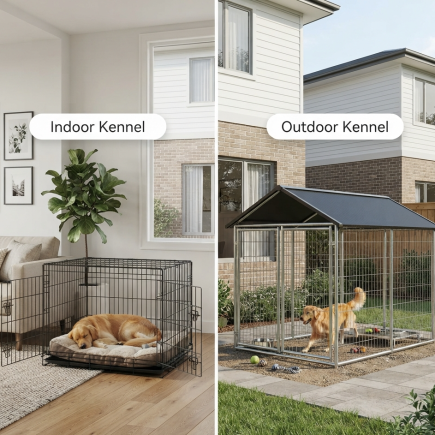
Indoor and outdoor dog kennels look similar at first glance, but they are built for very different jobs. An indoor kennel is a compact den for resting and training inside your home. An outdoor kennel is a large, weatherproof enclosure that gives your dog room to move safely outside. This guide compares both across size, weather protection, security, materials, cost and daily use, so you can choose the dog kennel that genuinely suits your dog and your setup.
1. What Each Kennel Is Built For
Before comparing features, it’s important to understand what each kennel is designed to do. Its purpose affects the size, construction and everyday use.
Indoor Dog Kennels
- Enclosed crates sized for a dog to stand, turn and lie down comfortably.
- Built as a quiet den for sleeping, resting and house training.
- Usually made from folding metal for easy storage.
- Designed for use in living rooms, bedrooms or hallways.
Outdoor Dog Kennels
- Large walk-in enclosures, often called dog runs.
- Give dogs room to walk, play and enjoy fresh air safely.
- Built from heavy-duty metal with a roof or protective cover.
- Designed for year-round outdoor use.
Tip: Think about what your dog needs most. A quiet resting space points to an indoor kennel, while more room to move points to an outdoor kennel.
2. Size and Space
Size is one of the biggest differences between these two kennel types. The amount of space your dog needs often makes the decision much easier.
Indoor Dog Kennels
- Compact enough for a dog to stand, turn and lie down.
- Sized to fit neatly beside furniture.
- Snug interiors support a dog’s natural den instinct.
Outdoor Dog Kennels
- Much larger, with compact runs starting around 5.9 ft × 4 ft.
- Mid-sized options such as 8 ft × 4 ft suit one active dog.
- Large backyard runs can reach approximately 19.7 ft × 19.7 ft.
Tip: Measure your yard before buying an outdoor kennel, and leave enough space around it for cleaning and maintenance.
3. Weather Protection
Indoor kennels stay protected inside your home. Outdoor kennels must withstand changing weather throughout the year.
Indoor Dog Kennels
- Used in climate-controlled spaces.
- No roof or weather cover required.
- Simpler materials perform well indoors.
Outdoor Dog Kennels
- Waterproof roofs help keep dogs dry.
- UV-resistant covers reduce sun damage.
- Galvanized steel frames resist rust and corrosion.
Tip: A waterproof, UV-resistant cover is essential for any outdoor kennel used throughout the year.
4. Security and Escape Proofing
Both kennel types keep dogs safely contained. Outdoor kennels require extra security to prevent escapes.
Indoor Dog Kennels
- Fully enclosed with a secure latching door.
- Your home provides an additional safety barrier.
- Heavy-duty steel models resist chewing and pushing.
Outdoor Dog Kennels
- Lockable latches improve security.
- Welded wire and chain-link panels resist bending.
- Roof panels help prevent climbing or jumping out.
Tip: Choose an outdoor kennel with a lockable latch for added security and peace of mind.
5. Materials and Durability
The materials used determine how long a kennel lasts. Outdoor models require stronger, weather-resistant construction.
Indoor Dog Kennels
- Usually made from folding metal wire.
- Powder-coated finishes resist scratches.
- Removable trays simplify cleaning.
Outdoor Dog Kennels
- Heavy-duty galvanized steel construction.
- Chain-link or welded wire panels provide strength.
- Rust-resistant finishes withstand outdoor conditions.
Tip: Galvanized steel is the best choice for an outdoor kennel that stays outside year-round.
6. Comfort and Everyday Features
The right features improve comfort for your dog and make daily use easier for you.
Indoor Dog Kennels
- Easy to pair with a soft bed or blanket.
- Keep your dog close to the family.
- Folds flat for storage or travel.
Outdoor Dog Kennels
- Rotating feeding bowls allow feeding from outside.
- Adjustable bowl heights suit different breeds.
- Two-room layouts separate resting and activity areas.
Tip: Rotating feeding bowls let you refill food and water without opening the kennel door.
7. Best Uses and Daily Routine
Indoor and outdoor kennels serve different purposes. The right choice depends on your dog’s daily routine and lifestyle.
Indoor Dog Kennels
- Ideal for house training puppies.
- Provide a quiet place to rest.
- Suitable for short periods when you’re away.
Outdoor Dog Kennels
- Allow safe outdoor time during the day.
- Give active dogs more room to exercise.
- Help contain dogs while gardening or entertaining.
Tip: An outdoor kennel is a daytime exercise space, not a permanent home. Dogs still need regular time indoors with their family.
8. Price and Value
Indoor and outdoor kennels fall into different price ranges. The difference mainly comes down to size, materials and overall construction.
Indoor Dog Kennels
- Usually the more affordable option.
- Folding crates offer a simple, budget-friendly setup.
- Easy to replace with a larger size as a puppy grows.
Outdoor Dog Kennels
- Compact runs often start around $245.
- Mid-sized kennels with covers usually cost between $300 and $600.
- Large heavy-duty runs can reach about $1,100.
Tip: Choose a kennel based on your dog’s adult size. Buying too small often means replacing it sooner than expected.
9. Quick Comparison at a Glance
This table highlights the biggest differences between indoor and outdoor dog kennels.
| Factor | Indoor Dog Kennel | Outdoor Dog Kennel |
| Purpose | Resting den and house training. | Daytime space for movement and play. |
| Typical Size | Room to stand, turn and lie down. | About 5.9 ft × 4 ft to 19.7 ft × 19.7 ft. |
| Weather | Not a concern indoors. | Waterproof, UV-resistant roof recommended. |
| Materials | Folding coated metal wire. | Galvanized steel, chain link or welded wire. |
| Security | Latching the door with the home as a second barrier. | Lockable latch with secure walls and roof. |
| Extras | Pairs with a bed and folds flat. | Rotating bowls and divided layouts. |
| Portability | Easy to fold and transport. | Usually stays in place once assembled. |
| Price | Lower and budget-friendly. | Around $245 to $1,100. |
| Best For | Puppies, apartments and travel. | Yards and large or active dogs. |
Tip: Choose an indoor kennel for rest and training. Choose an outdoor run when your dog needs more room to move safely.
Which One Should You Choose?
The best choice depends on your home, available space and your dog’s daily routine.
Choose an Indoor Kennel If You:
- Are house training a puppy.
- I want a quiet sleeping area.
- Live in an apartment or have limited outdoor space.
- Need a kennel that folds for storage or travel.
- Prefer a lower-cost option.
Choose an Outdoor Kennel If You:
- Have a secure yard.
- Own a large or active dog.
- I want a safe outdoor space for longer daytime use.
- Need more room for exercise than a crate provides.
- Want secure containment while working outside or hosting guests.
Many owners end up using both, and it works well. A crate indoors handles nights, travel and training, while an outdoor run covers daytime freedom and fresh air. If you want something in between, a Dog Playpen gives flexible space that works indoors or out.
What Matters Most
Indoor and outdoor dog kennels are not really competing with each other, because they solve different problems. An indoor kennel gives your dog a secure, cozy den for rest and training, while an outdoor kennel gives them protected space to move, play and enjoy fresh air safely.
Think about your dog’s size and energy level, how long they are left alone, and whether you have the yard space for a run. Match the kennel to those answers and you will end up with a setup that keeps your dog safe, comfortable and happy for years. Browse the full range of PawHut pet essentials to make your pets happy.
FAQs
An indoor kennel is a compact enclosed crate sized for a dog to stand, turn and lie down, used as a den for resting and house training. An outdoor kennel is a much larger walk-in enclosure built from heavy duty metal with a weatherproof roof, giving your dog protected space to move around outside.
An outdoor kennel is best used as a safe daytime space rather than a permanent home. Dogs are social animals and need time indoors with their family. Always provide shade, shelter from rain and snow, fresh water and regular company, and bring your dog inside in extreme weather.
Size it to your dog’s breed and energy level. Compact runs around 5.9 ft by 4 ft suit smaller dogs or short stays, while 8 ft by 4 ft works well for one active dog. Large or high energy breeds benefit from bigger runs, which reach roughly 19.7 ft by 19.7 ft at the top of the range.
The better ones are built for it. Look for a waterproof UV resistant cover or roof to keep your dog dry and shaded, plus a galvanized steel frame that resists rust in wet weather. These features are what allow a kennel to stay outside safely through the seasons.
Yes, and many owners do. The crate becomes a calm sleeping den for nights and travel, while the outdoor kennel gives daytime room to move and enjoy fresh air. Using both covers your dog’s needs around the clock without relying on one space for everything.