




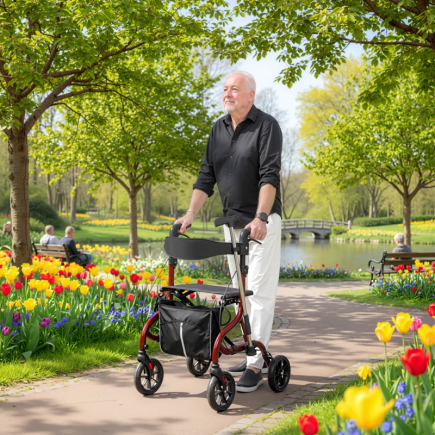
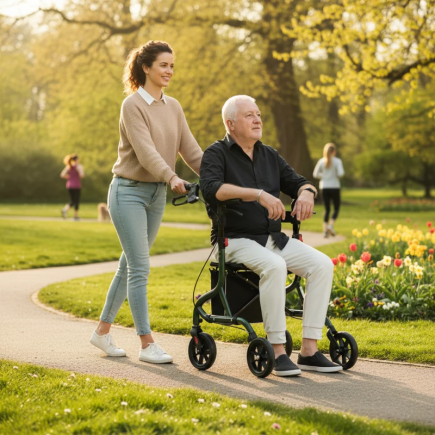













A rollator walker with a seat is one of the most effective mobility aids available today. It offers four-wheeled stability, built-in hand brakes, and a foldable seat that lets you rest whenever you need to, whether you are out for a walk, shopping at a store, or simply moving around the house. For seniors, people recovering from surgery, or anyone managing a condition that affects balance or endurance, a rollator can genuinely change daily life for the better.
But here is the thing: using it correctly matters more than most people realize. Poor posture, wrong handle height, or not locking the brakes before sitting down are small mistakes that can lead to falls or discomfort. This guide walks you through every step so you can use your rollator safely, confidently, and comfortably from day one.
1. Get to Know Your Rollator Before You Start
Before you take your first step, it is worth spending a few minutes understanding what each part of your rollator does. Knowing your equipment builds confidence and helps you catch any issues before they become a safety concern.
- Frame: Usually a lightweight powder-coated aluminum structure that gives the rollator its shape and strength.
- Handlebars: Padded grips that you hold while walking, adjustable to match your height.
- Hand Brakes: Loop-style levers that squeeze to slow you down and push down to lock the wheels in place.
- Wheels: Four wheels that glide smoothly. Front wheels typically swivel for easy steering, rear wheels are fixed.
- Seat: A fabric or padded seat that folds down when you need to rest and folds up when walking.
- Backrest: A strap or bar behind the seat that supports your lower back when sitting.
- Storage Bag or Basket: Usually located under the seat. Great for carrying a phone, medication, keys, or a small bag.
2. Adjust the Rollator to Fit Your Body
This is the single most important step for both safety and comfort. A rollator set to the wrong height will strain your back, neck, and shoulders, and reduce how much stability you actually get from it. Thankfully, adjusting the handle height only takes about a minute.
How to Set the Correct Handle Height
- Put on the shoes you normally wear. Shoe thickness affects your natural standing height.
- Stand tall inside the rollator frame with your arms relaxed by your sides.
- The top of each handlebar grip should line up with the crease on the inside of your wrist.
- Grip the handles from that position. Your elbows should have a comfortable, slight bend of about 15 to 20 degrees.
- Press the quick-release buttons on both sides and adjust both handles to the same height setting.
- Stand in front of a mirror and check your posture. Your back should be straight with no hunching forward or shrugging.
Warning: If the handles are set too high, you will shrug your shoulders and tire quickly. Too low, and you will hunch forward, placing stress on your spine. Get this right before anything else.
3. How to Walk Correctly with Your Rollator
Walking with a rollator is much simpler than using a standard walker because you do not need to lift and place it with every step. The wheels glide forward naturally. That said, a few technique habits make a real difference in how stable and comfortable you feel.
Step-by-Step Walking Technique
- Stand upright inside the rollator frame, positioned between the rear wheels.
- Hold both handles firmly but without gripping so hard that your hands tense up.
- Push the rollator forward by about one comfortable step length ahead of you. Never let it get too far in front.
- Step forward with your weaker leg first, then bring your stronger leg forward to meet it.
- Keep your gaze ahead, not down at the floor. Looking forward helps your posture and lets you see obstacles early.
4. Using the Brakes Safely
The hand brakes on your rollator are not just for going downhill. They are essential for everyday safety, especially during any transition between walking and sitting. Getting comfortable with the brakes early on is one of the best habits you can build.
How the Brakes Work
- Squeeze the brake levers toward the handles to slow your pace. Apply both hands evenly for a smooth, controlled stop.
- Push the levers downward until they click into a locked position. This locks the rear wheels completely. Always do this before sitting.
- Release the brakes by lifting the levers back up before you resume walking.
5. How to Sit Down and Stand Up Using the Rollator Seat
The built-in seat is one of the most useful features of a rollator. It gives you the freedom to rest anywhere, without needing to find a bench or chair nearby. But sitting down and standing up correctly is crucial because this is when most rollator-related falls happen.
Sitting Down Safely
- Find a flat, level surface to sit on. Avoid slopes, wet ground, or uneven surfaces.
- Stop walking and engage both brakes fully by pushing the levers down until locked.
- Turn around slowly so the seat is behind you. You should feel the frame against the backs of your legs.
- Keep your hands on the handlebars for support as you begin to lower yourself.
- Bend at the knees and hips, lowering yourself slowly and in a controlled way onto the seat.
- Once seated, keep your feet flat on the ground and your back supported against the backrest strap.
Standing Up Safely
- Make sure both brakes are still locked before you attempt to rise.
- Shift forward to the edge of the seat and plant both feet flat on the floor.
- Lean your torso slightly forward to bring your weight over your feet.
- Push up from the handlebar grips, not from the seat fabric. This protects the seat and gives you better leverage.
- Once standing, take a moment to steady yourself before you unlock the brakes and begin walking.
Pro Tip: The rollator seat is designed for short rest breaks, not extended sitting. If you need to sit for longer, always aim for a proper chair or bench.
6. Navigating Different Surfaces and Terrain
Most rollators work best on flat, smooth surfaces, but daily life does not always cooperate. Knowing how to handle ramps, doorways, curbs, and uneven ground will give you the confidence to get out and about without hesitation.
On Ramps and Slopes
- Going uphill: Lean slightly forward from the hips and take shorter, deliberate steps. Keep the rollator close.
- Going downhill: Apply light, even brake pressure throughout the descent. Do not let the rollator roll ahead of you.
- On steep ramps: Take your time. If a ramp feels too steep or slippery, ask for assistance or look for an alternative route.
On Uneven Ground and Outdoor Paths
- Slow down when crossing gravel, grass, or cobblestones.
- Rollators with larger 8 to 10-inch wheels handle outdoor terrain significantly better than smaller-wheeled models.
- Avoid very soft surfaces like deep sand or mud where wheels can sink and become difficult to steer.
- Wet pavement reduces wheel grip. Apply light brake pressure and take shorter steps.
7. Folding and Transporting Your Rollator
One of the great practical advantages of modern rollators is how easily they fold for storage in a car boot, closet, or tight space. Most HOMCOM rollators available at Aosom.ca feature a one-step or quick-fold mechanism that takes seconds to operate.
How to Fold Your Rollator
- Empty the storage bag underneath the seat before folding.
- Engage both brakes for safety while you work.
- Lift the seat upward or pull the seat strap (depending on your model) to trigger the fold.
- Press the side frames inward until the rollator collapses flat.
- Use the carry strap or built-in handle to lift and place it in the boot of your car.
8. Keeping Your Rollator in Top Condition
A well-maintained rollator is a safe rollator. A quick weekly check adds just two or three minutes to your routine but makes a significant difference in how reliably and safely your rollator performs over time.
- Brakes: Squeeze both levers before every use. They should feel firm and responsive. If they feel soft or do not lock securely, have them adjusted before using the rollator.
- Wheels: Roll the rollator forward and check for any wobbling, grinding, or debris caught in the wheel housing. Clean out any dirt or grit regularly.
- Frame and Bolts: Once a month, check all visible bolts and connection points for tightness. A slightly loose bolt can affect the whole frame’s stability.
- Seat and Backrest: Wipe down with a damp cloth and mild soap. Check the backrest strap for any fraying or stretching.
- Storage Bag: Keep it clean and avoid overloading it. The weight capacity of the storage basket is separate from the seat weight limit, so always check your model’s specifications.
Common Mistakes to Avoid
Even people who have been using a rollator for months can develop small habits that quietly reduce safety over time. Here is what to watch out for:
- Leaning too far forward: Forces you to reach for the handles, shifting your center of gravity and increasing fall risk. Keep the rollator close.
- Sitting without locking the brakes: Even a gentle slope can cause a rollator to roll when you put weight on the seat. Always lock first, no exceptions.
- Overloading the storage bag: Excess weight in the bag changes how the rollator handles and can make steering feel heavy or unpredictable.
- Leaning heavily on the rollator: It is a balance aid, not a load-bearing support. Distributing your weight properly protects both you and the frame.
Once you understand how to use a rollator properly, the next step is making sure you have the right one for your lifestyle and body. Aosom Canada carries a range of HOMCOM rollator walkers with seats that are built with quality aluminum frames, dual braking systems, and practical storage solutions.
FAQs
Check if your elbows bend slightly when holding the handles. Your posture should stay upright without leaning forward. If you feel strain in your shoulders or back, readjust immediately.
Yes, but thicker carpets can make movement slightly harder. Use steady, controlled pushes to avoid sudden resistance. Low-pile rugs are safer and easier to navigate daily.
Stop using it until the brakes are properly adjusted. Check cables or consult a professional for tightening. Reliable brakes are essential for both walking and sitting safety.