








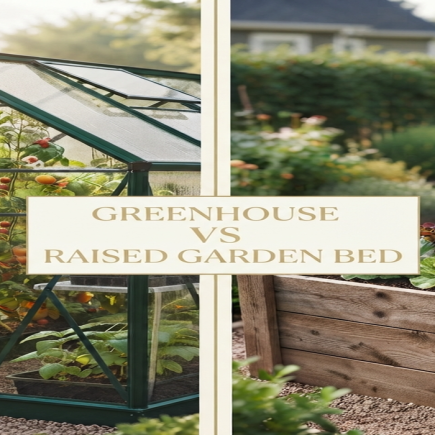






Greenhouses and raised garden beds are two of the most popular ways to grow more at home, and gardeners often wonder which one to buy first. The truth is they solve different problems. One controls the growing environment, and the other improves the soil and makes gardening easier.
This guide breaks down the difference between a greenhouse and a raised garden bed, compares them across cost, control, crops and ease of use, and helps you choose the right one for your space, your climate and your budget.
What Is the Difference Between a Greenhouse and a Raised Garden Bed?
A greenhouse controls the growing environment, while a raised garden bed gives you better control over the soil. A greenhouse protects plants from weather and extends the growing season, while a raised bed improves drainage, soil quality and accessibility.
Choose a greenhouse if weather or a short growing season is your main problem. Choose a raised bed if poor soil, weeds or back strain are holding your garden back.
What Are the Advantages of a Greenhouse?
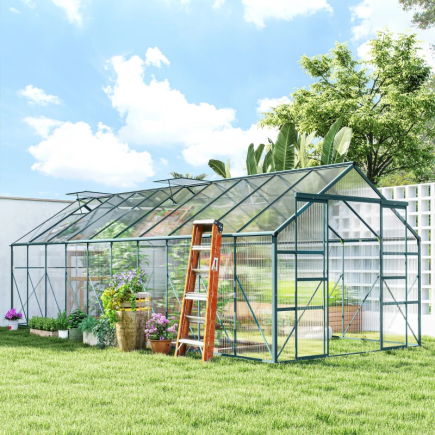
A greenhouse extends the growing season, protects plants from harsh weather and pests, and gives you more control over temperature, humidity and light.
It is ideal when your climate limits what or when you can grow.
- Extends the season for earlier planting and later harvests.
- Protects plants from frost, heavy rain, wind and heat.
- Reduces exposure to common garden pests.
- Creates better conditions for tender and out-of-season crops.
Tip: Even a small greenhouse can add valuable growing weeks, making it useful for gardeners with short or unpredictable seasons.
What Are the Advantages of a Raised Garden Bed?
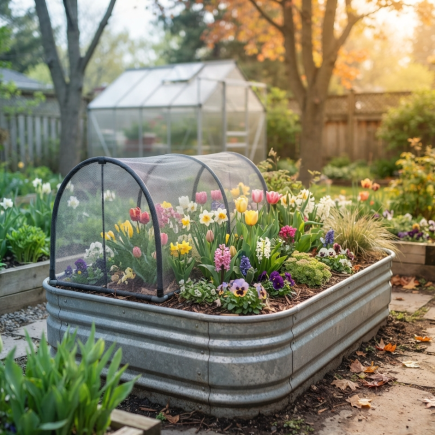
A raised garden bed improves soil quality, drainage and accessibility while making it easier to control weeds and growing conditions.
It is a practical choice when your existing soil is poor or difficult to work with.
- Lets you fill the bed with quality, nutrient-rich soil.
- Improves drainage and reduces waterlogging.
- Makes planting and maintenance easier on your back and knees.
- Works well in yards, patios and other small spaces.
Tip: If poor soil is your biggest challenge, a raised bed is one of the simplest ways to create a better growing environment.
Which Costs More, a Greenhouse or a Raised Garden Bed?
A greenhouse usually costs more than a raised garden bed because it requires a larger structure and may need heating, cooling or ventilation.
Greenhouse
- Higher upfront cost for the structure.
- May have ongoing energy or maintenance costs.
- Offers more growing-season control and protection.
Raised Garden Bed
- Lower upfront cost and easy DIY options.
- Very little ongoing cost after setup.
- Soil is the main expense, especially for deeper beds.
Tip: For a limited budget, start with a raised bed. You can always add a greenhouse later as your garden grows.
Which Is Easier for Beginners?
A raised garden bed is generally easier for beginners because it requires less monitoring and maintenance than a greenhouse.
Greenhouse
- Requires monitoring of temperature and humidity.
- Needs ventilation during hot weather.
- Offers more growing possibilities but has a steeper learning curve.
Raised Garden Bed
- Simple to build, fill and plant.
- Requires basic watering, weeding and soil care.
- Provides an easy starting point for new gardeners.
Tip: Start with a raised bed if you are new to gardening. Add a greenhouse when you want to extend the season or grow more demanding plants.
What Can You Grow in Each One?
A greenhouse is best for tender and heat-loving crops, while a raised bed suits most vegetables, herbs and flowers that grow well outdoors.
Greenhouse
- Tomatoes, peppers and cucumbers.
- Seedlings, herbs and leafy greens.
- Tropical or out-of-season plants needing extra warmth.
Raised Garden Bed
- Tomatoes, zucchini, beans and carrots.
- Leafy greens and root vegetables.
- Herbs and flowers in well-drained soil.
Tip: Start seedlings in a greenhouse and move them to raised beds when outdoor conditions are suitable for an earlier and stronger harvest.
Greenhouse vs Raised Garden Bed: Quick Comparison
A greenhouse is better for climate control and extending the growing season, while a raised garden bed is better for soil quality, affordability and easy gardening. Here is a quick comparison:
| Factor | Greenhouse | Raised Garden Bed |
| Main purpose | Climate control and season extension | Better soil, drainage and access |
| Cost | Higher upfront and running cost | Lower cost, plus soil |
| Ease of use | Needs more monitoring | Simple and beginner-friendly |
| Climate control | Controls temperature and airflow | Grows in outdoor conditions |
| Season | Extends the growing season | Follows the normal season |
| Best for | Tender and out-of-season crops | Everyday vegetables and herbs |
| Setup | Larger and more permanent | Quick to build and fill |
Tip: These two work well together. Use a raised bed for simple outdoor growing and a greenhouse to start plants early or extend the season.
Should You Use Both Together?
Yes. A greenhouse and raised garden bed can complement each other. Raised beds provide better soil and drainage, while a greenhouse adds protection and climate control.
- Grow summer crops in outdoor raised beds.
- Use a greenhouse for seedlings and tender plants.
- Start plants in the greenhouse before moving them outdoors.
- Place raised beds inside a greenhouse for added protection.
Tip: If you have enough space, a raised bed inside a greenhouse combines soil control with a protected growing environment
Which One Should You Choose?
Choose a raised garden bed for affordable, simple gardening and better soil. Choose a greenhouse if you want to extend the growing season, protect plants and grow more demanding crops.
Choose a Raised Garden Bed If You:
- I want an affordable and beginner-friendly setup.
- Have poor soil or drainage problems.
- I want easier access and less bending.
- Mainly grow vegetables, herbs or flowers outdoors.
- Have a small yard, patio or other limited space.
Choose a Greenhouse If You:
- I want to extend the growing season.
- Need protection from frost, heat and storms.
- I want to grow tender or out-of-season plants.
- Are comfortable monitoring ventilation and temperature.
- Want greater control over growing conditions.
A raised garden bed is ideal for better soil, easy maintenance and affordable outdoor growing. A greenhouse is better for extending the season and protecting plants from changing weather. If you have the space, using both gives you the benefits of soil control and a protected growing environment.
Explore gardening & greenhouse supplies, and raised garden beds to create a setup that fits your garden.
FAQs
Choose a spot with good sunlight, easy water access and enough space for maintenance. Greenhouses benefit from consistent sunlight and protection from strong winds, while raised beds should receive several hours of sunlight each day for healthy plant growth.
Inspect plants regularly to spot pests early. Remove damaged leaves, keep the area clean and avoid overcrowding. In greenhouses, check doors, vents and openings, while raised beds can benefit from suitable physical barriers to protect plants.
Their lifespan depends on materials, construction quality, weather exposure and maintenance. Greenhouse frames can last for years, although covers or panels may need replacing. Raised beds can also last for years, with weather-resistant materials generally lasting longer.