










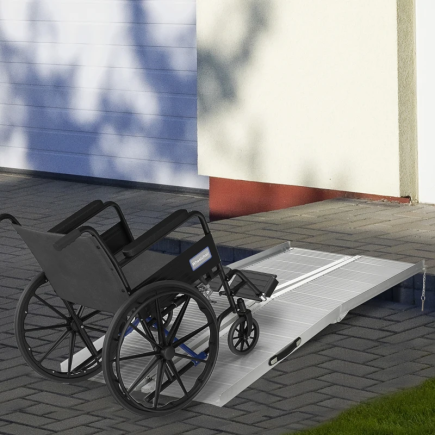


























Wheelchair ramps help users move between different height levels such as doorways, curbs, porches, and vehicle entrances. However, using a ramp safely requires more than simply rolling forward. Proper ramp inspection, correct wheelchair alignment, balanced body positioning, and controlled speed all help maintain stability and prevent slipping or tipping.
This guide explains the key steps for inspecting a ramp, positioning the wheelchair correctly, and safely moving up or down a ramp with better control and confidence.
How to Use a Wheelchair Ramp Safely
For quick reference, safe ramp usage follows these steps:
- Inspect the ramp surface and stability.
- Align the wheelchair straight with the ramp entry.
- Maintain balanced body positioning.
- Lean slightly forward when climbing.
- Lean slightly backward when descending.
- Control speed using push rims or brakes.
- Avoid turning or stopping on steep slopes.
Following these basic principles helps maintain balance, traction, and safe movement on ramp inclines.
Step 1: Inspect the Ramp Before Every Use
Before moving onto a ramp, take a moment to inspect it carefully. Many ramp accidents occur because the surface is slippery, the ramp is not positioned correctly, or there is debris that affects traction. A quick inspection ensures the ramp is stable and safe to use.
Key Safety Checks
- Ramp surface is dry and free from debris
- No cracks, bending, or loose traction tape
- Ramp edges sit flush against the ground or threshold
- Side rails or curb guards are secure
- Ramp weight rating supports the wheelchair and user
Ramp Surface Hazards
| Surface Condition | Potential Risk |
| Wet ramp | Reduced traction |
| Ice or frost | Wheel slip |
| Loose gravel | Ramp instability |
| Oil or dirt buildup | Loss of grip |
Tip: Even a gentle ramp slope can become dangerous when the surface loses traction.
Step 2: Understand Ramp Slope Before Using It
Ramp slope determines how much effort is required to climb and how carefully the wheelchair must be controlled while descending. A ramp that appears short may still have a steep incline that increases the risk of losing balance.
Common Ramp Slope Ratios
| Slope Ratio | Approx. Angle | Recommended Use |
| 1:20 | ~3° | Powered wheelchairs or easy self-propelling |
| 1:12 | ~5° | Standard accessibility ramps |
| 1:8 | ~7° | Short temporary ramps |
| 1:6 | ~9.5° | Power chairs for very short distances |
The 1:12 ratio is widely considered the safest standard for wheelchair ramps.
How to Calculate Ramp Slope
Measure the height rise and ramp length.
Example: 6-inch rise ÷ 72-inch ramp length = 1:12 slope
Step 3: Position the Wheelchair Correctly at Ramp Entry
Proper alignment at the ramp entrance ensures smooth movement and prevents the wheelchair from drifting toward the ramp edges. Starting slightly off-center can cause the chair to veer sideways during the climb or descent.
Correct Ramp Entry Position
- Position the wheelchair directly in the center
- Ensure equal space on both sides of the wheels
- Keep both hands on push rims
- Confirm anti-tip wheels are engaged if available
Approaching the ramp at an angle increases the risk of wheel drop or tipping.
Step 4: Moving Up the Ramp Safely
Climbing a ramp requires controlled pushing and balanced body positioning. Maintaining steady forward momentum prevents unnecessary strain and keeps the wheelchair stable.
Technique for Ascending Ramps
- Lean slightly forward in the seat.
- Push both wheels evenly.
- Maintain steady momentum.
- Keep the wheelchair centered on the ramp.
- Continue pushing until reaching the landing platform.
Tips for Easier Climbing
- Approach the ramp with slight forward momentum
- Use short, controlled push strokes
- Pause briefly at landing platforms if needed
If climbing the ramp requires maximum effort immediately, the ramp may be too steep for independent use.
Step 5: Descending the Ramp Safely
Descending ramps requires careful speed control. Gravity naturally increases the wheelchair’s speed, so maintaining consistent braking pressure is essential for stability.
Safe Descending Technique
- Lean slightly backward to stabilize balance.
- Keep both hands on push rims.
- Apply gentle braking pressure.
- Maintain a straight direction down the ramp.
- Avoid sudden stops.
Alternative Method for Steeper Ramps
Descending backward (rear wheels first) provides better control and helps maintain a stable center of gravity on steeper ramps.
Step 6: Safe Caregiver Assistance on a Ramp
When assisting someone in a wheelchair, the caregiver must maintain proper posture and positioning to provide stable support. Incorrect pushing techniques can strain the caregiver and reduce control of the wheelchair.
Pushing a Wheelchair Up a Ramp
- Stand directly behind the wheelchair
- Keep feet shoulder-width apart
- Lean forward using body weight
- Push steadily without sudden force
Controlling Ramp Descent
- Stay behind the wheelchair
- Maintain constant grip on handles
- Walk slowly while controlling speed
For steeper ramps, a second helper positioned in front may improve stability.
Step 7: Self-Propelling Tips for Better Ramp Control
Independent ramp navigation becomes easier with the right technique and equipment adjustments. Small changes can significantly reduce effort and improve control.
Important Self-Propelling Factors
- Maintain correct tire pressure
- Use gloves for stronger grip on push rims
- Approach ramps with slight momentum
- Maintain a consistent push rhythm
- Underinflated tires increase rolling resistance and make ramps harder to climb.
Step 8: Setting Up a Portable Ramp Correctly
Portable ramps offer flexible accessibility but must be placed correctly to remain stable. Improper setup is a common cause of ramp accidents.
Portable Ramp Placement Checklist
- Ramp ends fully contact both surfaces
- Ramp positioned straight with doorway or step
- Non-slip feet or anchors touching the floor
- Ramp lip secured to the threshold
Always test the ramp by applying body weight before using it with a wheelchair.
Surface Compatibility Guide
| Surface Type | Safe for Portable Ramp | Notes |
| Smooth concrete | Yes | Good traction |
| Carpet | Yes | May require anchors |
| Gravel | No | Unstable surface |
| Ice or wet floor | No | Slip hazard |
Common Mistakes That Cause Ramp Accidents
Ramp accidents often occur due to simple mistakes that can be avoided with proper awareness.
Frequent Ramp Errors
| Mistake | Result |
| Entering ramp at an angle | Wheel drop |
| Descending too fast | Loss of control |
| Turning while on slope | Tipping risk |
| Ignoring ramp slope | Excessive effort |
| Using wet ramp | Reduced traction |
Maintaining straight alignment and controlled speed prevents most ramp-related incidents.
Ramp Confidence Starts with Consistent Technique
Once proper ramp techniques become routine, navigating slopes becomes predictable and safe. Wheelchair Ramps play an important role in improving accessibility, so taking a moment to inspect the ramp, aligning the wheelchair correctly, and maintaining controlled movement helps ensure smooth mobility across entrances, sidewalks, and public access points.
With consistent practice, ramps become a reliable mobility solution rather than a safety concern.
FAQs
Yes, descending backward can provide better control on steeper ramps because the rear wheels lead the movement.
Stopping briefly is possible on gentle slopes, but steep ramps should be climbed without stopping to avoid rollback.
A quick inspection should be done before every use, with a more thorough check performed regularly.