
















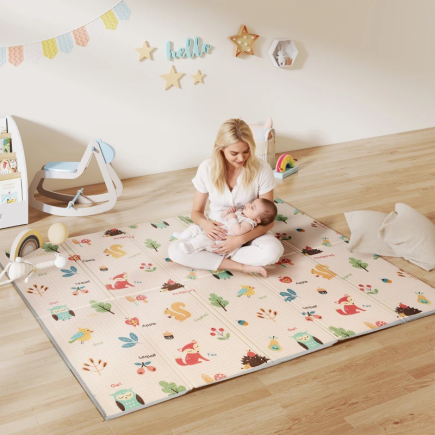

A baby play mat is one of the most used surfaces in early childhood. It supports tummy time, crawling, rolling, early steps, and sometimes snack breaks. Because it stays on the floor and comes into direct contact with hands, toys, and skin, it collects dust, spills, and moisture quickly.
Cleaning it properly is not about using stronger chemicals, it is about using the correct sequence, controlled moisture, and consistent maintenance. The steps below follow a structured order so the mat stays hygienic without damaging foam cushioning, stitched edging, or printed surfaces.
Cleaning Supplies You’ll Need Before You Start
Before beginning the process, gather your materials in one place. This prevents over-wetting the mat or leaving it exposed while searching for tools.
Basic Cleaning Tools
- Vacuum with hose attachment (no rotating brush)
- Microfiber cloths (2–3 pieces)
- Soft sponge or soft-bristle brush
- Spray bottle
- Small bowl of clean water
- Dry towel
Safe Cleaning Solutions
- Mild dish soap + warm water
- Diluted white vinegar solution
- Baking soda (for spot treatment only)
Step 1: Clear the Area and Remove Dry Debris
Before applying any cleaning solution, the surface must be completely free of loose dirt. Crumbs, sand, and pet hair can scratch the protective top layer when wiped with a damp cloth. Removing dry particles first prevents spreading grime during wet cleaning.
What to Do First
- Remove toys, cushions, and detachable accessories
- Take apart interlocking tiles (if applicable)
- Shake the mat gently outdoors if portable
- Vacuum using a hose attachment (avoid rotating brush heads)
Tip: Vacuuming is especially important around edges and fold lines where debris accumulates.
What to Check During This Step
- Surface cracks or dents
- Peeling edges
- Loose stitching
- Faded print areas
Tip: A soft brush attachment is safer than spinning bristles, which may damage foam coating.
Step 2: Identify the Material Before Choosing a Method
Cleaning methods depend entirely on the material. Many modern cushioned play mats are made from XPE or EVA foam with a laminated, water-resistant top layer. Others may be quilted fabric or plastic-coated.
Understanding this prevents over-wetting and structural damage.
Material Cleaning Guide
| Material | Soaking Allowed | Machine Wash | Cleaning Style |
| XPE Foam | No | No | Surface wipe & gentle scrub |
| EVA Foam | No | No | Spot clean only |
| Fabric Quilted | Yes | Yes | Machine wash |
| Waterproof Plastic | Yes | No | Rinse & wipe |
Foam mats should never be submerged, as internal moisture can remain trapped and lead to odor or mold growth.
Tip: If the mat is thick, foldable, and cushioned, always use controlled wiping instead of soaking.
Step 3: Prepare a Mild and Safe Cleaning Solution
Strong disinfectants are unnecessary for regular cleaning and may degrade surface coating. A gentle solution effectively removes bacteria, food residue, and everyday messes.
Recommended Safe Solutions
- Warm water + 4–5 drops mild dish soap
- 1 part white vinegar + 2 parts water
- Baking soda paste for stubborn stains
Avoid These
- Bleach
- Ammonia-based cleaners
- Alcohol sprays
- Abrasive powders
Tip: Always test a small hidden area before applying to the full surface.
Step 4: Wipe the Entire Surface Methodically
Once debris is removed and solution prepared, begin wiping the entire mat evenly. The goal is to remove surface bacteria and residue without saturating the foam.Lightly spray the solution onto a cloth rather than directly onto the mat to control moisture levels.
Clean in Sections
- Divide the mat into quadrants
- Wipe in circular motions
- Apply gentle pressure only
- Change cloth water when it becomes cloudy
For double-sided mats, clean both sides weekly to prevent uneven wear and dust accumulation underneath.
Tip: Focus on high-contact areas where crawling and play are concentrated.
Step 5: Target Stains and Sticky Spots
Some areas require deeper attention, especially after milk spills, juice drips, or snack crumbs.Apply a small amount of solution to the stain and allow it to sit briefly. Then scrub gently using a soft sponge or microfiber cloth.
Stain Removal Reference
| Stain Type | Best Cleaning Method |
| Milk/Formula | Mild soap + warm water |
| Fruit Juice | Vinegar solution |
| Marker/Crayon | Baking soda paste |
| Mud | Let dry fully, then wipe |
Avoid aggressive scrubbing, as printed graphics and laminated surfaces can wear down over time.
Tip: The faster a spill is treated, the less likely it will stain permanently.
Step 6: Rinse Carefully to Remove Residue
After cleaning and stain treatment, soap residue must be removed. Residual detergent can leave a sticky or slippery surface and may irritate sensitive skin.
Use a clean cloth dipped in fresh water and wipe the entire mat thoroughly.
Rinsing Guidelines
- Do not pour water directly over the mat
- Avoid oversaturating cloth
- Repeat wipe if surface feels slick
Tip: If water droplets remain visible, wipe again with a dry cloth before air drying.
Step 7: Allow Complete Air Drying
Drying is critical. Even slight moisture trapped inside foam layers can cause odor or bacterial growth.Place the mat in a well-ventilated room. It can be laid flat or stood upright against a wall so air circulates evenly.
Drying Recommendations
- Keep away from heaters or radiators
- Avoid prolonged direct sunlight
- Do not fold until completely dry
- Use a fan in humid conditions
Drying time typically ranges from 1–3 hours depending on room humidity.
Tip: Fold lines and stitched edges retain moisture longer check them carefully.
Step 8: Maintain a Consistent Cleaning Routine
Routine maintenance prevents deep buildup and reduces the need for aggressive cleaning later.
Suggested Cleaning Frequency
| Usage Level | Surface Wipe | Deep Clean |
| Light newborn use | After use | Every 2 weeks |
| Crawling stage | Daily wipe | Weekly |
| Snack-time use | After meals | Weekly |
| Multiple children | Daily | Weekly |
Between Deep Cleans
- Spot clean immediately after spills
- Flip sides weekly
- Store only when fully dry
- Keep in dry, ventilated area
Consistency significantly extends the life of foam cushioning and surface coating.
Tip: Portable foldable mats should be stored loosely rolled to prevent permanent creasing.
Storage and Long-Term Care
Correct storage protects cushioning thickness and prevents structural weakening.
Store the Mat:
- In a dry, ventilated space
- Away from damp floors
- Away from extreme temperature swings
- Away from heavy furniture pressure
Replace the Mat If:
- Deep cracks appear
- Persistent odor remains after drying
- Surface flakes or peels
- Cushioning becomes uneven
Tip: Regular inspection during cleaning prevents safety risks.
A Clean Finish for Safe and Comfortable Play
Consistent care, gentle cleaning solutions, and proper drying are what keep a baby play mat safe and durable over time. When debris is removed first and moisture is carefully controlled, the surface remains hygienic without damaging the foam or protective layer.
Whether maintaining existing Kids Play Mats or simply reviewing care routines, a structured cleaning approach ensures a comfortable, reliable play surface that supports everyday use.
FAQs
Most standard disinfectant wipes contain alcohol that can weaken the laminated surface over time. Instead, use a diluted vinegar solution or mild soap for routine sanitising. If extra hygiene is needed, wipe with a damp cloth first, then dry thoroughly.
Blot the area immediately with a dry towel to absorb moisture. Use a light vinegar-water mix to neutralise odour rather than mask it. Dry the mat upright in a ventilated space to prevent trapped smells.
Remove the mat and inspect the floor for moisture buildup. Clean the underside with mild soap and ensure the floor is fully dry before placing it back. Improve ventilation and avoid laying mats on damp surfaces long-term.
Increase cleaning frequency for several days after recovery. Use warm soapy water followed by a separate clean-water wipe to remove residue. Allow extended air drying to reduce lingering bacteria.