












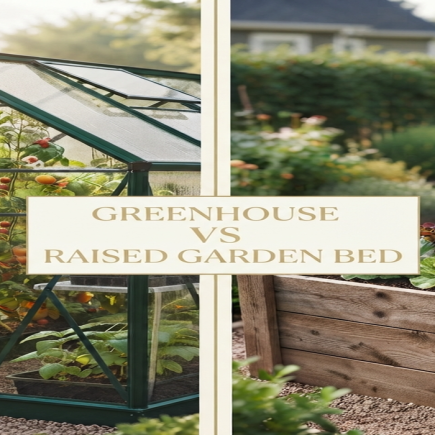

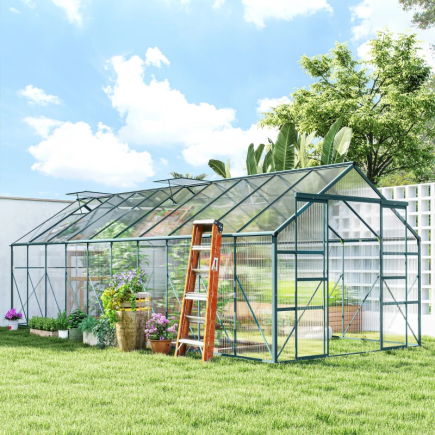
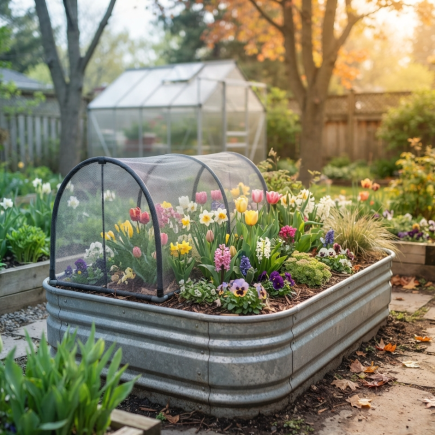










Greenhouse farming, also called controlled-environment growing, means raising plants inside a structure that gives them ideal conditions to thrive. Instead of leaving your crops at the mercy of the weather, you create a protected space where temperature, moisture and pests are all managed. For home gardeners and growers alike, the payoff is bigger, healthier, more reliable harvests.
This guide covers eight key benefits of greenhouse farming, backed by real numbers, and points to the gardening and greenhouse supplies that help you get started.
What Are the Main Benefits of Greenhouse Farming?
The main benefits of greenhouse farming include year-round growing, higher yields, better weather and pest protection, efficient water use, and greater control over growing conditions. Together, these advantages can lead to healthier crops, more reliable harvests, and less waste.
In simple terms, a greenhouse gives you more control. Instead of relying entirely on outdoor weather, you can create conditions that help plants grow for longer and more consistently.
1. Grow Crops All Year Round
A greenhouse extends the growing season by protecting plants from cold weather and changing conditions. This allows you to start earlier in spring, continue later into autumn, and grow some crops through winter.
- Start planting earlier in spring and harvest later in autumn.
- Continue growing during colder months with the right setup.
- Enjoy fresh produce outside the normal growing season.
- Fit more planting cycles into one year.
Tip: Even an unheated greenhouse can extend your growing season by several weeks. Adding heating can help support more consistent winter growth.
2. Control the Growing Environment
One of the biggest advantages of greenhouse farming is greater control over temperature, humidity, light, and airflow. This creates a more stable environment where crops can grow with less weather-related stress.
- Manage temperature and humidity for healthier plants.
- Protect crops from frost, storms, heavy rain, and heat.
- Adjust conditions according to the crops you grow.
- Reduce losses caused by unpredictable weather.
Tip: Adding ventilation and greenhouse accessories helps release excess heat and improve airflow during warmer days.
3. Get Higher Yields From Less Space
Controlled growing conditions can help plants grow more efficiently, allowing you to produce more from a limited area. This makes greenhouses especially useful for small farms, backyards, and urban growing spaces.
- Produce more from each square metre.
- Grow crops closer together when conditions allow.
- Make better use of smaller growing areas.
- Create more consistent growing conditions across the greenhouse.
Tip: Pair your greenhouse with Raised Garden Beds or Planters to organise crops and maximise available growing space.
4. Protect Crops From Pests and Disease
A greenhouse provides a physical barrier against many insects, birds, and animals that can damage crops. Better protection can also reduce the need for frequent pesticide treatments.
- Help keep insects, birds, and animals away from crops.
- Reduce pest-related crop damage.
- Spot potential problems before they spread.
- Maintain healthier plants in a protected environment.
Tip: Keep the greenhouse clean and organised, and avoid bringing contaminated tools or plants inside. Good hygiene helps reduce the risk of pests and disease spreading.
5. Save Water and Resources
Greenhouse farming uses water far more efficiently than open fields. With drip irrigation and targeted watering, water goes straight to the roots instead of evaporating or running off, cutting use by up to 70 percent.
- Deliver water directly to the roots with drip irrigation.
- Cut water use by up to 70 percent compared with open fields.
- Reduce runoff, evaporation and wasted nutrients.
- Capture and recycle water for even greater efficiency.
Tip: A simple drip or self-watering setup pays for itself quickly in a greenhouse, saving water while keeping plants evenly moist and healthy.
6. Grow High-Value and Out-of-Season Crops
A greenhouse lets you grow the crops that fetch the best prices and the ones your climate normally will not allow. Tomatoes, lettuce, herbs, strawberries and microgreens all thrive in controlled conditions.
- Grow high-value crops like tomatoes, peppers, herbs and strawberries.
- Produce out-of-season crops when outdoor supply is low.
- Cultivate tender or exotic plants your climate could not support.
- Enjoy better flavour and quality from protected, well-managed plants.
Tip: Fast-growing, high-demand crops like salad greens and herbs are the easiest way to make a greenhouse pay for itself, since they grow quickly and are always in demand.
7. Make the Most of Small and Urban Spaces
You do not need acres to benefit from greenhouse growing. Compact and walk-in greenhouses let you grow seriously productive gardens on a patio, balcony or small yard, which makes fresh food possible almost anywhere.
- Fit a compact or lean-to greenhouse into a small yard or patio.
- Grow productively in urban areas with limited space.
- Use vertical space and shelving to multiply your growing area.
- Bring fresh food production closer to home.
Tip: In a tight space, a walk-in tunnel or compact Greenhouse gives you the most growing room for the smallest footprint, and it sets up without permanent construction.
8. Enjoy More Consistent Quality and Income
Because conditions stay stable, greenhouse crops grow more uniformly and predictably than open-field ones. That consistency means better quality, steadier harvests and, for growers, more reliable income.
- Harvest more uniform, better-quality produce.
- Rely on steadier, more predictable yields season to season.
- Reduce losses from weather, pests and disease.
- Earn more reliable income from consistent, premium crops.
Tip: Stagger your planting dates so you harvest continuously rather than all at once, which keeps a steady supply of fresh produce coming from even a small greenhouse.
Greenhouse Farming Made Simple
Greenhouse farming turns growing from a seasonal gamble into a reliable, year-round pursuit. By controlling the environment, you get longer seasons, higher yields, fewer pests, less water waste, and more consistent, better-quality crops, all from a smaller footprint. Whether you are a home gardener wanting fresh food for longer or a grower chasing steadier harvests, the benefits are hard to ignore.
Start with a greenhouse sized to your space and the crops you want to grow, then build up your setup over time. Explore the full range of gardening and greenhouse supplies, and browse patio, lawn and garden essentials to build your ideal growing space.
FAQs
For many home gardeners, yes. A greenhouse can extend the growing season, protect plants from harsh weather and pests, and increase output in less space. A compact or unheated model is an easy way to start, without major upfront costs or expensive equipment.
Greenhouses can produce up to 10 times more yield per acre than open-field farming in some cases. Controlled conditions, efficient space use, higher planting density and protection from weather and pests help crops grow more consistently and productively.
Yes. Greenhouse farming can reduce water use by up to 70 percent compared with open-field growing. Drip irrigation delivers water directly to plant roots, while controlled conditions reduce evaporation and runoff, helping you use every drop more efficiently.
Tomatoes, peppers, cucumbers, lettuce, herbs, strawberries and microgreens are among the best greenhouse crops. They benefit from controlled temperature, moisture and light, while fast-growing greens and herbs are especially practical for beginners with limited space.