


























Most raised bed advice is written for summer, when the soil is warm and nothing needs protecting from anything. Early autumn and early spring are trickier. Nights swing cold fast, frost can show up early or linger late, and flowers are more sensitive to both than most vegetables.
These two windows also happen to be when a lot of the season’s real work gets done. Autumn is bulb-planting season and the last chance to protect late blooms before frost. Spring is when everyone wants a head start, but the weather rarely cooperates on schedule. Getting the bed right for each one makes a bigger difference here than it does in the middle of summer, when almost anything grows.
Why These Seasons Are Different
Early autumn:
- Days often feel warm, but nights cool quickly once the sun angle drops.
- The first light frost can arrive weeks before most people expect it.
- It’s also bulb-planting season. Tulips and daffodils need to go in before the ground gets too cold to work.
- Pests haven’t fully disappeared yet, and birds get more aggressive around the season’s last blooms.
Early spring:
- Soil warms slowly, especially in a raised bed sitting above ground level.
- A late frost can hit right as new growth is emerging.
- Planting too early without protection often sets flowers back instead of giving them a head start.
- Temperature swings between a mild afternoon and a cold night are often bigger than in any other season.
Why a Raised Bed Helps More in These Windows Specifically
A raised bed isn’t just a container. In these two seasons, the elevation itself does real work.
- Faster warming in spring. Soil in a raised bed sits above ground level and catches more direct sun, so it warms up days to weeks earlier than a ground-level plot.
- Better drainage in autumn. Heavy autumn rain drains through a raised bed instead of pooling the way it can in flat ground, which matters for bulbs sitting just below the surface.
- Easier to add temporary cold protection. A raised bed’s defined edges make it simpler to fit a cover, cage, or cloche over the top than trying to protect an open ground bed.
What to Look For in a Bed for These Windows
- Good drainage: Helps manage heavy autumn rain and spring snowmelt.
- Cold protection: Supports covers to protect young plants from sudden frost.
- Pest protection: Helps keep insects and birds away from plants.
- Raised design: Keeps plants above cold, wet ground and improves drainage.
Best Beds for Early Autumn Planting
Early autumn is about getting bulbs in the ground and protecting whatever’s still blooming from pests and unreliable rainfall.
Outsunny Galvanized Raised Garden Bed with Crop Cage (SKU: 84H-447V01CG)
- HDPE mesh crop cage keeps birds and late-season insects off blooms and freshly planted bulbs.
- Included irrigation kit (hose, 3 spray heads, connectors) keeps watering consistent as autumn rainfall gets less predictable.
- Open-bottom design helps drainage keep up with autumn rain.
- Roll-up zipper door for easy access without removing the cage.
- Overall dimensions 70.9″ x 35.4″ x 36.6″.
Outsunny Galvanized Steel Planter Box with Crop Cage and Shade Cloth (SKU: 84H-075V04GN)
- A smaller option than the pick above, good for a tighter yard or patio.
- Mesh crop cage still keeps pests off late blooms and new bulbs.
- Zippered access door for watering and harvesting without removing the cage.
- Open-bottom design for proper drainage.
- Overall dimensions 49.2″ x 25.6″ x 43.3″.
Best Beds for Early Spring Planting
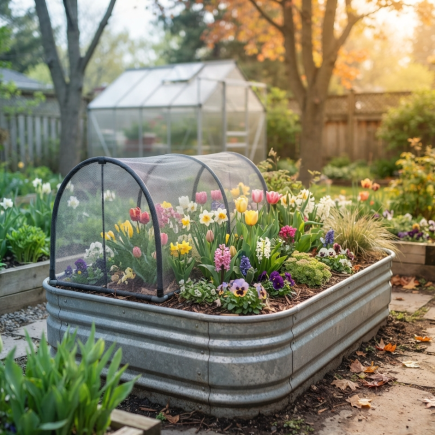
Early spring is where cold protection matters most. A dual-use bed with a fitted greenhouse cover lets you plant before the soil and air have fully caught up with the calendar.
Outsunny Raised Garden Bed with Mini Greenhouse (SKU: 84H-240V00GN)
- PE cover traps warmth and blocks UV and mild rain, letting flowers go in earlier than an open bed would allow.
- Roll-up window for ventilation on the mild days that pop up between cold snaps.
- Galvanized, open-bottom planter handles drainage once the cover comes off later in the season.
- 4 support rods divide the bed into 3 sections.
- Overall dimensions 106.3″ x 35.4″ x 36.6″.
Outsunny Steel Raised Garden Bed with Greenhouse Cover (SKU: 845-520GY)
- A smaller version of the same idea, good for a patio, balcony, or a bed tucked against a wall.
- 140 g/m² cover with a zippered roll-up door for access and venting.
- Rated to block wind up to Beaufort Force 4.
- Galvanized steel planter base, rust-resistant for outdoor use.
- Overall dimensions 50″ x 37.4″ x 36.2″.
Flowers Worth Planting in These Windows
Early autumn:
- Tulip and daffodil bulbs. Need roughly 8 to 10 weeks of cold soil before spring.
- Pansies. Frost-tolerant and will keep blooming into light autumn frosts..
- Ornamental kale. Grown for foliage color, holds up well into cold weather.
Early spring:
- Primrose. One of the earliest bloomers, tolerant of temperature swings.
- Ranunculus. Benefits from being started under cover before the last frost fully passes.
- Sweet peas. Prefer cooler soil, often struggle if planting is delayed until fully warm.
Quick Care Tips for the Transition
- Mulch after planting autumn bulbs to regulate soil temperature swings.
- Water less often but more deeply in early spring. Cold soil holds moisture longer than warm soil.
- Check covers after windy nights so they’re still doing their job.
- Don’t remove cold protection after just one warm day. Wait for a consistent stretch of milder nights.
Building the Rest of Your Setup
Early spring and late autumn demand more from a garden bed than summer ever will. Success during these tricky transition months boils down to three simple factors: soil elevation for quick warming and deep drainage, paired with fitted covers to shield delicate flowers from sudden frost and pests.And if you want to see how these two seasons fit into the rest of the year, our one-year garden plan lays it out quarter by quarter. Matching the right bed to the season lets you plant weeks earlier in spring and keep blooms thriving well into autumn.
FAQs
Yes. Bulbs planted in early autumn can stay dormant through winter and bloom before many early spring flowers get going. This lets you combine both in one bed while enjoying colour across different parts of the season. It also extends the display well.
A cover is not essential, but it can help you start planting several weeks earlier. It also protects young flowers from unexpected late frosts, cold nights and sudden temperature changes that can occur in early spring. This can protect tender growth.
Late summer usually brings warm soil, longer days and more reliable growth. In early autumn, nights become cooler, daylight shortens and the risk of the first frost increases, so flower beds need more protection. This makes seasonal care more important.
No. Flowers can grow well at ground level, but a raised bed often warms faster in spring and provides better drainage during heavy autumn rain. It can also make planting, maintenance and seasonal protection easier. It is a practical option for many seasonal flowers.