

































Have you ever spent too much time searching for a tool or screw in your workshop? A disorganized space can cost you time and energy with every project. But organizing your tools and screws doesn’t require a big budget or a full weekend. It’s all about having a logical system and the right approach. Here’s how you can get your workspace in order efficiently.
Step 1: Clear Everything Out First
Before you start organizing, it’s important to clear out the clutter. Trying to reorganize around a mess only leads to frustration. Start fresh.
- Empty all drawers, shelves, and storage bins.
- Clean shelves, benches, and surfaces to prevent dust and grime buildup.
- Remove anything that’s broken, rusted, or no longer useful.
Tip: Don’t focus on organizing at this stage. Just get everything out and take a good look at what you have. You can always declutter later.
Step 2: Sort Everything Into Categories
Once the space is cleared, it’s time to sort everything. Grouping your items logically will save you time in the long run, making it easier to find what you need when you need it.
Sort Your Hand Tools by Type
- Group tools like screwdrivers, pliers, and hammers together.
- Organize measuring tools such as tape measures, levels, and squares in one place.
- Separate cutting tools like utility knives and saws from other tools.
Sort Your Screws and Small Hardware
- Separate wood screws, machine screws, and drywall screws into different containers.
- Organize screws by size short, medium, and long.
- Create sections for nuts, bolts, and washers.
Tip: For screws, tape a sample fastener to the front of each bin to help you identify them quickly, no need for labels later!
Step 3: Plan Your Storage Before You Buy
Before you start spending on bins and racks, think about how your workshop operates. Your storage should be functional, not just tidy.
- Frequency of use matters: Tools you use daily should be easy to access , think eye level or arm’s reach. Tools used occasionally can be stored lower down.
- Utilize your wall space: Wall-mounted storage keeps your workspace clear and maximizes storage.
- Match storage to the item: Use bins with separate compartments for screws and small hardware, and hooks or shelves for hand tools.
Step 4: Choose the Right Storage for Each Item
Not all tools and hardware should be stored the same way. Choose storage that fits your items and your workflow.
For Small Hardware Like Screws, Nuts, and Bolts
- Wall-mounted bin racks with open fronts let you easily see what’s inside.
- Use different-sized bins small for screws, larger ones for bolts and fittings.
For Hand Tools
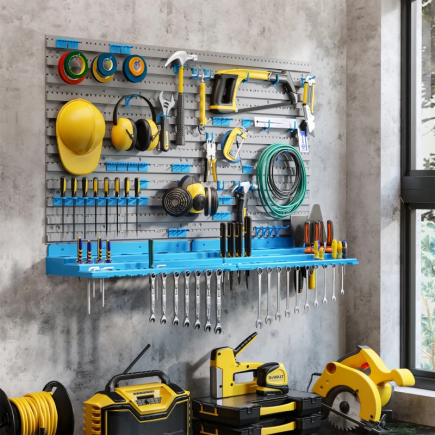
- Pegboards are perfect for hanging tools with handles. Use hooks that match the tool’s shape, like a forked hook for pliers and a simple hook for hammers.
- Group tools based on the tasks you use them for, making it easier to grab everything you need in one go.
For Power Tools
- Wall mounts or heavy-duty hooks are ideal for drills, sanders, and other power tools.
- Store power tools with their charging stations nearby so batteries are always ready.
Step 5: Mount Your Storage
Now it’s time to mount your storage on the wall. Make sure everything is within easy reach.
- Mount pegboards or bin racks at eye level above your workbench.
- Check the wall type before drilling. Use the correct fixings for drywall, concrete, or wood studs.
- If you’re installing multiple units, align them at the same height for a clean, organized look.
Tip: Before drilling, hold the unit against the wall and mark the corners with a pencil to ensure the best positioning.
Step 6: Fill Your Storage Thoughtfully
With everything organized into categories, it’s time to fill your storage bins and shelves.
- Store the most-used items in the most accessible spots.
- Use one bin per category of hardware (e.g., one for Phillips screws, one for 3x40mm screws).
- Use the correct bin size: small bins for tiny screws, larger bins for bolts and fittings.
Tip: Always place the most used items at eye level. This minimizes the time you spend looking for them.
Step 7: Label Everything
Labels are essential to keeping your system working long-term. It’s easy to let things slide, but with clear labeling, you’ll always know where things belong.
- Label every screw and hardware bin. Be as specific as possible e.g., “Wood Screws 3.5 x 50mm” rather than just “Screws.”
- Label the pegboard space behind each tool, so you know exactly where each tool goes when it’s put back.
Tip: Use a label maker or simple masking tape for handwritten labels. What matters most is consistency, not appearance.
Maintain the System
The hardest part of organizing is keeping it that way. But with a few simple habits, your system will stay intact.
- Return tools and screws to their designated spot after every use.
- Do a quick tidy-up after each project instead of letting clutter build up.
- Check your storage once a year to restock and reorganize as needed.
Tip: A well-maintained system saves you time in the long run. A simple reset at the end of each work session can keep your workshop organized year-round.
Organizing your tools and screws is a one-time task that saves time on every project you take on afterward. By following these steps, you’ll have a well-organized, efficient workshop. The key is creating a system that works for your specific needs and sticking to it. If you’re looking for the best solutions, check out our selection of tool organizers to help you get started.
FAQs
Use wall-mounted bin racks with open fronts for easy visibility. Separate hardware into different bins based on size and type, and label them clearly to save time when searching for the right screw or nut.
Power tools should be stored on wall mounts or heavy-duty hooks, with their charging stations nearby. This ensures easy access and keeps your workspace tidy while preventing clutter.
Make it a habit to return tools and screws to their designated spots after each use. Do a quick tidy-up after each project and reassess your storage yearly to keep the system running smoothly.