





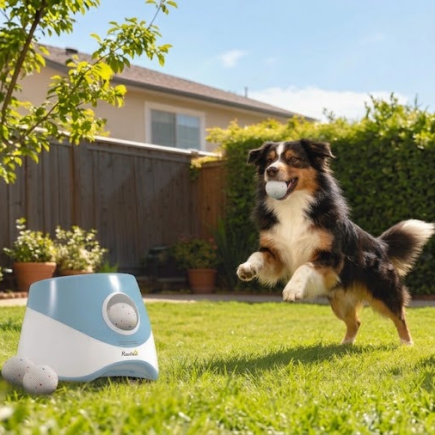

An automatic ball launcher can be a game-changer for an energetic dog, giving them endless fetch while you take a break. But most dogs do not understand the machine straight away, and some are wary of the noise at first. With a little patience and a step-by-step approach, almost any dog can learn to fetch and even reload the launcher on their own.
This guide walks you through how to train your dog to use a ball launcher, from the basic commands they need first to fully hands-free play. Take it at your dog’s pace, keep every session positive, and you will soon have a happy, tired pup and a lot less throwing to do yourself.
What Do You Need Before You Start?
A little preparation makes training far smoother. Before you introduce the launcher, make sure the basics are in place so your dog can focus on the new machine rather than the fundamentals.
- Teach the “fetch” and “drop it” commands first, since the whole game relies on them.
- Have plenty of small, tasty training treats on hand for rewards.
- Pick balls that fit your launcher and suit your dog’s size.
- Choose a quiet, distraction-free space for the first few sessions.
Tip: If your dog does not yet reliably drop a ball on command, spend a few short sessions on “drop it” first. It is the single most important skill for launcher training.
Step 1: Let Your Dog Explore the Launcher Turned Off
Dogs can be cautious of a strange new object, so the first step is simply to make the launcher feel familiar and safe. Keep it powered off and let your dog investigate it at their own pace.
- Place the switched-off launcher on the floor and let your dog sniff and explore it.
- Praise and treat them whenever they approach or show interest.
- Practice familiar commands like sit and lie down nearby to build comfort.
- Never force your dog toward the machine, and let curiosity lead.
Tip: Keep these first sessions short and relaxed. The goal is just to teach your dog that the launcher is nothing to worry about.
Step 2: Get Your Dog Used to the Sound
The launching noise is the part that startles many dogs, so introduce it gradually before any real play begins. Building a calm association with the sound now prevents fear later.
- With your dog relaxed, set the launcher some distance away and power it on.
- Reward calm behaviour around the sound with treats and praise.
- If your dog seems nervous, increase the distance and go slower.
- Take a break and try again later if they show any stress.
Tip: Watch your dog’s body language closely. If they look worried, you have moved too fast, so give them space and build back up gradually.
Step 3: Play Fetch With the Launcher Switched Off
Before the machine does the throwing, connect it to the fetch game your dog already loves. This step links the launcher to fun without the surprise of a launch.
- Stand next to the switched-off launcher and toss the ball for your dog by hand.
- Let them fetch it and bring it back as they normally would.
- Repeat until your dog is happily playing right beside the machine.
- Keep the energy up and the rewards coming so the spot feels positive.
Tip: Playing fetch beside the machine teaches your dog that good things happen near the launcher, which makes every later step easier.
Step 4: Teach Your Dog to Drop the Ball Into the Bucket
Reloading is the skill that turns the launcher into hands-free play, so introduce the bucket while the machine is still off. Use a treat to guide the ball into the right spot.
- With the launcher off, hold a treat over the loading bucket and say “drop it”.
- When your dog drops the ball into the bucket, reward them right away.
- Pull the ball back out and throw it by hand to keep the game going.
- Repeat so your dog links dropping the ball in the bucket with a reward.
Tip: Use a clear, consistent word like “drop it” or “bucket” every time, so your dog builds a strong association with loading the machine.
Step 5: Turn the Machine On and Start With One Ball
Now you can bring it all together with a live launch, keeping things simple and controlled. Start with a single ball so your dog is not overwhelmed.
- Load one ball, position your dog to the side of the launcher, and power it on.
- Give your “fetch” command as the ball launches.
- Let your dog chase and retrieve the ball, then praise them warmly.
- Guide them back to the machine to drop the ball and reload.
Tip: Keep sessions to around 10 minutes a few times a day. Short, frequent practice works far better than one long session.
Step 6: Always Position Your Dog Safely to the Side
Safety is the one rule you should never bend with a ball launcher. A dog standing in front of the machine can be hit by a fast-moving ball, so positioning matters at every stage.
- Have your dog sit or stand to the side of the launcher, never directly in front.
- Keep their face and eyes out of the launch path at all times.
- Only move them closer to the machine once they are calm and confident.
- Supervise every session and never leave your dog alone with the launcher.
Tip: Balls can launch at speed, so the side position protects your dog’s face and eyes. Make it a habit from the very first session.
Step 7: Build Up to Independent, Hands-Free Play
Once your dog fetches and reloads reliably, you can start stepping back and letting them run the game. This is the payoff, where the launcher becomes truly hands-free.
- Encourage your dog to drop the ball into the bucket themselves after each fetch.
- Gradually reduce your help until they load and trigger the cycle on their own.
- Phase out treats slowly, letting the next launch become the reward.
- Add commands like “wait” or “stay” to sharpen the game and add control.
Tip: Not every dog learns to fully reload on their own, and that is completely fine. Even fetching from the machine while you load is great exercise and enrichment.
How Long Does It Take to Train a Dog?
Every dog learns at a different pace, so try not to rush or compare. Some pick it up in a few days, while nervous or younger dogs may need a couple of weeks of short, steady sessions.
- Expect faster progress from dogs that already love fetch and know “drop it”.
- Allow more time for dogs that are wary of the launching sound.
- Keep sessions short, positive and consistent for the best results.
- End on a win, stopping while your dog is still enjoying the game.
Tip: If progress stalls, go back a step rather than pushing forward. A confident dog learns far faster than a stressed one.
Tips to Keep Ball Launcher Play Safe and Fun
A few good habits keep the game healthy and enjoyable for the long run. These simple points protect your dog and keep them keen to play.
- Always supervise play and store the launcher out of reach when not in use.
- Use only balls made for your launcher to avoid jams and hazards.
- Give your dog water breaks and watch for signs of tiredness or overheating.
- Keep sessions fun and stop before your dog loses interest.
Tip: Rotate a couple of different balls to keep the game fresh, and always end on a positive note so your dog stays excited for next time.
Making Fetch Easier
Training a dog to use a Dog Ball Launcher is really about patience and small, positive steps. Start with the basic commands, let your dog get comfortable with the machine and its sound, then build up from hand-thrown fetch to loading the bucket and finally hands-free play. Keep every session short, safe and rewarding, and always position your dog to the side of the launcher.
Take it at your dog’s pace and celebrate the small wins along the way. Before long, you will have a happily tired dog and a fetch game that mostly runs itself. Explore dog toys and supplies to keep your dog active, engaged and happy.
FAQs
No. Treats are useful when teaching the loading behavior, but you can gradually reduce them once your dog understands it. Praise, play, and the next ball launch can become natural rewards as your dog becomes more confident.
Go back to practicing “drop it” away from the launcher before continuing. Reward your dog for returning the ball to you, then slowly introduce the bucket again. Keep the exercise fun rather than chasing your dog for the ball.
Yes. Teaching “wait” or “stay” can help your dog remain in a safe position. Practice the command separately first, then use it near the launcher and reward your dog for staying calmly to the side.
Short sessions are usually best. Practice for around 5–10 minutes at a time, once or several times a day depending on your dog’s energy and attention. Stop while your dog is still interested and enjoying the game.
Take a break and return to simple fetch games your dog already enjoys. You can also try shorter sessions, different rewards, or a familiar ball. Avoid forcing interaction, as keeping the experience positive helps maintain enthusiasm.