



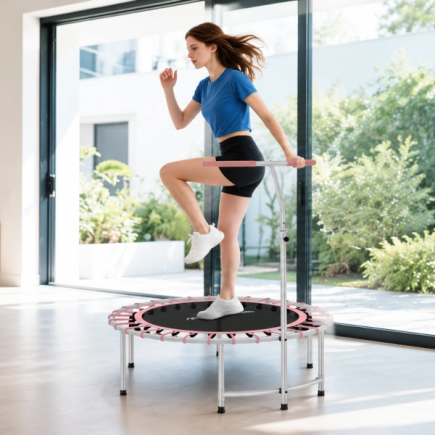









A mini trampoline (rebounder) is a small, low-to-the-ground trampoline designed for exercise at home. It takes up little space, costs far less than most gym equipment, and turns a workout into something that actually feels fun. But it’s more than a toy. Regular bouncing can support your heart, muscles, balance, and mood, all while being gentler on your joints than many other forms of cardio.
In this article, we’ll cover the main benefits, who a mini trampoline is best suited for, how to get started safely, and a simple beginner routine to try.
What Are the Benefits of a Rebounder Trampoline?
A mini trampoline offers a low-impact cardio workout that improves heart health, strengthens leg and core muscles, sharpens balance, and lifts your mood, all in a small space at home. Here’s a closer look at each benefit.
1. Low-Impact Cardio That’s Easy on Your Joints
Running on pavement or jumping on a hard floor sends a lot of force through your ankles, knees, and hips. The flexible mat of a mini trampoline absorbs much of that shock, so you can raise your heart rate with less stress on your joints.
- Gentler landings than running or jumping on hard ground.
- A good choice for beginners and people returning to exercise.
- Suitable for older adults and anyone who finds running uncomfortable.
- Lets you work out longer with less joint soreness.
2. Better Heart Health and Endurance
Like any aerobic exercise, bouncing gets your heart pumping and your breathing deeper. Done regularly, it trains your heart and lungs to work more efficiently, so everyday activities start to feel easier.
- Raises your heart rate for a solid cardio workout.
- Helps build stamina over time.
- Easy to adjust, from a gentle bounce to a high-energy session.
- Even 10 to 20 minutes a day adds up over a week.
3. Stronger Legs and Core
Every bounce works the muscles in your lower body. Because the surface moves beneath you, your core also has to work constantly to keep you upright and stable.
- Tones your calves, thighs, and glutes.
- Engages your abs and lower back with every bounce.
- Moves like twists and knee lifts target even more muscles.
- Adding light hand weights can bring in your arms and shoulders.
4. Improved Balance and Coordination
Staying steady on a moving surface challenges your body in ways flat-ground exercise doesn’t. Over time, this helps you feel more stable and in control of your movements.
- Strengthens the small stabilizing muscles in your feet and ankles.
- Improves body awareness and coordination.
- Supports steadier movement in daily life.
- May help lower the risk of falls as you age.
5. Supports Bone Health
Weight-bearing exercise, where your body works against gravity, helps keep bones strong. Gentle bouncing is a form of weight-bearing activity that’s easier on the joints than many high-impact options.
- Puts light, repeated load on your bones.
- Can be part of a routine for maintaining bone strength.
- A gentler option than running for many people.
6. Burns Calories
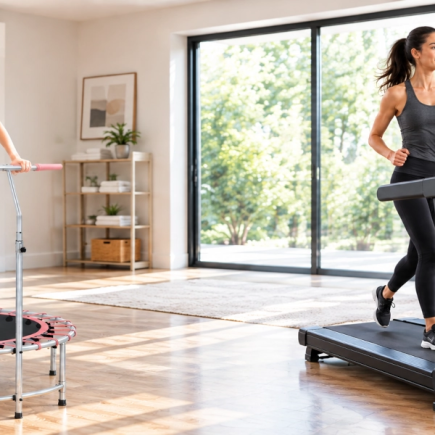
A mini trampoline workout can burn a good number of calories, depending on how hard you work and your body weight. Because it’s fun, many people find they keep going longer than they would on a treadmill.
- Faster, high-energy routines burn more calories.
- Gentle bouncing still keeps you active instead of sitting.
- Can support weight management alongside a balanced diet.
- Easy to mix with intervals for a tougher workout.
7. Boosts Mood and Reduces Stress
Exercise releases endorphins, the brain chemicals linked to feeling good. The light, playful feeling of bouncing adds to that effect for many people.
- Helps release tension after a long day.
- Can lift your mood and energy levels.
- Feels more like play than a chore.
- Makes it easier to stay consistent with exercise.
8. Supports Circulation and Lymph Flow
Movement and muscle contraction help your blood circulate and support the lymphatic system, which depends on body movement to move fluid around. Rebounders are often promoted for this reason.
- Keeps blood flowing, especially after long periods of sitting.
- Supports the lymphatic system through regular movement.
- Any regular exercise helps, but bouncing is an easy, rhythmic way to get it.
9. Suitable for All Fitness Levels
A Mini Trampoline works for almost anyone because you control the intensity. You can keep your feet close to the mat for a gentle session or bounce higher and faster for a challenge.
- Beginners can start with small, gentle bounces.
- Fitter users can add jumps, sprints, and intervals.
- Models with a handlebar give extra support.
- Easy to progress as your fitness improves.
10. Convenient and Space-Saving
A mini trampoline fits in the corner of a bedroom or living room, and many models fold away for storage. That makes it one of the easiest ways to exercise at home.
- Takes up very little floor space.
- Many models fold for easy storage.
- Use it any time, in any weather.
- No gym membership or travel needed.
- Perfect for short movement breaks during a busy day.
Who Should Use a Mini Trampoline (Rebounder)?
Fitness beginners, busy parents, people working from home who need short movement breaks, and older adults looking for gentle exercise can all use a mini trampoline. A model with a stabilizing handlebar is a smart choice if you’re concerned about balance.
If you’re pregnant or have joint problems, a heart condition, osteoporosis, pelvic floor issues, or balance difficulties, check with your doctor before starting.
How to Get Started Safely
- Choose a good-quality model with a sturdy frame, a suitable weight limit, and a bungee or spring system that feels smooth.
- Place it on a flat surface with enough ceiling height and clear space all around.
- Start small with 5 to 10 minutes of gentle bouncing, keeping your feet close to the mat.
- Wear supportive shoes or bounce barefoot with good grip, following the manufacturer’s advice.
- Build up gradually by adding time and new moves as your confidence grows.
Simple Beginner Routine
This short routine takes about 7 minutes and is perfect if you’re new to mini trampoline workouts. Move at your own pace and stop if you feel dizzy or out of breath.
- Gentle bounce (2 minutes): Stand in the center of the mat with your feet hip width apart. Bounce lightly, keeping your feet close to the mat. This warms up your body.
- Jog in place (1 minute): Lift your feet one at a time, as if you’re jogging slowly. Keep your arms relaxed and moving naturally.
- Jumping jacks (1 minute): Jump your feet out and back in while raising and lowering your arms. Keep the movement small and controlled.
- Twist bounce (1 minute): Keep your feet together and gently twist your hips from side to side as you bounce. Your upper body stays facing forward.
- Cool down bounce (2 minutes): Return to a slow, gentle bounce to bring your heart rate back down.
Once this feels easy, repeat the routine once or twice for a longer workout.
Is a Mini Trampoline Worth It?
For most people, yes. A mini trampoline (rebounder) offers much more than fun. It gives you low impact cardio, stronger muscles, better balance, healthier bones, and a mood boost, all from a compact piece of equipment you can use at home. Start slowly, stay consistent, and it may become your favorite way to move. Why not try the beginner routine above this week and see how you feel?
FAQs
Mostly, yes. Both are small exercise trampolines that sit low to the ground. “Rebounder” is common in fitness circles and often means a sturdier, higher quality model, while “mini trampoline” is the broader, everyday term.
Bungee models give a softer, quieter, and smoother bounce that many people find easier on the joints. Spring models feel firmer and cost less but can be noisier. For comfort, a bungee model is usually the better choice.
Many people notice better energy and mood within the first week or two. Gains in stamina, balance, and muscle tone usually take about 4 to 8 weeks of regular use, depending on how often and how hard you work out.
Yes, daily use is fine for most people, especially with light to moderate sessions. If you do harder workouts, alternate them with gentler days so your muscles can recover, and take a rest day if you feel sore or tired.
Most are fairly quiet, especially bungee models, which make much less noise than spring ones. To reduce sound and vibration for neighbors below, place a thick exercise mat or rug under the trampoline and keep your bounces low and controlled.