



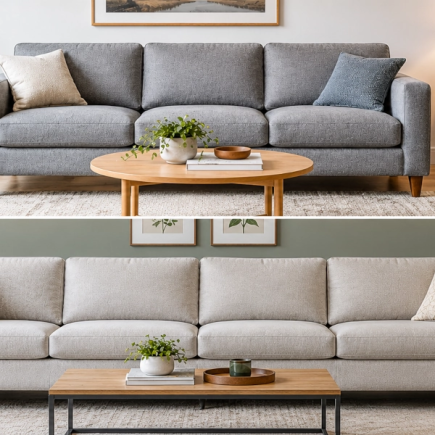


















A 3 seater sofa is better for small to medium rooms and households of up to three people, while a 4 seater sofa is better for larger rooms and families of four or more. A 3 seater is typically 63 to 90 in (160 to 228 cm) wide and fits along one wall. A 4 seater is usually an L-shaped or U-shaped sofa 100 to 120 in (254 to 305 cm) long and works best in rooms of 12 x 15 ft (3.7 x 4.6 m) or larger.
Here are the most important points to know before you compare sofa sizes in detail.
- Room size decides first: A 4 seater needs floor space on two sides, while a 3 seater needs only one wall.
- Shape matters as much as seats: Most 3 seaters are straight sofas, and most 4 seaters are L-shaped couches with a chaise or ottoman.
- Lounging is the big upgrade: A 4 seater chaise lets you stretch out fully, which a standard 3 seater cannot.
- Cost per seat is similar: A 4 seater costs more upfront but can replace a 3 seater plus an extra chair.
- Flexibility favours the 3 seater: It is easier to move, deliver, and rearrange.
3 Seater vs 4 Seater Sofa at a Glance
This quick comparison shows how the two sofa sizes differ across the factors that matter most.
| Factor | 3 Seater Sofa | 4 Seater Sofa |
| Seats | 3 adults | 4 adults |
| Typical shape | Straight or compact L-shape | L-shaped or corner sectional |
| Width | 63 to 90 in (160 to 228 cm) | 100 to 120 in (254 to 305 cm) |
| Depth | 30 to 38 in (76 to 97 cm) | Up to 60 to 66 in (152 to 168 cm) at the chaise |
| Floor space used | One wall | One wall plus floor in front of another |
| Minimum room size | About 10 x 12 ft (3 x 3.7 m) | About 12 x 15 ft (3.7 x 4.6 m) |
| Full lounging | Limited | Yes, on the chaise |
| Layout flexibility | High, easy to rearrange | Moderate, reversible chaise helps |
| Price | Lower upfront | Higher upfront, similar cost per seat |
| Delivery | Usually one piece | Often ships in sections |
Which Sofa Size Fits Your Room?
Room size is the most reliable way to decide, and the simplest rule is that your sofa should cover about two thirds of the wall it sits against.
| Room size | Best fit |
| Under 10 x 12 ft (3 x 3.7 m) | Compact 3 seater or futon style sofa |
| 10 x 12 to 12 x 14 ft (3 x 3.7 to 3.7 x 4.3 m) | Standard 3 seater or 3 seat L-shaped sofa |
| 12 x 15 ft (3.7 x 4.6 m) and larger | 4 seater L-shaped couch |
| Open plan space | 4 seater L-shaped or U-shaped sofa |
- Walkways: Keep 30 to 36 in (76 to 91 cm) of clear path around the sofa.
- Coffee table gap: Leave 16 to 18 in (40 to 46 cm) between the sofa and the table.
- Chaise clearance: For L-shaped sofas, measure both walls and keep the area in front of the chaise free.
- Entry check: Measure doors, hallways, stairs and elevators before ordering.
What Is a 3 Seater Sofa?
A 3 Seater Sofa is a sofa built to seat three adults side by side along one wall. It is the most widely bought sofa size because it balances seating with space, with compact versions suiting bedrooms and studios and larger versions anchoring a standard living room.
Types of 3 Seater Sofas
3 seater sofas come in several styles, each suited to a different room and way of relaxing.
- Modern fabric sofa: Polyester or linen feel upholstery with cushion backs and clean lines for everyday use.
- Corduroy sofa: Soft, textured fabric with curved or rolled armrests and extra pillows for a cozy look.
- Button tufted sofa: Tufted back cushions and wooden legs that give a mid-century feel.
- Futon style sofa: A slim settee with padded cushions, ideal for small bedrooms and studios.
- Sofa with cup holders: Deep spring cushions and built-in cup holders on the arms for TV time.
- 3 seat L-shaped small space sofa: A compact sectional with a changeable chaise, giving lounging space in a smaller footprint.
- Corduroy corner sofa with pocket spring cushions: A reversible L-shaped corner design with textured fabric and firm, even spring support.
Benefits and Limitations of a 3 Seater Sofa
A 3 seater sofa offers practical advantages, but it also has a few limits worth knowing before you buy.
- Space efficient: It fits along one wall and leaves room for walkways and side tables.
- Affordable: A smaller frame and less fabric keep the price lower.
- Easy delivery: It passes through standard doors, stairwells and elevators without trouble.
- Flexible layout: You can move it between rooms or pair it with other seating anytime.
- Simple upkeep: Less upholstery means faster cleaning.
Limitations: It gets crowded with four or more people, taller adults usually cannot lie down fully, and it can look small in a large open room without extra seating.
What Is a 4 Seater Sofa?
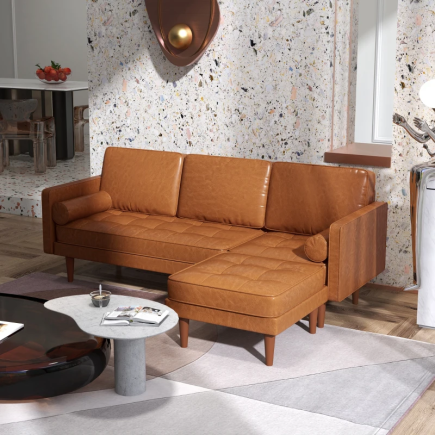
A 4 Seater Sofa is a larger sofa that seats four adults at once. Most 4 seaters are L-shaped couches, where a chaise, ottoman or corner section adds the fourth seat and creates room to stretch out.
Types of 4 Seater Sofas
Most 4 seater sofas are L-shaped or U-shaped designs, but they vary in chaise style, fabric and cushion support.
- L-shaped sofa: A sofa with a chaise on one side, ideal for corners and open plan rooms. Many models have a reversible chaise that switches to the left or right.
- L-shaped sofa with ottoman: An L-shaped design with a movable ottoman that works as a footrest, extra seat, or part of the chaise.
- U-shaped sofa: A sofa with a chaise on both ends, creating a cozy, conversation-friendly seating area for larger rooms.
- Chenille sectional sofa: A sectional upholstered in plush chenille fabric, made for lounging and relaxed family time.
Benefits and Limitations of a 4 Seater Sofa
A 4 seater sofa is built for shared living, though its size brings some trade-offs.
- More seating in one piece: It replaces a sofa plus extra chairs and keeps the room less cluttered.
- Built-in lounging: The chaise lets one person stretch out while others stay seated.
- Smart use of corners: L-shaped designs make use of space that often goes empty.
- Defines open spaces: Its shape naturally separates the living area in open plan homes.
- Easier entry for large sizes: Many models ship in sections that fit through tight doorways.
Limitations: It needs space on two sides, costs more upfront, is harder to rearrange once set up, and can block walkways in a small room.
Which Sofa Material Is Best?
The best sofa material depends on your household, comfort preference and cleaning habits.
| Material | Feel | Best For |
| Polyester fabric | Smooth and durable | Everyday family use on a budget |
| Linen feel fabric | Light and breathable | Modern, relaxed living rooms |
| Corduroy | Soft and textured | Homes with kids and pets |
| Chenille | Plush and cozy | Lounging and 4 seater L-shaped sofas |
| PU or faux leather | Sleek and wipeable | Spill-prone homes and easy cleaning |
| Velvet | Rich and soft | Formal or decorative spaces |
- Frame: Eucalyptus wood, rubberwood and steel frames give sturdy, long-lasting support.
- Cushions: Pocket spring cushions keep their shape longer than foam alone, which matters most on a 4 seater that gets heavy daily use.
Tip: Colour names such as “charcoal grey” describe the finish, not the material, so always check the specifications.
Who Should Buy Each Sofa?
Once you know what fits your room, your household and habits decide the rest.
Who Should Buy a 3 Seater Sofa?
A 3 seater sofa is the best fit for smaller households and spaces that need flexible seating.
- Singles and couples: There is enough room to sit comfortably, with space left for a guest or pet.
- Apartment and condo owners: It suits compact living rooms where every inch of walkway counts.
- Renters and frequent movers: It adapts easily to a new home and a new layout.
- Home office and bedroom setups: A compact or futon style model adds seating without crowding the room.
- Small space loungers: A 3 seat L-shaped small space sofa gives you a chaise without a full sectional.
- Budget-conscious shoppers: You can start with a 3 seater and add an accent chair later.
Who Should Buy a 4 Seater Sofa?
A 4 seater sofa is the best fit for larger households and rooms built for shared time.
- Families of four or more: Everyone can sit together without pulling in extra chairs.
- Frequent hosts: An L-shape sofa with ottoman offers movable seating when guests arrive.
- Owners of large or open plan rooms: Its shape fills the space and defines the living area.
- Movie and lounge lovers: The chaise supports long, relaxed evenings with your legs stretched out.
- Homes with an empty corner: An L-shaped sofa turns unused space into a cozy seating zone.
Common Sizing Mistakes to Avoid
Many sofa regrets come from a few simple errors that are easy to prevent.
- Buying for rare guests: A large 4 seater used fully only twice a year wastes space every other day.
- Ignoring the chaise side: A fixed chaise on the wrong side can block a door or window.
- Filling the whole wall: A sofa that stretches wall to wall makes a room feel smaller.
- Forgetting seat depth: Deep seats suit lounging, while shallower seats suit shorter users and upright sitting.
Find the Sofa That Fits Your Space
A 3 seater suits smaller rooms and households of up to three, while a 4 seater suits larger rooms, bigger families and anyone who loves a chaise. Measure first, and the right size becomes clear.
Your perfect sofa is just a click away. Explore Aosom Canada’s range and start relaxing in style today.
FAQs
Yes, most do. Large L-shaped and U-shaped sofas usually ship in several boxes and need simple assembly at home. Many include all the tools, and two people can typically put one together, so plan for a helper on delivery day.
A 4 seater creates one unified seating area and works well in corners and open plan rooms. Two 2 seaters offer more layout options, such as facing each other for conversation, and are easier to move one at a time.
Mid-tone colours such as grey, charcoal and beige hide everyday stains, pet hair and wear better than pure white or very dark shades. Textured fabrics like corduroy also help disguise small marks between cleanings.
Keep your sofa at least 12 in (30 cm) away from baseboard heaters, radiators and vents. This protects the fabric from drying out or fading and lets warm air circulate freely, which matters during long Canadian winters.
Rotate and flip removable cushions every week or two, fluff back cushions often, and avoid sitting in the same spot every day. Try not to sit on the armrests or edges, which strains the frame and padding over time.