



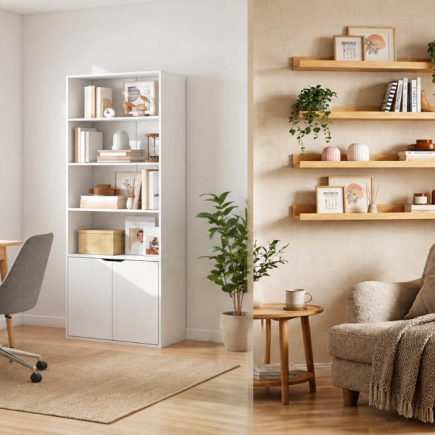











Choosing between a bookcase and floating shelves depends on what you need to store, how much space you have, and the look you want to achieve. A bookcase provides several storage levels in one freestanding unit, while floating shelves attach to the wall to create display space without occupying the floor.
For Canadian homes, the decision may also depend on wall construction, rental restrictions, room dimensions, and installation requirements. Understanding these differences will help you select shelving that suits your belongings, budget, and everyday routine.
Bookcase vs Floating Shelves: Key Differences
Bookcases and floating shelves serve similar purposes but differ in their construction, storage capacity, and installation requirements.
| Feature | Bookcase | Floating Shelves |
| Design | Freestanding unit with multiple shelves | Individual wall-mounted shelves with concealed supports |
| Space requirements | Occupies floor space | Uses available wall space |
| Storage capacity | Often accommodates larger collections and varied belongings | Best for selected items within the shelf’s weight and size limits |
| Installation | Usually requires assembly; anchoring may be necessary | Requires suitable mounting hardware and secure wall attachment |
| Flexibility | Can often be moved when empty | Relocating shelves may require drilling and wall repairs |
| Appearance | Available in traditional, modern, and decorative designs | Creates a streamlined, open appearance |
| Enclosed storage | Some models include drawers or cabinet doors | Generally provides open storage |
| Overall cost | Depends on unit size, materials, and construction | Depends on shelf quantity, materials, hardware, and installation |
Which is better?
A bookcase is generally the more practical choice for storing books, documents, games, and other belongings together. Floating shelves are better suited to displaying selected items or adding storage in rooms where preserving floor space is important.
What Is a Bookcase?
A bookcase is a freestanding furniture unit designed to organise books and other household belongings. Depending on its design, it may feature fixed or adjustable shelves, open compartments, drawers, or cabinet doors.
Bookcases are useful in living rooms, bedrooms, home offices, and study areas where several categories of items need a dedicated storage space.
Advantages of a Bookcase
- Organised storage: Keep books, files, board games, baskets, and accessories together.
- Multiple storage levels: Arrange belongings by category, size, or frequency of use.
- Versatile designs: Choose from compact, tall, corner, or enclosed storage models.
- Easy furniture rearrangement: Many units can be relocated when empty and handled safely.
- Additional organisation options: Models with drawers or doors provide space for belongings you prefer to keep out of sight.
Limitations of a Bookcase
A bookcase takes up floor space, so a large unit may not suit a narrow room or an apartment with limited clearance. Assembly can also require time and assistance, particularly for larger models.
Open shelves need regular dusting, and shelf dimensions may limit the size of items you can store. Check the manufacturer’s load limits and anchor tall or narrow units according to the supplied instructions to reduce tipping risks.
When a Bookcase Makes More Sense
Choose a bookcase if you have an extensive book collection, need to organise office documents, or want a dedicated place for household belongings.
For example, a home office with textbooks, binders, reference materials, and storage baskets can benefit from a multi-tier bookcase placed beside a desk.
If you need a freestanding storage solution, explore Aosom Canada’s bookcases and bookshelves. The collection offers HOMCOM storage and display options in different sizes and layouts.
What Are Floating Shelves?
Floating shelves are wall-mounted shelves designed to provide storage or display space without visible brackets beneath the shelf. Their concealed mounting systems create a clean appearance that works well in modern and minimalist interiors.
They can be installed individually or arranged in groups to complement existing furniture, highlight decorative objects, and make use of otherwise unused wall space.
Advantages of Floating Shelves
- Wall-based storage: Make use of vertical space without adding another piece of floor-standing furniture.
- Flexible arrangements: Position multiple shelves at different heights to suit the wall and the items being displayed.
- Visual simplicity: Their open design can help a room feel less crowded.
- Decorative potential: Display framed photographs, ornaments, small plants, and appropriately sized books.
- Convenient placement: Shelves above a desk or beside suitable furniture can keep selected belongings accessible.
Limitations of Floating Shelves
Floating shelves have weight limits determined by their construction, mounting system, and wall type. They may not be suitable for large book collections or heavy equipment, particularly when the mounting points cannot support the intended load.
Unlike freestanding furniture, they require careful installation and may leave holes when removed. Their open design also exposes stored items to dust, while shelves positioned too high can be difficult to reach.
When Floating Shelves Are the Better Fit
Floating shelves are worth considering when you want to display selected belongings without introducing additional floor-standing furniture.
For example, in a compact apartment, a securely mounted shelf above a desk could hold photographs, small accessories, or a few books while leaving the area below available for a chair.
Before purchasing, check the shelf dimensions, rated load capacity, mounting instructions, and compatibility with your wall.
Bookcase vs Floating Shelves: Which Works Best in Each Room?
The best shelving option depends on the room’s function and the items you want to keep there.
| Room | Bookcase | Floating Shelves |
| Living room | Organises books, games, baskets, and household belongings | Displays photographs, ornaments, and decorative accessories |
| Bedroom | Stores books, personal belongings, and baskets | Provides space for selected items without adding floor-standing furniture |
| Home office | Accommodates files, textbooks, folders, and office supplies | Keeps frequently used, lightweight accessories within reach |
| Kitchen or dining area | Holds cookbooks and suitable household items | Displays selected dishes, jars, or cookbooks when the location and shelf are suitable |
| Entryway | Provides several storage levels if space allows | Offers a compact place for lightweight everyday essentials |
For kitchens and dining areas, select materials and finishes suited to moisture, heat, and cleaning requirements. Avoid placing shelving where splashes or heat could damage the material or its contents.
In bedrooms, carefully consider the placement of wall-mounted shelves above beds or seating areas. Secure installation and appropriate positioning are particularly important wherever people sit, sleep, or walk underneath.
How to Choose the Right Shelving for a Canadian Home
1. Measure Your Space
Measure the height, width, and depth available for a bookcase, allowing clearance for walkways and nearby furniture. For floating shelves, account for windows, electrical outlets, and other wall obstacles.
If you need a compact freestanding option, browse Aosom Canada’s small bookshelves.
2. Check Storage Requirements
Consider the size, weight, and quantity of your belongings. Bookcases generally suit larger collections, while floating shelves are better for selected items within their rated capacity.
3. Consider Wall Construction and Rental Rules
Canadian homes may have drywall over wood framing, masonry, or concrete walls. Use mounting hardware compatible with the wall and intended load. Consult a qualified installer if necessary.
If you rent or live in a condominium, check applicable rules and obtain any required permission before drilling. Tall bookcases may also require anchoring.
4. Compare Materials and Long-Term Use
Solid wood, engineered wood, and metal have different maintenance requirements. Choose materials suitable for the room’s conditions and follow the manufacturer’s care instructions.
Consider whether your storage needs may change. Adjustable bookcase shelves can accommodate different items, while relocating floating shelves may require additional drilling and wall repairs.
Bookcase vs Floating Shelves: Cost and Installation
Neither option is always cheaper. The total cost depends on the number of shelves, materials, construction, mounting requirements, and any professional assistance needed.
Comparing the Total Cost
Bookcase costs
When budgeting for a bookcase, consider the purchase price, delivery, assembly, and any required anchoring equipment. One unit can provide several storage levels, which may offer good value when you need to organise many belongings.
Floating shelf costs
For floating shelves, include the price of each shelf, compatible mounting hardware, and installation. Purchasing several shelves or hiring a professional may increase the total cost. Compare the complete arrangement rather than the price of a single shelf with the price of an entire bookcase.
Understanding Installation Requirements
- Bookcases: Most models require assembly according to the manufacturer’s instructions. Larger units may need two people to assemble or move safely, and anchoring may be required.
- Floating shelves: Installation involves measuring the layout, identifying suitable mounting points, and securing the shelves with compatible hardware. Difficult wall materials or heavier loads may require professional assistance.
Before buying either option, review the assembly instructions, installation requirements, and any additional equipment needed to avoid unexpected expenses.
Common Buying Mistakes to Avoid
A few checks can help you avoid choosing shelving that does not suit your space or belongings.
❌Ignoring dimensions: Check usable shelf depth, spacing, and overall clearance before purchasing.
❌Overlooking load limits: Confirm the rated capacity for your intended items.
❌Choosing unsuitable mounting hardware: Match the hardware to the wall construction and shelf specifications.
❌Neglecting stability: Follow the manufacturer’s anchoring instructions for freestanding units.
❌Selecting the wrong material: Consider the room’s moisture, heat, and cleaning requirements.
❌Forgetting rental restrictions: Obtain any required permission before making permanent wall changes.
❌Focusing only on appearance: Prioritise the storage capacity, accessibility, and installation requirements you need.
A bookcase is generally the better choice for storing larger collections of books, documents, and household belongings in one place. Floating shelves are more suitable when you want to display selected items and use wall space instead of adding floor-standing furniture.Before deciding, consider your available space, storage requirements, wall construction, and installation budget.
FAQs
Floating shelves can suit Canadian condos, but check your condo corporation’s rules and any applicable rental restrictions before drilling. Confirm the wall construction, use suitable mounting hardware, and follow the manufacturer’s load limits. Ask your landlord or property manager for permission when required.
Changes in indoor humidity can affect some wood and engineered-wood furniture. Keep bookcases away from damp walls, condensation, and direct heat. Follow the manufacturer’s care instructions, clean spills promptly, and maintain suitable indoor conditions to help reduce the risk of material damage.
Empty the bookcase, remove detachable shelves where appropriate, and secure loose components before moving it. Protect corners and use suitable lifting equipment. Measure doorways, stairwells, and elevators beforehand, particularly in Canadian condos and apartments where access may be limited.
Adhesive shelves may work for lightweight items if the product is designed for the wall finish and the intended load. Check its weight rating, surface preparation, and removal instructions. Avoid relying on adhesive mounts for heavy books or valuable belongings unless the manufacturer specifically approves the application.
Adjustable shelves provide flexibility for changing book collections, binders, and storage boxes. Fixed shelves offer a predetermined layout that may suit a consistent collection. Compare shelf spacing, construction, and weight limits to ensure the bookcase can accommodate your belongings safely.