












Choosing between a gazebo and a pergola depends on how you plan to use your outdoor space. A gazebo usually has a defined roof for more consistent overhead shelter, while a traditional pergola has an open roof that lets sunlight and air pass through.
For Canadian homeowners, the right choice also depends on rain protection, snow accumulation, wind exposure, available space, maintenance and local building requirements. Comparing these factors can help you choose a structure that suits your backyard and seasonal needs.
What Is the Difference Between a Gazebo and a Pergola?
What Is a Gazebo?
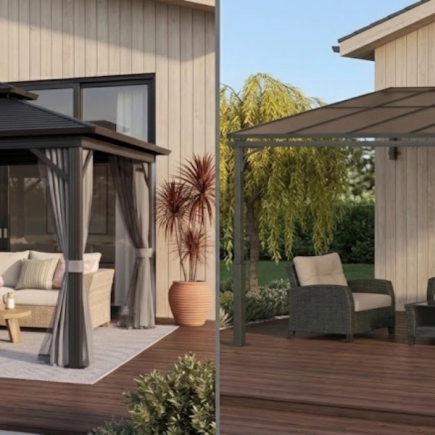
A gazebo is a freestanding outdoor structure with a defined roof supported by posts or a frame. Depending on the model, it may include curtains, mosquito netting or additional side panels.
Gazebos are commonly used for outdoor dining, entertaining and relaxing. Their roof design can provide shade and rain protection, but performance varies by material and construction.
What Is a Pergola?
A pergola is an outdoor structure with supporting posts and an overhead framework of beams or slats. Traditional designs provide partial shade while maintaining an open feel.
Some models include retractable canopies or adjustable louvres, allowing greater control over sunlight. Coverage from rain depends on the roof system and whether it is designed to be waterproof.
Gazebo vs Pergola: Key Differences
The table below summarises the main differences to consider before choosing a structure.
| Feature | Gazebo | Pergola |
| Roof design | Usually has a defined roof. | Traditionally has an open or slatted roof. |
| Shade | More consistent with a suitable roof. | Partial with an open design. |
| Rain protection | Depends on roof material and construction. | Limited with open slats; varies with added coverage. |
| Airflow | Depends on roof and side panels. | Usually good with an open roof. |
| Appearance | Creates a distinct sheltered area. | Defines an open outdoor living space |
| Common uses | Outdoor dining and sheltered seating. | Patio seating, garden features and climbing plants. |
| Maintenance | May involve roof, frame, fabric and curtains. | May involve frame, canopy, louvres and hardware. |
Neither structure is automatically better for every property. Your intended use and the product’s specifications matter more than its general design.
Shade and Weather Protection: Which Is Better?
Shade and Sunlight
A gazebo with a suitable roof is a practical option if you want consistent overhead shade for outdoor dining or seating. A traditional pergola allows sunlight to pass between its beams, creating a mixture of light and shade.
A pergola with a retractable canopy can provide more flexibility throughout the day. However, the amount of shade depends on the roof design, slat spacing, orientation and position of the sun.
Choose a gazebo for more consistent coverage or a traditional pergola for a brighter, more open setting.
Rain Protection
A gazebo with a roof designed to shed rain generally offers more straightforward overhead protection. Hardtop and soft-top models differ in their materials and performance, so check the manufacturer’s specifications.
Traditional pergolas allow rain through their open roofs. A canopy, adjustable louvres or solid roof may improve coverage, but not every system is waterproof.
Before buying, check whether the roof is described as waterproof, water-resistant or water-repellent. Also review drainage requirements and instructions for retracting or removing fabric components during adverse weather.
How Do Gazebos and Pergolas Handle Canadian Weather?
Canadian weather varies considerably by region. Before installing either structure, check its specific weather limitations rather than assuming that a particular design can withstand winter conditions.
Snow and Winter Conditions
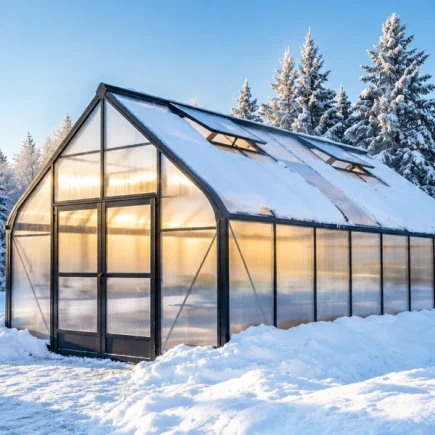
Snow can accumulate on roofs and place significant stress on the structure. A hardtop gazebo or solid-roof pergola is not necessarily designed to support heavy snowfall.
Check the manufacturer’s snow-load rating and instructions for clearing snow or dismantling components. If no snow-load information is provided, do not assume the structure is suitable for accumulated snow.
Wind and Rain
Wind can place stress on frames, roof panels, fabric canopies and anchoring points. Even a heavy structure needs the recommended anchoring system and a suitable installation surface.
Review any stated wind limitations, secure the structure as instructed, and remove or retract fabric components when required. Keep drainage areas clear to reduce water accumulation.
Seasonal Use
Some outdoor structures are intended mainly for seasonal use. Check whether curtains, canopies or other removable parts should be stored during winter.
Before purchasing, confirm that the product’s documented limitations suit your location and planned use. If year-round installation is important, prioritise verified specifications over appearance alone.
Which Structure Suits Your Backyard and Lifestyle?
Small Patios and Compact Backyards
Measure the available area before choosing a structure. Account for the frame, roof overhang, furniture and room to walk around the seating area.
A compact gazebo creates a defined sheltered space, while a pergola can maintain a more open appearance. A wall-mounted pergola may also suit certain patios if the wall and fixing method are appropriate.
Outdoor Dining and Family Gatherings
A gazebo may suit regular outdoor dining or entertaining if its roof provides the coverage you need. Curtains or mosquito netting can add convenience when included with the model.
A pergola can define a seating or dining area without making the garden feel enclosed. If you prefer adjustable shade, consider a design with a compatible canopy or louvred roof.
Check the space needed for your table, chairs and movement around the furniture before selecting a size.
Open Garden Designs and Climbing Plants
Pergolas can provide a framework for suitable climbing plants and help define garden pathways or seating areas. Before adding vines, check the structure’s load limits and maintain the plants to prevent excessive weight or obstructed components.
A gazebo can instead serve as a focal point within the garden, creating a separate area for relaxing or entertaining.
Gazebo vs Pergola: Costs and Maintenance
Purchase and Installation Costs
The total cost depends on size, materials, roof design, accessories and installation requirements. An open-roof pergola may have a lower purchase price than a comparable gazebo, but premium pergolas with adjustable or solid roofs can cost more.
When comparing models, consider:
- Size and materials: Larger structures generally require more material, while wood, steel and aluminium have different costs and care needs.
- Roof system: Open beams, fabric canopies, polycarbonate panels and adjustable louvres vary in complexity.
- Assembly: Some models are designed for home assembly; others may require professional assistance.
- Site preparation: Uneven ground, foundations and additional anchoring can increase installation costs.
Compare the complete specifications and installation requirements rather than judging value by the purchase price alone.
Long-Term Maintenance
Maintenance depends on the frame material, roof system and exposure to weather.
- Wood: May need periodic sealing or other treatment, depending on the wood and finish.
- Metal: Inspect frames, fasteners and coatings for corrosion or damage.
- Fabric: Clean, dry and store removable canopies according to the manufacturer’s instructions.
- Roof components: Check panels, louvres, moving parts and drainage areas regularly.
Choose a structure that fits both your budget and the amount of upkeep you are prepared to provide. Avoid adding heavy accessories or climbing plants unless the structure is designed to support them.
Installation and Space Requirements
Measure the Area
Measure the available length, width and height, including roof overhangs and projecting components. Allow enough room for furniture, walkways, doors and windows.
Also check property boundaries, overhead obstructions and access for carrying large components into the garden. Review the product’s technical drawings and assembly instructions before purchasing.
Prepare the Surface and Anchoring
Gazebos and pergolas need a suitable supporting surface and the anchoring method specified by the manufacturer. A concrete patio, timber deck and ground installation may require different fixing methods.
Do not assume a heavy frame is stable without anchoring. For wall-mounted pergolas, confirm that the wall and fixing method can safely support the installation. Seek qualified advice if the surface or anchoring requirements are unclear.
Assemble Safely
Before assembly, check that all parts are present and review the tools and assistance required. Large frames and roof panels can be difficult to handle safely.
Follow the manufacturer’s assembly sequence and do not modify structural components unless authorised. Professional installation may be appropriate where foundations, structural alterations or specialised anchoring are required.
Do You Need a Permit for a Gazebo or Pergola in Canada?
Permit and zoning requirements vary by province and municipality. They may depend on the structure’s size, height, location, design and whether it is attached to an existing building.
Before installation, contact your municipal building department to check:
- Building permits: Whether the proposed structure requires a permit.
- Zoning rules: Requirements for setbacks, height, location and lot coverage.
- Property restrictions: Whether easements, utility locations or heritage rules affect the project.
- Technical documentation: Whether plans, engineering details or foundation information are required.
For example, the City Of Toronto’s Accessory-Structure Guidance explains the documentation required for relevant permit applications. Requirements depend on the project, so do not apply one municipality’s rules across Canada.
Even if a building permit is not required, zoning and other applicable requirements may still apply. Confirm the rules for your property before buying or installing the structure.
How to Choose the Right Gazebo or Pergola
Use these questions to narrow down your options:
- Need more overhead coverage?
Consider a gazebo with a roof suited to your intended use. - Prefer an open garden design?
Consider a traditional pergola. - Want adjustable shade?
Compare pergolas with compatible canopies or louvred roofs. - Expect snow or strong winds?
Check the model’s stated limits, anchoring instructions and seasonal-use guidance. - Working with limited space?
Measure the area, including furniture and installation clearance. - Planning a budget?
Compare purchase price, assembly, accessories and maintenance. - Installing a permanent structure?
Check municipal permits, zoning and property restrictions first.
A gazebo is generally a good fit if you want a defined outdoor seating area with consistent overhead coverage from a suitable roof. A pergola is better suited to an open garden design with filtered sunlight or adjustable shade.
For Canadian backyards, make your decision based on the product’s weather limitations, installation requirements, available space and intended use rather than structure type alone.
FAQs
A gazebo without a roof is usually called a pergola. Instead of a solid roof, it has open beams or slats on top that let sunlight through. If it is just a small frame for climbing plants, with no real cover, it is often called an arbor, a popular garden feature.
A hardtop gazebo is the best choice for Canadian winters. Look for a strong steel or aluminum frame, a peaked roof that lets snow slide off, and solid anchors set deep in the ground. After a big storm, brush heavy snow off the roof so it does not pile up.
Light, soft-top gazebos can lift or shake in strong gusts, so take down the canopy before windy weather. Even a well-anchored hardtop gazebo can be at risk in very strong storms. Check the maker’s wind rating for your model, and anchor it well into the ground.
A pergola is a great choice for open, adjustable shade. A patio umbrella works for small spaces, and a canopy tent suits short-term use. An awning on the side of your house adds cover, while a shade sail is a simple, light option for hot, sunny days.
A pergola feels open and airy, and it lets air move freely. You can attach it to your house or deck, and it fits nicely over a patio. Louvred roofs let you open or close the slats to control sun and shade, and vines can grow over it for natural cover.