

















Wardrobe and dresser both store your clothes, and stores often group them together, but they work in very different ways. One is built for hanging clothes and one for folding them, and that single difference changes how much you can store, how much floor space you use, and how your bedroom feels.
This guide breaks down the difference between a wardrobe and a dresser, compares them across everything that matters, and helps you choose the right one for your clothes and your room.
What Is the Difference Between a Wardrobe and a Dresser?
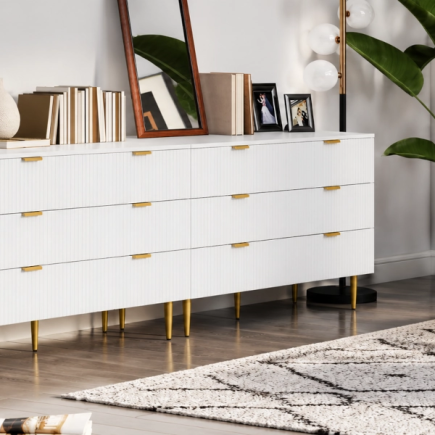
A wardrobe is a tall, freestanding cabinet with a hanging rod, and often shelves and drawers, that works like a portable closet. A dresser is a low, wide piece of furniture with stacked drawers, built for folded clothes and offering a surface on top.
The two can overlap in stores, so the best way to compare them is by looking at how you store your clothes, how much space you have, and whether your room already has a closet. In short, a wardrobe is for hanging and a dresser is for folding.
1. Hanging vs Folded Storage
The main difference is how each holds your clothes. Wardrobes are built to hang garments, while dressers are built to store folded items in drawers.
Wardrobe
- Built around a hanging rod for suits, dresses, shirts and coats.
- Keeps wrinkle-prone clothes hanging and easy to see.
- Often adds shelves and drawers for a mix of hanging and folded storage.
Dresser
- Designed for folded clothing like t-shirts, jeans and sweaters.
- Keeps socks, underwear and accessories sorted in separate drawers.
- Not ideal for delicate items that crease when folded.
Tip: Hang more? Choose a wardrobe. Fold more? Choose a dresser.
2. Space and Footprint
Wardrobes use vertical space and stand tall, while dressers are low and wide and spread across the floor. The right choice depends on your room’s shape and ceiling height.
Wardrobe
- Tall and freestanding, using vertical space efficiently.
- Takes up less floor area for the same or more storage.
- Needs enough height and clearance for the doors to open.
Dresser
- Low and wide, usually around waist to chest height.
- Takes up more floor space but stays below eye level.
- Fits neatly under a window where a tall piece would not.
Tip: High ceilings suit wardrobes; low ceilings suit dressers.
3. Storage Capacity and Organization
A wardrobe generally offers more total storage and combines hanging, shelves and drawers, while a dresser focuses on organised drawer storage for folded clothes.
Wardrobe
- Combines a hanging section with shelves and sometimes drawers.
- Holds more overall, acting as a freestanding closet.
- Ideal when a built-in closet is full or does not exist.
Dresser
- Multiple drawers keep folded clothes neatly separated.
- Great for sorting everyday basics by type in each drawer.
- Usually offers less total capacity than a full wardrobe.
Tip: Have a closet? Add a dresser. No closet? Choose a wardrobe.
4. Everyday Access and Convenience
Dressers offer quick daily access with drawers at a comfortable height, while wardrobes make hanging and seasonal clothes easy to see and choose at a glance.
Wardrobe
- Opens to show hanging clothes together, like a mini closet.
- Best for outfits and seasonal pieces you want to see at once.
- Doors keep everything hidden for a clean, tidy look.
Dresser
- Drawers at waist height give fast, easy access to everyday clothes.
- Simple to open, see and grab folded items in a hurry.
- The flat top doubles as a handy spot while getting ready.
Tip: Choose drawers for daily basics and a wardrobe for outfits.
5. Style, Surface and Versatility
Dressers give you a surface on top and adapt to other uses over time, while wardrobes make a taller statement and hide everything behind doors.
Wardrobe
- Makes a bold, vertical statement as a freestanding feature.
- Hides all clutter behind doors for a streamlined look.
- Anchors a room that lacks a built-in closet.
Dresser
- Gives a usable surface on top for a mirror, lamp or decor.
- Easy to repurpose later as a TV stand, console or entryway piece.
- Adds a low, grounding shape that suits most bedrooms.
Tip: Want a surface? Choose a dresser. Want hidden storage? Choose a wardrobe.
6. Best Rooms and Situations
Your closet situation is often the deciding factor. A wardrobe suits rooms with little closet space, while a dresser works best alongside an existing closet.
Wardrobe
- Best when there is no built-in closet, or the closet is full.
- Acts as a complete freestanding closet in studios and older homes.
- Ideal for storing coats, suits and seasonal clothing.
Dresser
- Best when a closet already handles your hanging clothes.
- Ideal for folded basics and everyday wear.
- Easy to move to other rooms as your needs change.
Tip: Choose a wardrobe without a closet; choose a dresser when you already have one.
Wardrobe vs Dresser at a Glance
| Factor | Wardrobe | Dresser |
| Storage type | Hanging clothes, plus shelves | Folded clothes in drawers |
| Shape | Tall, freestanding, closet-like | Low and wide, waist height |
| Floor space | Less floor space, uses height | More floor space |
| Top surface | No usable top surface | Flat top for a mirror or decor |
| Everyday access | Great for hanging and seasonal clothes | Fast, drawers at eye level |
| Wrinkle-prone clothes | Ideal, hanging prevents creases | Not ideal, folding creases |
| Best for | Hanging clothes, no closet | Folded basics, existing closet |
Tip: Compare storage type, space and closet availability.
Which One Should You Choose?
Choose a wardrobe if you have a lot of hanging clothes or little closet space. Choose a dresser if you mostly fold your clothes and already have a closet for hanging.
Choose a Wardrobe If You:
- Own a lot of hanging clothes like suits, dresses and coats.
- Have little or no built-in closet space in the room.
- I want more storage while using less floor space.
- Prefer everything hidden neatly behind doors.
- Need a freestanding closet in a studio or older home.
Choose a Dresser If You:
- Mostly wear folded clothes like t-shirts, jeans and sweaters.
- Already have a closet for your hanging garments.
- Want quick daily access to your everyday clothes.
- I would like a surface on top for a mirror or lamp.
- Have a window wall or low ceilings where a tall piece will not fit.
What to Keep in Mind
The wardrobe versus dresser question comes down to one thing: do your clothes fold or hang? A wardrobe is a tall, freestanding closet built for hanging clothes and saving floor space, while a dresser is a low, wide piece built for folded basics with a handy surface on top.
Think about your clothes, available space and existing closet, and the right choice becomes clear. Many bedrooms benefit from using both together.
FAQs
A wardrobe is a tall, freestanding cabinet with a hanging rod, and often shelves and drawers, that works like a portable closet. A dresser is a low, wide piece of furniture with stacked drawers, made for folded clothes and offering a surface on top.
It depends on your ceiling height and closet. A wardrobe uses vertical space and stores more without taking up much floor area, which suits small rooms with high ceilings and no closet. A dresser is low and wide, fits under a window, and works well when you already have a closet.
A wardrobe generally holds more overall because it combines hanging space with shelves and drawers and uses vertical height. A dresser offers organised drawer storage but usually has less total capacity. If maximum storage in a small footprint is the goal, a wardrobe wins.
Often yes. A closet handles your hanging clothes, but a dresser adds organised drawer storage for folded basics like t-shirts, socks and sweaters, with quick everyday access. Together they cover both hanging and folded storage, which is the most complete setup for a bedroom.
Yes. A wardrobe acts as a freestanding closet, with a hanging rod and often shelves and drawers as well. It is an ideal solution for studios, older homes, or any bedroom that has little or no built-in closet space.