




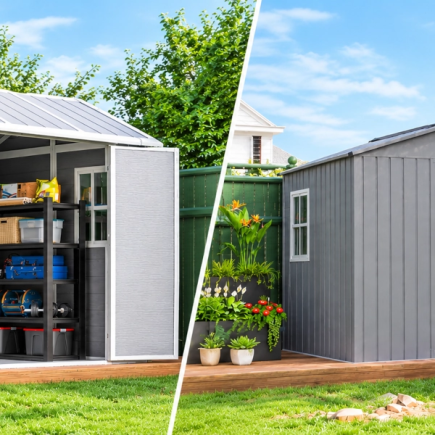










Choosing between a metal and resin shed for Canadian weather depends on your storage needs, local climate and the shed’s construction. Metal sheds offer rigid panels, while resin sheds resist rust and need less surface maintenance. Winter durability depends on roof design, frame strength, anchoring and documented snow-load and wind ratings.
Metal vs Resin Sheds: What’s the Difference?
Metal and resin sheds differ in construction, weather resistance and upkeep.
Durability and Construction
- Metal sheds typically use steel panels with a protective finish.
- Rigid panels provide enclosed storage, but thin panels may dent or bend on impact.
- Resin sheds use moulded plastic panels, commonly made from polypropylene or similar polymers.
- Some resin models include metal reinforcement to improve structural stability.
Weather Resistance
- Metal sheds resist outdoor exposure while their protective coating remains intact.
- Scratches, cut edges and damaged fasteners may become vulnerable to corrosion.
- Resin does not rust, making it useful in damp conditions.
- Plastic can become brittle, expand or contract with temperature changes, and degrade under prolonged sun exposure.
Metal vs Resin Sheds: Key Differences at a Glance
This table summarizes how the two materials differ on the points that matter most.
| Feature | Metal Shed | Resin Shed |
| Main material | Steel or other metal panels | Moulded plastic panels |
| Rust resistance | Depends on coating and maintenance | Does not rust |
| Impact resistance | Panels may dent or bend | Panels may crack or deform |
| Maintenance | Check coating, corrosion and fasteners | Clean surfaces and inspect joints |
| Snow performance | Depends on roof and frame capacity | Depends on roof design and structural support |
| Wind performance | Depends on frame, anchoring and panel rigidity | Depends on frame, joints and anchoring |
| Best suited to | Enclosed storage where rigid panels are useful | Lower-maintenance storage in suitable conditions |
How Do Metal and Resin Sheds Perform in Canadian Weather?
Each Canadian weather factor affects the two materials differently.
Snow and Freezing Temperatures
- Conditions vary by region, from sheltered Vancouver yards to wind-exposed prairie sites and snowy parts of Ontario and Quebec.
- Snow can place considerable weight on roof panels, supports and joints.
- A sloped roof may shed snow but does not guarantee adequate load capacity.
- Thin panels and lightly supported roofs on metal sheds may buckle under heavy loads.
- Resin sheds vary widely in strength, and reinforced frames may improve performance, but the material alone does not establish winter suitability.
Heavy Rain, Moisture and Humidity
- Metal sheds with intact coatings can perform well in wet conditions, but exposed edges and poorly protected fasteners may corrode over time.
- Resin will not rust, but leaks, poor drainage and unsealed joints or doors can still cause moisture problems.
Wind and Severe Weather
- Strong winds can loosen panels, lift an inadequately anchored shed or damage doors and roof sections.
- Rigid metal panels do not guarantee stability; the frame, joints and anchoring also matter.
- Lightweight resin sheds may also move or sustain damage if not properly secured, so reinforcement and suitable anchoring are important.
Summer Heat and UV Exposure
- Sunlight can gradually affect protective coatings on metal sheds, and dark metal surfaces may become hot in direct sun.
- Resin can fade or become less flexible after prolonged ultraviolet exposure, depending on its formulation and UV protection.
- Shade may help, but it does not replace product-specific UV protection.
Freeze-Thaw Cycles and Seasonal Temperature Changes
- Repeated temperature changes can affect joints, fasteners, seals and the shed’s alignment.
- Metal and plastic components can expand or contract as temperatures change.
- Inspect the structure after winter and address loose connections or damaged seals.
Advantages and Disadvantages of Metal and Resin Sheds
Each material has practical benefits and limitations.
Metal Sheds
Advantages
- Rigid panels provide an enclosed space for garden tools, equipment and outdoor supplies.
- Protective finishes can help resist corrosion when maintained.
Disadvantages
- Thin panels can dent or bend on impact.
- Scratches and exposed edges may develop rust if left untreated.
- Condensation can form inside, potentially affecting items that need dry storage.
Resin Sheds
Advantages
- Resin does not rust, reducing corrosion concerns in damp environments.
- Surfaces are generally easy to clean and need little finish-related maintenance.
- Some models include reinforced frames, built-in floors or other storage-friendly features.
Disadvantages
- Plastic panels can crack, deform or become brittle depending on quality and conditions.
- UV exposure may cause fading or deterioration over time.
- Lightweight construction may require careful anchoring in windy areas.
How Long Do Metal and Resin Sheds Last?
Lifespan varies with quality, exposure and care.
Lifespan Factors
- Longevity depends on material quality, exposure, installation, maintenance and use.
- A metal shed may last well when its coating remains intact and corrosion is addressed early.
- A resin shed can remain serviceable with routine cleaning, though prolonged UV exposure, impact damage, weakened joints or temperature-related stress may shorten its life.
Which Shed Requires Less Maintenance?
Upkeep needs differ, but neither material is maintenance-free.
Surface Maintenance Differences
- Resin sheds need less surface maintenance because they do not rust or need protective paint.
- Metal sheds need more attention to coatings and exposed metal, particularly after damage.
Routine Care for Either Material
- Inspect the roof, doors, joints and fasteners for damage.
- Keep the base level and drainage clear.
- Remove debris that could obstruct drainage or retain moisture.
- Check anchors and connections after severe weather.
- Follow the manufacturer’s guidance for snow removal and seasonal care.
Which Shed Is Better for Different Backyard Uses?
The best choice depends on what you plan to store.
Garden Tools and General Storage
- Either material may suit hand tools, pots and routine supplies.
- Choose by internal dimensions, door access, ventilation and shelving needs.
Storage in Damp Areas
- Resin is worth considering where rust prevention and easy cleaning matter.
- Metal can also work if its finish is suitable and maintained.
Equipment That Needs a Rigid Enclosure
- A well-constructed metal shed may suit buyers who value rigid panels.
- Check door dimensions, panel strength and the security features of the specific model.
Exposed or Snow-Prone Locations
- Do not choose by material alone.
- Prioritise documented snow and wind ratings, suitable anchoring and a roof suited to local conditions.
- If ratings are unavailable, check the available product specifications before buying.
What Should You Check Before Buying a Shed in Canada?
Use this checklist to judge whether a shed suits your property.
- Snow-load capacity: Check the stated rating and whether it suits your region.
- Wind resistance: Review any published wind rating and anchoring requirements.
- Roof design: Consider the slope, supports and snow-management guidance.
- Frame and panels: Check thickness, reinforcement, fasteners and construction.
- Base and drainage: Check foundation requirements and drainage.
- Dimensions and access: Measure the space, door opening and items you need to store.
- Maintenance: Review cleaning, coating care and seasonal inspections.
Metal vs Resin Shed: Which Offers Better Value for Money?
Value depends on more than the purchase price.
Value by Material
- Metal may offer good value when rigid enclosed storage is the priority and you will maintain its finish.
- Resin may suit buyers who prioritize rust resistance and simpler surface care.
Price Versus Suitability
- A cheap shed without suitable snow ratings or reinforcement may not suit an exposed property.
- A higher price does not guarantee better weather performance.
So, Which Shed Should You Choose?
There’s no single winner for every Canadian backyard. If you want rigid panels and enclosed storage, a metal shed may suit your needs, provided its coating, frame, and roof are appropriate for your conditions. If you prefer rust resistance and less surface maintenance, a resin shed may be the better fit. For areas with heavy snowfall or strong winds, check the model’s documented load ratings and weather-related specifications before buying.
Ready to find the right shed for your backyard? Explore garden sheds at Aosom Canada and choose an option that suits your storage needs and local weather conditions.
FAQs
Permit rules depend on your municipality, shed size, placement, foundation and intended use. Before buying or installing, check local building and zoning requirements, including property-line setbacks; a small shed is not automatically exempt.
Coastal salt air can accelerate corrosion on exposed or damaged metal. Check the model’s coating guidance and inspect fasteners and scratches regularly. Ask the manufacturer whether the finish suits marine or high-salt environments before buying.
Yes, a portable garden shed needs stable, level support. In Canada, follow the manufacturer’s foundation instructions and check municipal rules before installation. Uneven ground can affect door alignment and stability, so inspect the base for movement or settling.
Choose a shed with a compatible lock or latch, keep valuable tools out of sight, and secure doors as directed. A lock may deter opportunistic access, but it cannot make a lightweight shed theft-proof; consider lighting around the storage area.
Do not assume a garden shed is suitable for gasoline or propane storage. Follow local fire-safety rules and product instructions. Never store propane cylinders in a shed unless the applicable safety requirements specifically permit that arrangement.