










Match the type to the rider’s balance skills, the wheel size to the roughest surface on the route, and the handlebar range to the rider’s measured wrist and navel height.
Age charts cannot do that for you, because two seven year olds on different routes need different scooters. Work in this order instead, type, route, rider, fit, then specifications.
Know the Five Kick Scooter Types
The best kick scooters are simply the ones whose type suits the rider’s balance skills, so settle this before comparing anything else.
| Type | Best for | Watch out for |
| Three wheel, lean to steer | First riders, roughly 2 to 5 years | Outgrown faster than parents expect. |
| Two wheel folding | Everyday riding, school runs, storage | Folding lock quality varies widely. |
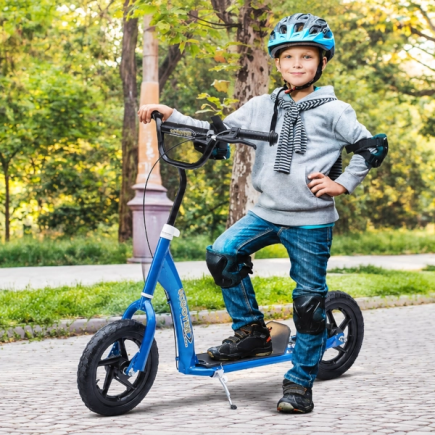
| Big wheel or inflatable tyre | Rough pavement and longer routes | Heavier to carry and store. |
| Pro or stunt | Skatepark tricks and jumps | Fixed height, no fold, no growth room. |
| Convertible and seasonal | Snow or mixed conditions | Compromises in both modes. |
Start With the Ride, Not the Scooter
Four questions about the route settle most of the specification, each pointing to a different part of the scooter.
- What surface? Smooth tarmac, cracked pavement, or gravel and packed dirt. This decides wheel size and type more than anything else does.
- How far? Short play rides, a 1 km to 3 km school run, or longer trips. Distance turns deck comfort and wheel diameter into necessities.
- Any hills? A real descent calls for a hand brake or dual brake, because a rear fender alone struggles to hold speed on a slope.
- What happens at the end? Carried upstairs, folded into a locker, or left in the garage. This sets how much weight and bulk you can live with.
That last question sinks more scooters than any specification. A big wheel model that rides beautifully but cannot be carried upstairs gets used twice.
Match the Rider Stage, Not the Birthday
Readiness is about balance and body control, so treat these ages as a guide.
| Stage | Typical age | Look for |
| First rides | 2 to 4 years | Three wheels, lean to steer, low deck. |
| Building confidence | 4 to 6 years | Three wheels or a light two wheel model. |
| Independent riding | 6 to 9 years | Two wheels, adjustable stem, solid rear brake. |
| Longer routes | 9 to 13 years | 200mm wheels or inflatable tyres, folding stem. |
| Teens and adults | 13 years and up | Large wheels, low deck, verified weight rating. |
Ready for two wheels: The child steers a three wheeler without thinking, stops on request, and already balances on a bicycle. If any of those is missing, another season on three wheels costs nothing.
Too much scooter: The rider puts a foot down straight after pushing, avoids turning one way, or wants the bars held. That is a fit problem, not a confidence problem.
Get the Fit Right Before You Buy
Fit decides whether a scooter gets ridden, and most of it can be settled from a listing.
Measure the rider, then read the listing
Take three numbers with the rider in normal shoes.
- Floor to wrist: Arms hanging relaxed, measured to the wrist crease. This is the lowest comfortable grip height.
- Floor to navel: Roughly the highest comfortable grip height.
- Shoe length: Compare it against the listed deck dimensions rather than the photo.
Match those numbers to the specs
| Your measurement | Listing field | A good fit |
| Floor to wrist | Minimum handlebar height | The lowest setting sits at or just below it. |
| Floor to navel | Maximum handlebar height | The top setting reaches it without towering over it. |
| Shoe length | Deck length and width | The deck takes the standing foot with room to spare. |
| Rider weight | Maximum rider weight | At least 10 kg of headroom. |
| Lifting ability | Net scooter weight | Light enough for the rider to carry. |
A listing that gives only a total height and a broad age range cannot be sized from. Keep the packaging until the rider has stood on the deck, because a lowest setting that forces raised shoulders is a reason to use the return window rather than wait for the child to grow.
Choose Wheels for the Surface
Solid wheels are listed in millimetres and inflatable tyres in inches, so a 200mm wheel and a 12 inch tyre are closer in size than they look.
| Wheel type | Best for | Trade off |
| 100mm to 125mm solid | Indoor floors and driveways | Agile, but stops dead on cracks. |
| 145mm to 180mm solid | Average pavement and school runs | A genuine all rounder. |
| 200mm and up solid | Commuting and longer rides | Carries speed, bulkier to store. |
| EVA foam | Casual mixed surface riding | Puncture free, but less rebound. |
| Inflatable 12 to 16 inch | Broken pavement and gravel | Best cushioning, needs pressure checks. |
Frame material: Aluminium is lighter and easier for a child to carry. Alloy steel is heavier but handles rough treatment and higher rider weights.
What Separates the Best Kick Scooters From the Rest
Scooters fail at the joints, not in the middle of the deck, and the better ones are built around that fact.
- Folding lock: Play on day one becomes a dangerous wobble within months.
- Stem and clamp: The front wheel should follow the bars with no slack.
- Brakes: A rear fender that springs clear and does not drag. On dual brake models, a front lever a small hand can squeeze.
- Rider limit: Move up a tier if you are within 10 kg of it, since riding loads the stem and lock far harder than static testing does.
- Scooter weight: For a child, the question is whether they can lift it over a kerb. Inflatable tyre models ride beautifully but weigh noticeably more.
When reading reviews, look for owners at six months or more. Unboxing impressions say nothing about wear.
Set a Budget That Matches the Riding
- Around $60 and under: Occasional driveway play and first three wheel scooters.
- Roughly $60 to $150: Regular riding, school routes, and big wheel or inflatable tyre models. Most families land here.
- Above $150: Daily riders, heavier riders and long distances. Prices move with seasonal sales, so treat these as bands rather than fixed points.
Extras worth judging by route
- Suspension: Helps on broken pavement, but adds weight. On smooth routes, larger wheels do more for the money.
- Light up wheels: A motivation feature, not a substitute for proper lights after dark.
- Baskets and cupholders: Useful nearby, but check they do not block the pushing foot or the fold.
With those numbers written down, filters do what scrolling cannot. Narrowing a range such as Aosom Kick Scooters by rider age, wheel type and price leaves only models worth comparing, and the shortlist usually comes down to three or four.
Safety Gear and Simple Upkeep
- Helmet: Every ride. Level on the head, about two fingers above the eyebrows, with the strap snug enough that the chin moves when the helmet is wiggled.
- Pads and practice: Knee and elbow pads for the first few weeks, on flat traffic free ground until the rider can stop on request.
- After dark: A clip on light and reflective clothing. Light up wheels are decoration.
- Upkeep: Check the lock, wheels and brake before each ride, tighten the axle bolts and stem clamp monthly, and store it dry.
Final Checks Before You Pay
✓ The type matches the rider’s current balance skills.
✓ The wheels match the roughest surface on the regular route.
✓ The lowest handlebar setting fits the rider today.
✓ The folding lock has no play when engaged.
✓ The rider is comfortably inside the weight limit, not at it.
✓ The age range is narrow rather than sold as 3 to 12.
✓ A helmet is in the budget, not an afterthought.
The best kick scooters are rarely the ones with the longest feature list. They are the ones sized to the rider, matched to the surface underfoot, and light enough to be carried the last stretch home. Get those three right and the rest of the specification sheet is detail.
FAQs
Wet pavement cuts grip and lengthens braking on every wheel type, and standing water speeds up bearing rust. Light drizzle at low speed is manageable. Wet leaves, painted lines and metal covers are worth avoiding entirely.
ABEC-5 is fine for casual riding and ABEC-7 suits daily use. Bearings are also the cheapest part to swap later, so a solid frame with modest bearings beats a weak frame with premium ones.
Rarely in comfort. Kids’ models often cap out near 50 kg to 70 kg and the bars sit too low, forcing a stooped stance that strains the stem. Check the stated rider limit before borrowing one.
Most ship part assembled, needing the stem fitted and the clamp tightened, which takes about ten minutes with the supplied tool. Confirm the clamp and folding lock are fully closed before the first ride.
A balance bike teaches balance earlier, while a three wheel scooter teaches pushing and steering from a standing position. Many families use both and start with whichever the child reaches for.