









Most people buy garden equipment reactively. A raised bed shows up in spring because everyone’s buying one. A greenhouse gets added mid-summer as an afterthought. A shed gets picked up in a panic once the mower has nowhere to go.
The result is usually a yard with the right pieces bought at the wrong time, with no real plan for how they work together.
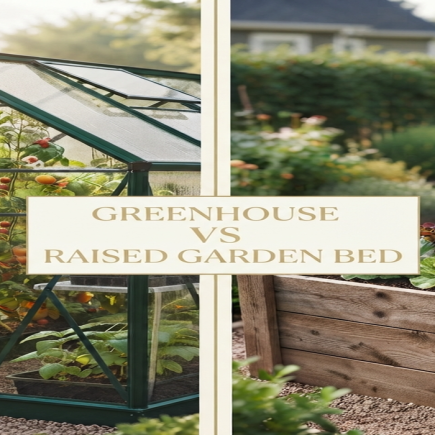
These three product types serve three distinct jobs across the year:
- A raised garden bed is where plants actually grow. Better soil control, less bending, fewer weeds.
- A greenhouse extends your growing window on both ends of the season and protects young or sensitive plants from wind, frost, and pests.
- A garden shed is what keeps the other two running. Tools, soil, pots, and seasonal gear need somewhere to live when they’re not in use.
Below is a season-by-season breakdown of when each one matters most, along with what to actually look for when buying one at that point in the year. For a closer look at building a week-by-week planting schedule once your setup is in place, see our guide to creating a greenhouse planting schedule.
Year at a Glance
If you just want the quick version, here’s the whole plan condensed into a single table.
| Month | Raised Bed | Greenhouse | Shed |
| January | Plan the season, order seeds | Dormant, check anchoring | Organize tools, check for leaks |
| February | Test old seed viability | Start long-season crops indoors | Keep supplies dry |
| March | Clear beds, top up soil | Start hardier seedlings, vent on sunny days | Pull out spring tools |
| April | Transplant seedlings | Harden off transplants | Store away winter covers |
| May | Direct sow, install pest cages | Finish hardening off | Light use for daily tools |
| June | Mulch, shift to maintenance | Secondary period, less active | Regular tool access |
| July | Deep watering, pest checks | Mostly quiet | Daily use for gardening tools |
| August | Plan fall crops | Clean out for autumn use | Daily use continues |
| September | Sow fall crops, clear spent plants | Second peak begins | Daily use continues |
| October | Harvest last fall crops | Protect late crops from frost | Bring in outdoor items |
| November | Season mostly wrapped up | Overwinter potted plants | Peak storage season |
| December | Plan next year’s layout | Periodic checks on overwintered plants | Peak storage season |
How the Three Fit Together
| Product | Peak Season | Secondary Season | Core Need | Role |
| Raised Garden Bed | April to August | March, September | Growing vegetables, flowers, home gardening | Grow |
| Greenhouse | March to May, August to October | February, June to July, November | Seedling raising, extending the growing season, frost protection | Extend & Protect |
| Garden Shed | May to October, November to December | January to April | Tool storage, gardening tasks, winter storage | Store & Organize |
A simple way to think about it: the greenhouse gets things started before the ground is workable. The raised bed is where those plants spend the bulk of the season. The shed is the support system running underneath both of them, year round.
Q1: January to March: Planning, Prepping, and Early Starts
What’s happening this quarter
January and February are mostly dormant outdoors, but gardeners are planning, sharpening tools, and gathering supplies. Sheds keep tools and materials dry and organized.
By late February into March, greenhouses become active for starting seedlings and protecting plants from frost. Starting seeds 6–8 weeks before the last frost helps ensure strong transplants and lets you get a head start before the ground warms.
Instead of losing weeks waiting to sow seeds outdoors, you can give your plants an early start. Our beginner’s guide to what to grow in a greenhouse covers easy first crops if you’re setting one up for the first time.
What to look for in a shed
- Weather sealing and dryness: Protect tools from winter moisture.
- Snow load rating: Essential in areas with heavy snowfall.
What to look for in a greenhouse
- Wind resistance and a solid foundation: Important during strong late-winter winds.
- Skylights or roof vents: Help prevent overheating on sunny winter days. Even a small greenhouse can overheat on a sunny February day despite freezing air temperatures outside. Our guide on keeping a greenhouse warm through winter covers this balance in more depth.
Recommended products for Q1
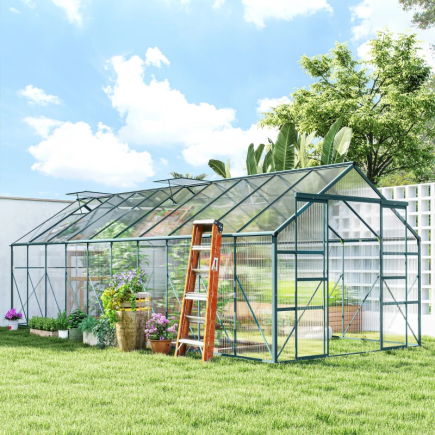
Outsunny 6′ x 6′ x 6.4′ Polycarbonate Greenhouse, Clear (SKU: 845-243)
- 4mm hollow polycarbonate sheet rated for a snow load of 20kg/m².
- Door with latch (W61.5 x H160.5cm), wall height 141cm.
- Roof-mounted skylight (L57 x W60cm) for ventilation control.
- Water drainage system: roof troughs on both sides with funnels at each end.
- Aluminum alloy frame (0.8 to 1mm thick), panels rated for good light transmittance and UV resistance.
Outsunny 8′ x 6′ Plastic Garden Storage Shed, Light Grey (SKU: 845-410V05LG)
- 10mm thick polypropylene panels with aluminum and galvanized steel reinforcement.
- Floor area of 4.1m², interior chamber roughly 225cm x 175cm.
- Sloped roof and a frame rated for a 20kg/m² snow load.
- Latch-door design with two sliding doors, plus a side window for extra light.
- Three vents for airflow, reducing the trapped humidity that damages stored items over winter.
Outsunny 7′ x 4′ x 6′ Garden Storage Shed, Brown (SKU: 845-030V00BN)
- Galvanized steel construction with a powder-coated, corrosion-resistant surface.
- Overall dimensions 83.75″ W x 51.25″ D x 72.75″ H, interior floor space 80″ W x 46″ D.
- Double sliding doors, useful for tight backyards where a swing-out door would not clear.
- 4 vents for airflow, helping prevent musty, humid conditions inside over winter.
- Snow load capacity rated at 20kg/m², foundation kit included for a stable, level setup.
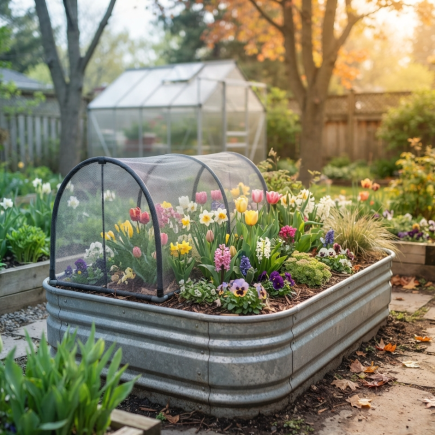
Outsunny 8.6′ x 3′ x 1′ Raised Garden Bed with Mini Greenhouse, Green (SKU: 84H-240V00GN)
- Combines a raised planter with a fitted mini greenhouse cover, usable together or separately.
- PE cover traps warmth and blocks UV and mild rain, useful for protecting early seedlings from a late cold snap.
- Roll-up window for ventilation and plant access without fully removing the cover.
- Open-bottom galvanized steel planter improves drainage and lets roots grow into the ground below.
- Overall dimensions 106.3″ W x 35.4″ D x 36.6″ H, with 4 support rods dividing the planter into 3 sections.
Q2: April to June: Peak Planting Season
What’s happening this quarter
April through August is the peak season for raised garden beds, covering most planting, growing, and early harvesting.
- April–May: Prepare beds and transplant seedlings after frost risk passes.
- June onward: Beds shift to regular watering, weeding, and pest management.
Greenhouses remain in their first peak through May, protecting plants from late frosts. By June, they shift toward hardening off transplants before moving them outdoors.
What to look for in a raised bed this quarter
- Pest protection: Young plants attract birds, rabbits, and other pests, so integrated cages or covers are especially useful.
- Drainage: Spring rain and regular watering make good drainage essential to prevent waterlogging.
If you’re deciding how to line or layer a new bed before the season starts, our guides on the best material to line a raised garden bed and how to layer a raised garden bed for better growth walk through both from scratch.
Recommended product for Q2
Outsunny Galvanized Steel Planter Box with Crop Cage and Shade Cloth (SKU: 84H-075V04GN)
- Integrated mesh crop cage keeps birds and small animals out while still letting sunlight and rain through.
- Shade cloth roof panel protects tender seedlings as spring sun intensifies.
- Zippered access door for watering, weeding, and harvesting without removing the cage.
- Open-bottom design improves drainage and lets roots grow into the ground below.
- Galvanized steel construction resists cracking and warping from repeated wet and dry cycles.
- Overall dimensions: 49.2″ x 25.6″ x 43.3″.
Outsunny Galvanized Raised Garden Bed with Crop Cage and Watering System, Dark Grey (SKU: 84H-447V01CG)
- Larger bed than the option above, suited to gardeners wanting more growing space during peak season.
- HDPE mesh crop cage (4mm netting) keeps pests and birds out while letting sunlight and rain through.
- Included irrigation kit with a hose, three spray heads, and connectors for even, low-effort watering.
- Roll-up zipper door (35.4″ x 23.6″) for easy access to water, prune, and harvest.
- Open-bottom design for drainage, powder-coated galvanized steel with a folded-edge frame for stability.
- Overall dimensions 70.9″ x 35.4″ x 36.6″.
Q3: July to September: Full Growth, Then the Autumn Turn
What’s happening this quarter
July is typically the highest-maintenance month for an established raised bed. Consistent watering, active pest management, and often a first round of harvesting for faster-growing crops.
September is a genuine turning point:
- Raised beds: As summer crops wind down, September is often the last practical window for quick fall crops like leafy greens and radishes before frost.
- Greenhouses: The second peak begins, extending through October. Greenhouses shift from early-season starts to protecting late crops from light frost and extending the growing season by several weeks.
What to look for in a greenhouse this quarter
The growing area matters more here than in spring. You’re often trying to move multiple pots or trays under cover as outdoor conditions cool, rather than starting a handful of seed trays, so a larger footprint gives you room to actually shelter a meaningful portion of your garden.
Recommended product for Q3
Outsunny Walk-In Polycarbonate Greenhouse, Silver (SKU: 845-059V00SR)
- 4-bay structure with 4.79m² of growing space, the largest of the greenhouse options in this plan,
- 4mm hollow PC polycarbonate sheet with UV30u resistance rating,
- Slot-type structure rated to withstand Level 6 wind and bear 40kg/m² of snow load (clear heavy accumulation promptly),
- Includes foundation and foundation bolts, installable on concrete or anchored into soil,
- Single sliding door for easy access as you move plants in and out,
- 1.0mm aluminum alloy frame, 3-year service life, chrome-plated screws,
Q4: October to December: Extending the Season and Winter Storage
What’s happening this quarter
October wraps up the second greenhouse peak, protecting late crops from early cold. November is a secondary greenhouse period, mainly useful for overwintering plants.
November and December are peak months for garden sheds:
- Bring in cushions, hoses, raised-bed panels, and other items before hard freezes and snow.
- Sheds protect tools, supplies, and garden components through winter, keeping them ready for spring.
What to look for in a shed
- Interior space and door width: Important for storing bulky seasonal items.
- Secure, lockable doors: Especially valuable when the shed sits unattended through winter.
If you’re shopping specifically for a smaller footprint, our guide to the best small tool sheds in Canada covers compact options for tighter yards.
Recommended products for Q4
Outsunny 6×4.5FT Plastic Shed with Double Lockable Doors and Vent, Grey (SKU: 845-953V00GY)
- Peaked roof shape in polypropylene and aluminum, designed to shed rain, wind, and snow.
- Overall dimensions 72″ W x 52.75″ D x 82.75″ H, interior size 64.25″ W x 45″ D.
- Double door design for easier access when moving in bulkier seasonal items.
- Snow load rating of roughly 8 lbs/ft², suited to typical winter accumulation.
- Includes installation gloves, manufacturer recommends 2 to 3 people for assembly.
Outsunny 5′ x 7′ Lean-To Garden Shed with Foundation, White (SKU: 845-983V00WT)
- Lean-to design fits flush against a wall or fence, useful where yard space is already tight.
- Galvanized steel construction, overall dimensions 60.6″ W x 81.3″ D x 71.3″ H, roughly 2.81m² of floor area.
- Sliding door plus 2 vents for airflow, reducing trapped moisture during winter storage.
- Foundation included for a stable base directly on the ground.
Outsunny Steel Raised Garden Bed with Greenhouse Cover, Clear (SKU: 845-520GY)
- A smaller dual-use option than the Q1 pick, combining a raised bed with a fitted greenhouse cover.
- 140 g/m² PVC cover with a zippered roll-up door, blocking wind up to Beaufort Force 4.
- Traps warmth to extend growing beyond the normal outdoor season, useful for keeping herbs or greens going into cooler weather.
- 0.5mm galvanized steel planter base, rust-resistant and built for outdoor use.
- Overall dimensions 50″ x 37.4″ x 36.2″, best placed against a wall for extra stability in wind.
Putting the Plan Into Practice
The quarters above are a general framework, not a strict calendar. Actual frost dates, growing windows, and storage needs shift depending on your specific region and microclimate.
The underlying logic holds regardless of location:
- A raised bed grows.
- A greenhouse extends and protects.
- A shed stores and organizes.
Each one has a season where it’s doing the most work. Buying with that rhythm in mind, rather than all at once in spring, generally means less wasted storage, less impulse buying, and a setup that’s actually matched to what the season ahead requires.
Explore Garden Beds, Greenhouses & Sheds for Every Season
FAQs
Spring, especially April and May, is the main buying window for raised garden beds. This is when most gardeners prepare their soil and begin planting. However, beds can also be useful in March or September for early and late-season crops.
Greenhouses are most useful during the early and late parts of the growing season. In spring, they help start seedlings and protect plants from frost. In late summer and fall, they help extend the growing season and protect plants from cooler weather.
A garden shed provides a dedicated space for storing tools, soil, pots, hoses, outdoor furniture, and seasonal equipment. Keeping these items dry, organized, and protected helps prevent weather damage and keeps your garden ready for the next growing season.
Yes, although greenhouse use changes during winter. A greenhouse can protect hardy plants and help overwinter potted plants, while also providing shelter from frost and harsh weather. Good ventilation and insulation are important for maintaining suitable conditions.
Not necessarily. Each product serves a different purpose: raised beds provide a controlled growing space, greenhouses extend and protect the growing season, and sheds keep tools and equipment organized. Together, they create a more complete year-round garden setup.