










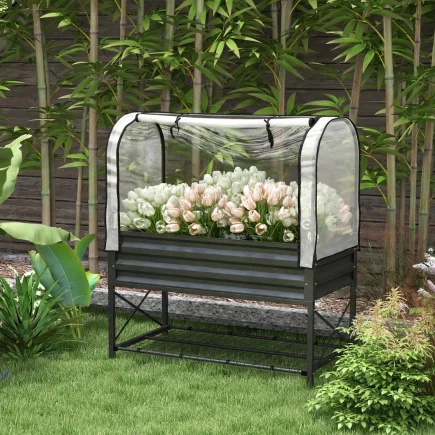





Yes, a raised garden bed can sit on a deck or patio. The water needs somewhere to go that is not the surface, and the structure must carry the filled weight. For many decks and slabs, an elevated bed with a base and drainage holes is better suited than an open-bottom bed.
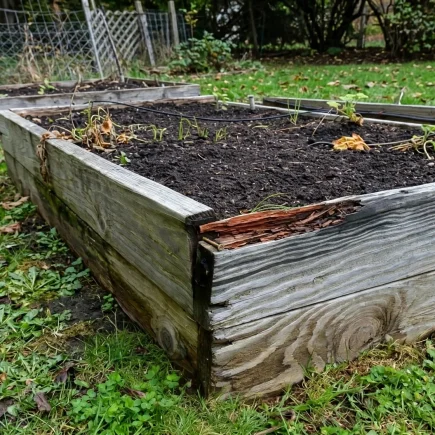
- Open-bottom beds: They drain into whatever is underneath, which suits soil or gravel. On a deck or slab, that water and fine soil reach the surface.
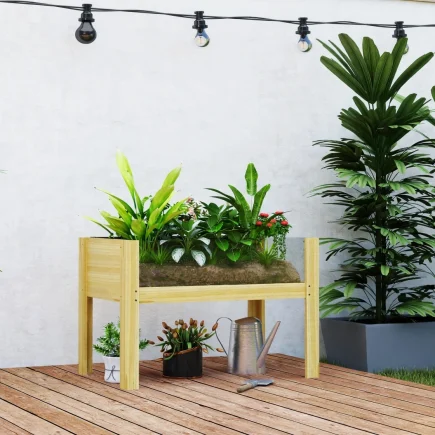
- Elevated beds: A base with drainage holes, a lift of an inch or two and a tray help keep water off the surface.[1][2]
- Weight: Soil weighs about 75 lb per cubic foot (about 34 kg), so check deck, balcony and condo rules before filling.[1]
- Depth: Tomatoes need about 12 to 24 inches (30 to 60 cm) of soil on a hard surface. Leafy greens need at least 8 inches (20 cm).[3]
- Watering: Beds on hard surfaces dry out faster, so check them often in warm weather.[3][4]
What Happens to Water When a Raised Bed Sits on a Hard Surface?
Water leaves a bed through drainage holes or an open base, then spreads across whatever is below. On a patio slab it tends to follow the slope. On a deck it can reach the gaps between boards and drip onto the ground or furniture underneath. On an upper-floor balcony it can also reach the balcony below.
- Extension guidance says the water containers drain can stain concrete and wood decking.[1]
- A University of Saskatchewan guide advises raising containers slightly to prevent water rings or discolouration on a deck. It also says to keep the drainage holes unblocked.[2]
- Gravel in the bottom does not fix this. Extension sources say a gravel layer does not improve drainage and can raise the water table inside the container.[1][5]
Which Bed Fits Which Surface, Open-Bottom or Elevated?
The surface decides the bed. This table sorts three common surfaces.
| Surface | What happens to water | Better fit | Watch for |
| Wood or composite deck | Water and fine soil can pass between boards. | Elevated bed with a solid base, drainage holes and a tray. | Weight and a tray left full. |
| Concrete slab or pavers | Water runs along the surface and can leave marks. | Elevated bed, or a bed lifted an inch or two on feet with a tray. | Stains and reflected heat. |
| Gravel over soil | Water can pass through the base into the ground. | Open-bottom bed. | Weeds and shifting stones. |
Advice on lifting a bed, using a tray and keeping holes clear comes from extension guidance.[1][2] How water behaves on each surface, and which bed fits it, is general reasoning rather than a tested rule.
How Do You Keep Water and Stains Off a Deck or Patio?
Use these five steps before the first watering.
- Choose a bed with a base and drainage holes for a deck, or a bed set on a slab with a tray beneath it.
- Lift the bed an inch or two (2.5 to 5 cm) on bricks, blocks or feet so water can escape.[1]
- Add a tray or saucer under the base and empty it after watering or rain, because standing water can cause root rot and breed mosquitoes.[1]
- Line the inside with a material that lets water through, such as landscape fabric, rather than non-permeable plastic.[4]
- Run water slowly through the empty, lined bed and watch where it goes before you plant.
How Much Does a Filled Raised Bed Weigh?
A 20-inch container with moist mix and plants can weigh 100 lb (45 kg).[1] A raised bed holds more. The same source puts soil at about 75 lb per cubic foot, against about 10 lb for soilless mix.[1]
| Bed volume | Soil | Soilless mix |
| 5 cubic feet (about 140 L) | About 375 lb (170 kg) | About 50 lb (23 kg) |
| 13 cubic feet (about 370 L) | About 975 lb (440 kg) | About 130 lb (59 kg) |
These figures are the article’s own arithmetic from the Maryland numbers (5 x 75 and 5 x 10, then 13 x 75 and 13 x 10). Plants and standing water add more, and real mixes vary. Lighter mixes cut the load, but one extension guide says potting soil does not work well in raised beds because it dries out too quickly.[4] It is a trade-off.
Can Tomatoes and Herbs Grow Well on a Deck or Patio?
Yes, if the raised bed is deep enough to support healthy root development and the site is not too hot or dry. Choosing the right raised bed depth is particularly important when growing tomatoes.
- Depth: On a hard surface, extension guidance gives about 12 to 24 inches for tomatoes, peppers and squash, and at least 8 inches for leafy greens, beans and cucumbers.[3]
- Pots: For pots rather than beds, Parks Canada suggests one compact cherry tomato per 5-gallon pot, and herbs such as thyme, rosemary, basil, mint, parsley and oregano in a 1-gallon pot about 6 inches deep.[6]
- Sun: Tomatoes, peppers and eggplants need at least 6 to 8 hours of sun a day.[4]
- Heat: Brick, concrete and decking reflect or absorb heat, and a balcony in direct sun all day gets very hot.[1][6] On pavement, raising a bed by one or two feet can help reduce heat.[4]
- Watering: Most containers should be watered one to two times a day.[2] A taller bed needs water more often.[4]
What Changes Over Winter?
The Saskatchewan guidance covers pots. It says clay and ceramic pots should be emptied and sheltered, or large ones covered, to protect them from freeze and thaw.[7]
Advice on raised beds is thinner, so read the bed’s manual for how to leave it over winter. Emptying trays and keeping the bed clear of the surface can help water drain instead of sitting and freezing.
What Does the Evidence Cover?
The sources are university extension services and Parks Canada. They cover containers and raised beds on hard surfaces, and two Saskatchewan pages date from 2018.
None gives a load limit for a deck or balcony, and none tests beds over winter. Those two points are left to the structure’s owner and the bed’s manual.
Worked Example With Two Aosom Beds
Two beds from the Aosom Raised Garden Beds Range show the checks in use. They are the Outsunny Wooden Raised Planter Box With Drain Holes[8] and the Outsunny Galvanized Raised Garden Bed, Deep Root Planter Box[9].
| Feature | Wooden Raised Planter Box | Galvanized Deep Root Bed |
| Base | Legs 18.1 in (46 cm) tall, 2 drainage holes, non-woven liner | Open bottom |
| Planter depth | 10.6 in (27 cm) | 24 in (61 cm) |
| Stated weight capacity | 220 lb (100 kg) | Not stated |
- Deck use: The legs lift the wooden planter clear, but its two holes still release water, so add a tray.
- Crops: At 10.6 inches the wooden planter is below the 12-inch low end for tomatoes, so it suits herbs and greens. The 24-inch bed has room for tomatoes.
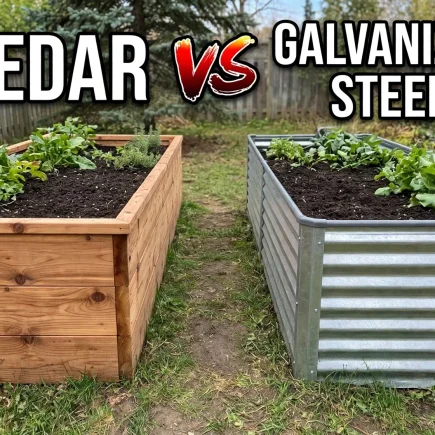
- Open bottom: It suits a spot where water can drain into the ground. On a deck there is nothing to catch water or soil.
- Weight: The wooden planter holds about 5 cubic feet (39 gal). Filled to the top, soil at 75 lb per cubic foot comes to roughly 390 lb (180 kg), above its 220 lb capacity, while soilless mix comes to about 50 lb. The deep bed holds about 13 cubic feet (376 L).
- Price and delivery: Priced at $116.99 (Outsunny Wooden Raised Planter Box With Drain Holes) and $114.99 (Outsunny Galvanized Raised Garden Bed, Deep Root Planter Box) at time of writing, with free shipping to most of Canada. Contact us within 30 calendar days of delivery to return it.
What Mistakes Do Gardeners Make With Beds on a Deck or Patio?
- Using an open-bottom bed on a deck: Water and fine soil reach the boards and whatever is below.
- Adding gravel to the bottom: It does not improve drainage.
- Sealing the base with plastic: Water cannot escape, so roots sit wet.
- Leaving the tray full: Standing water breeds mosquitoes and can rot roots.
- Choosing depth by looks: A shallow bed limits tomatoes, peppers and squash.
- Filling before checking weight: A large bed of soil is heavy.
Key Takeaways for Deck and Patio Gardening
A raised garden bed can sit on a deck or patio when water has an exit that is not the surface. Elevated beds with a base, drainage holes and a tray often suit decks and slabs, while open-bottom beds suit soil or gravel. Check the filled weight against the structure and the bed’s stated capacity before you fill it. Choose depth by crop, with 12 inches or more for tomatoes.
Expect to water often on hard surfaces, empty the tray after rain and read the bed’s manual for winter care. Ask the owner of the deck or building about load limits first.
FAQs
On a solid patio surface, drainage holes with a tray are the better fit, because an open bottom sends water and fine soil onto the slab. An open bottom suits soil or gravel. Extension guidance says containers need drainage holes, and beds on hard surfaces dry out faster.[1][3]
Raise the bed slightly, keep drainage holes unblocked and put a tray under the base. Empty the tray after watering, because standing water can cause root rot and mosquitoes. A University of Saskatchewan guide advises raising containers slightly to prevent water rings and discolouration on decks.[1][2]
Soil weighs about 75 lb per cubic foot (about 34 kg), so a 5 cubic foot bed holds roughly 375 lb (170 kg) of soil, from 5 x 75. Soilless mix weighs about 10 lb per cubic foot. Check the deck, balcony or condo rules first.[1]
References
[1] Growing Vegetables in Containers and Salad Tables – University of Maryland Extension.
https://extension.umd.edu/resource/growing-vegetables-containers-and-salad-tables
[2] Small Space Gardening – Gardening at USask, University of Saskatchewan.
https://gardening.usask.ca/articles-and-lists/articles-how-to/small-space-gardening.php
[3] Growing Vegetables in Raised Beds – University of Maryland Extension.
https://extension.umd.edu/resource/growing-vegetables-raised-beds
[4] Raised Bed Gardens – University of Minnesota Extension.
https://extension.umn.edu/garden-and-home/yard-and-garden/gardening-in-minnesota/raised-bed-gardens
[5] Plants Grown in Containers, Extension Gardener Handbook chapter 18 – NC State Extension.
https://content.ces.ncsu.edu/extension-gardener-handbook/18-plants-grown-in-containers
[6] How to Plant a Small-Space Garden – Parks Canada.
https://parks.canada.ca/voyage-travel/experiences/famille-family/parka/activites-activities/jardin-garden
[7] Preparing Your Garden for Winter – Gardening at USask, University of Saskatchewan.
https://gardening.usask.ca/articles-and-lists/articles-how-to/preparing-your-garden-for-winter.php
[8] Outsunny Wooden Raised Planter Box with Drain Holes, 45.3×21.7×31.5 inch | Aosom Canada.
https://www.aosom.ca/item/outsunny-wooden-raised-planter-box-with-drain-holes-for-vegetables-flowers-herbs-outdoor-garden-bed-45-3×21-7×31-5inch~1K48M2QNS7800.html
[9] Outsunny Galvanized Raised Garden Bed, Deep Root Planter Box, 5′ x 2′ x 2′, Dark Grey | Aosom Canada.
https://www.aosom.ca/item/outsunny-galvanized-raised-garden-bed-deep-rot-planter-box-outdoor-garden-bed-with-plant-labels-5-x-2-x-2-dark-grey~23GK47T0S9G00.html