














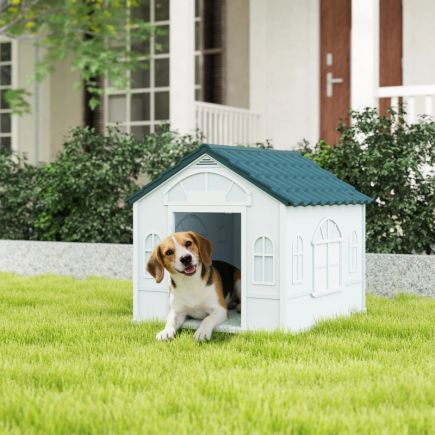




Building your own dog stairs is a great way to help your dog safely reach higher places without struggling or risking injury. Whether they need assistance getting into the car, onto the bed, or up on the sofa, a custom design gives you full control over strength, size, and comfort. These DIY stairs also fold flat and convert into a ramp, making them ideal for senior dogs, small breeds, and pets with mobility challenges.

Plan Your Dog Stairs (Height & Size)
Before cutting any wood, decide how high the stairs need to be and how comfortable the steps should feel for your dog.
a) Measure the Target Height
Measure from the floor to the surface your dog will climb to:
- Bed
- Sofa
- Tailgate of your truck
Example:
If your bed/top of the tailgate is 24″ high, your stairs should reach roughly 24″.
b) Choose Number of Steps
For most dogs, a step height (rise) of 6–8″ is comfortable.
- 3 steps × 8″ rise ≈ 24″ total height
- For smaller or older dogs → use 4 shorter steps (e.g., 6″ rise each)
c) Choose Step Depth and Width
- Tread depth (front-to-back): 9–11″ (10″ is a good average)
- Stair width (side-to-side): 14–18″ depending on dog size
- Small dogs: 12–14″
- Medium/Large: 16–18″
In this guide, we’ll use a standard build for
- Steps: 3
- Total height: 24″
- Tread depth: 10″
- Width: 16″
You can adjust these numbers to suit your own dog.
Tools & Materials
Materials Required
| Material | Specification / Quantity | Purpose |
| ¾” plywood sheet | 1 sheet (4′ × 8′) | Main structure (treads, risers, stringers, legs, stretchers) |
| Wood screws | 1¼”–1½” length | Securing stretchers, cleats, and structural joints |
| Wood glue | As needed | Strengthening all wood joints |
| 3/8″ hardwood dowel rod | As needed | Dowel joinery for treads & risers |
| 3/8″ bolts | 4 pcs (2½”–3″ length) | Attaching folding legs (pivot bolts) |
| 3/8″ washers | 8 pcs | Spacers between legs and stringers |
| 3/8″ lock nuts | 4 pcs | Securing bolts firmly while allowing rotation |
| Anti-slip grip tape | 1 roll (adhesive-backed) | Safe traction for your dog on the treads |
| Optional finishes | Wood stain, paint, varnish | Aesthetic and protective finish for the stairs |
Tools Required
| Tool | Specification | Use |
| Circular saw | With straight edge/guide | Cutting plywood sheets and parts |
| Drill/driver | Standard | Drilling holes, inserting screws |
| ¾” Forstner bit | – | Drilling pocket holes for bolt heads |
| 3/8″ drill bit | – | Drilling dowel and bolt holes |
| Measuring tape | – | Marking accurate dimensions |
| Combination square | – | Ensuring clean 90° and angle marks |
| Pencil | – | Marking cut lines and hole positions |
| Clamps | – | Holding pieces during cutting/gluing |
| Sandpaper or sander | 120–220 grit | Smoothing edges and surfaces |
| Router (optional) | Small round-over bit | Softening sharp edges |
Important Safety Tips
- Always wear eye and ear protection when cutting and drilling.
- Clamp wood securely before cutting or drilling.
- Keep hands away from the saw blade path.
- Let drill bits do the work, don’t force them.
- Test the stairs and ramp without your dog first, then let your dog use them under supervision.
Cut List Table for 24-Inch High Dog Stairs (All from ¾” Plywood)
| Part Name | Quantity | Dimensions (L × W × H) | Notes / Purpose |
| Treads (Steps) | 3 pcs | 16″ wide × 10″ deep | These are the horizontal steps your dog walks on. |
| Risers | 2–3 pcs | 16″ wide × 7″ high | Optional( skip if you want open-backed steps.) |
| Stringers (Side Panels) | 2 pcs | approx. 34″ long × 9″ high | Angled cuts required to match stair rise/run. |
| Legs | 2 pcs | 26–30″ long × 3–4″ wide | Length changes depending on the angle of the stairs. |
| Short Stretchers | 2 pcs | 10–12″ long × 3–4″ wide | Installed between stringers for extra support. |
| Long Leg Stretcher | 1 pc | approx. 16″ long | Should match the distance between legs (usually stair width). |
Step-by-Step Dog Stairs Build Process
Step 1: Mark and Cut the Plywood
- Lay the full plywood sheet on sawhorses or a work surface.
- Use a measuring tape and pencil to mark the main sections (treads, risers, stringers, legs, stretchers).
- Clamp a straight edge (like a guide) along your cut lines.
- Use a circular saw to make long, straight cuts.
Goal: Create rectangular blanks for all the main parts before you start angles and detailed cuts.
Cut the Side Stringers
The stringers are the two side pieces that define the shape of your stairs.
- From your rough stringer blanks (e.g., 34″ × 9″), mark the bottom and top ends.
- Set your saw or mark lines for:
- Bottom angle: 50° (this edge rests on the ground)
- Top angle: 40° (this edge meets the bed/vehicle or top step)
- Cut one stringer, then place it on top of the second blank and trace it so both match.
- Cut the second stringer to the same shape.
Now you have two identical stringers.
Mark and Drill Holes in the Stringers
You need holes for:
- The treads and risers (dowel joints)
- The bolts that hold the folding legs
a) Mark tread positions
- Lay one stringer flat.
- From the bottom, mark lines at:
- 8″ (top of first step)
- 16″ (top of second step)
- 24″ (top of third step)
- On each line, mark where the treads and risers will sit (front and back edges).
b) Drill dowel holes
You’ll drill matching holes in stringers, treads, and risers, so keep your layout consistent.
- On each tread location, mark where the dowel should go (e.g., 1″ in from the inside edge).
- Using a 3/8″ drill bit, drill holes in the stringers at these marks to a depth of about 1″–1¼”.
- Repeat on the other stringer, making sure the holes line up.
c) Drill leg bolt holes (for folding mechanism)
- Decide where the legs will attach, typically near the bottom of the stringer, but not too close to the end (for strength).
- Use a ¾” Forstner bit to drill a shallow “pocket” hole on the outside face of the stringer. This will hide the bolt head.
- In the centre of that pocket, switch to a 3/8″ bit and drill all the way through the stringer.
- Repeat on the other side.
Now your bolt can sit flush, and the leg will pivot on it.
Prepare the Treads and Risers
- Cut your treads and risers to final size (e.g., 16″ × 10″ for treads, 16″ × 7″ for risers).
- Mark where the dowels will go on their ends, match these to the spacing you used on the stringers.
- Use a 3/8″ drill bit to drill 1″ deep holes in the ends of each tread and riser.
- Lightly sand all edges, or use a router with a small round-over bit to soften the corners.
Tip: Use a piece of tape on the drill bit as a depth marker
Add Tread Cleats and Dowels
Cleats are small strips on the underside of the treads that help support them.
- Cut cleats from scrap ¾” plywood to about 2″ wide and just shorter than tread width.
- Apply wood glue to one edge of each cleat.
- Position them underneath each tread, slightly back from the front edge.
- Clamp or screw temporarily until dry.
Add Dowels:
- Cut 3/8″ dowel rod into pieces just over 1¼” long.
- Put glue into the drilled holes at the ends of treads and risers.
- Insert dowels so about half their length sticks out.
Let everything dry completely.
Assemble the Stair Frame
Now you’ll build the main stair structure.
- Lay one stringer flat on the bench with the inner face up.
- Apply a small amount of glue into each dowel hole on the stringer.
- One by one, insert the treads and risers by lining up their dowels with the matching holes in the stringer.
- Once all treads/risers are in place on one side, bring the second stringer down over the exposed dowels.
- Carefully align and press everything together.
To lock the frame:
- Use two short stretchers between the stringers, one near the top and one near the bottom.
- Pre-drill and screw these stretchers through the stringers.
Now you have a rigid stair frame.
Build and Attach the Folding Legs
The legs support the stairs when in “step mode” and fold flat when used as a ramp.
- Cut two leg pieces to length (e.g., 28–30″ long × 3–4″ wide).
- Cut a 40° angle on the bottom of each leg so they sit flat when open.
- Position each leg against the stringer where you drilled the bolt hole.
- Use a 3/8″ drill bit (through the existing stringer hole) to mark the leg, then drill through the leg.
- Insert a 3/8″ bolt from the outside of the stringer, through the Forstner pocket and the hole.
- Add a washer between the stringer and the leg (this acts as a spacer).
- Slide on the leg.
- Add another washer on the outside of the leg.
- Secure with a lock nut. Tighten until snug but still able to pivot smoothly.
Repeat on the other side.
Add the Leg Stretcher and Test Folding
The leg stretcher keeps the legs from spreading apart.
- Stand the stairs upright with the legs folded out in their working position.
- Measure the distance between the legs at a comfortable angle (make sure the stairs are stable).
- Cut your leg stretcher to this length (roughly equal to stair width).
- Position the stretcher between the legs, a few inches up from the floor.
- Pre-drill and screw through the legs into the ends of the stretcher.
Now:
- Open and close the legs a few times.
- Confirm they fold completely flat against the underside of the stairs.
Sand, Finish, and Add Grip Tape
- Sand all surfaces and edges with 120–220 grit.
- Remove dust with a brush or cloth.
- Optionally apply paint, stain, or clear varnish. Let it dry completely.
- Cut strips of adhesive grip tape and stick them along each tread where the dog’s paws will land.
Your stairs are now ready to use.
Optional Upgrades and Customisation
You can make your DIY dog stairs look more “furniture-like” with:
- Fabric or carpet-covered treads
- Painted or stained finish to match your room
- Rubber feet under stringers and legs for non-slip on hard floors
- Hidden storage space under the top step
- Cut-out handles on the sides to carry the stairs easily
Building your own Dog Stairs not only saves money but also lets you tailor the design to your dog’s exact mobility needs, home layout, and long-term comfort. With a foldable ramp option, you gain flexibility for travel, outdoor use, and changing health conditions.
As your dog ages, you can easily adjust surface grip or add padding to keep the stairs safer and more supportive. This simple project empowers you to create a dependable solution that grows with your pet.
FAQ
1. How do I stop the stairs from sliding on hardwood or tile floors?
Attach rubber pads or non-slip furniture feet under the stringers and folding legs. You can also place the stairs against a wall or bed frame to prevent shifting during use.
2. How do I fix wobbling or creaking after a few weeks of use?
Check all screws and bolts to ensure nothing has loosened. Tighten the leg stretcher and cleats if needed. Adding glue to non-moving joints or reinforcing with an extra bracket can eliminate wobbling entirely.
3. What should I do if my dog slips even with grip tape installed?
Choose a thicker, textured non-slip tape or switch to indoor-outdoor carpet strips. Dogs with long nails may also slip more, so trimming claws regularly helps improve grip and stability.