


















A desk is the one piece of furniture you will touch every single working day, so the choice between a standing desk and a traditional desk is bigger than it looks. One lets you shift between sitting and standing to break up long hours at the computer. The other is the fixed, familiar setup most home offices have used for decades. Both can anchor a productive workspace, but they suit different bodies, budgets, and daily routines.
This guide compares the two across five key areas: health and posture, daily comfort, cost and adjustability, space and style, and long-term value. We break down exactly what each desk does well and finish with a simple guide to which one fits your workday. The short answer may be a bit of both, and we will show you the flexible way to get there.
1. Meet the Contenders: Standing Desks vs. Traditional Desks
Before comparing their benefits and drawbacks, it helps to understand what each type of desk is designed to do and how they differ.
What Is a Standing Desk?
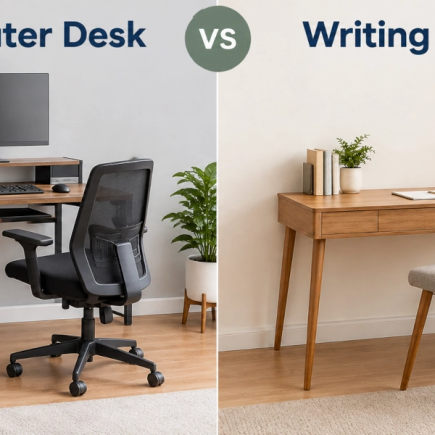
A standing desk is a height-adjustable workstation that lets you switch between sitting and standing throughout the day. It can be adjusted manually with a crank or electronically with a motor for quick and easy height changes.
What Is a Traditional Desk?
A traditional desk is a fixed-height workstation designed for seated use. It is commonly made from wood, metal, or engineered wood and may include built-in storage such as drawers, shelves, or a hutch.
The range runs wide, from compact fixed writing desks up to full Standing Desks with memory height presets, and everything in between on the office desks and work stations page.
2. Health and Posture Benefits
Both desk types support productive work, but they affect your posture and comfort differently throughout the day.
Standing Desk Advantages
- Encourages you to alternate between sitting and standing, helping reduce strain from prolonged sitting
- Promotes better circulation and a more upright posture during long work sessions
- Height adjusts to suit your ideal sitting or standing position and can accommodate multiple users
Traditional Desk Advantages
- Fixed height provides a stable workspace without needing adjustments
- Pairs well with an ergonomic office chair for comfortable seated work
- Simple, familiar setup that’s easy to use every day
Best for posture: Standing desks encourage movement and better posture throughout the day, while traditional desks work well when paired with a supportive ergonomic chair.
3. Productivity, Comfort, and Daily Use
The best desk depends on how you work. Some users benefit from frequent movement, while others prefer a dedicated seated workspace.
How Each Desk Fits Different Work Styles
- Standing desks are ideal for long meetings, extended computer work, and users who prefer changing positions
- Traditional desks suit focused tasks such as writing, designing, or precision mouse work
- Standing desks with wheels are easy to move between rooms or shared workspaces
- Traditional desks with drawers and shelves provide convenient built-in storage
| Work Style | Standing Desk | Traditional Desk |
| Long video calls | Alternate between sitting and standing | Comfortable seated setup |
| Deep focus work | Adjust to sitting height when needed | Stable workspace with no adjustments |
| Shared or small office | Portable models move easily | Fixed layout that’s easy to organize |
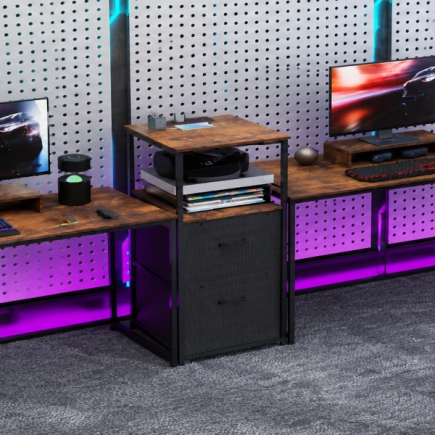
| Gaming or dual monitors | Adjustable screen height for better ergonomics | Spacious desktops for multi-monitor setups |
| Storage needs | Minimal cable management | Built-in drawers and shelves |
Best for daily comfort: Standing desks offer greater flexibility during long workdays, while traditional desks are ideal for users who prefer a dedicated workspace with integrated storage.
4. Cost, Assembly, and Adjustability
Price, setup, and adjustment features vary depending on the desk type you choose.
Standing Desk Options
- Manual standing desks: Lower-cost models adjusted with a hand crank
- Electric standing desks: Raise or lower with the press of a button and often include memory height settings
- Standing desks with wheels: Combine height adjustment with easy mobility for flexible workspaces
Traditional Desk Benefits
Traditional desks are generally quicker to assemble and more affordable because they don’t include lifting mechanisms or motors.
| Option | Height Adjustment | Typical Price | Best For |
| Fixed traditional desk | Fixed sitting height | $70–$180 | Budget-friendly workspaces |
| Manual standing desk | Hand-crank adjustable | $110–$220 | Affordable sit-stand setups |
| Electric standing desk | Push-button adjustable | $180–$400 | Frequent height adjustments |
| Standing desk with wheels | Adjustable and portable | $130–$260 | Shared offices and small spaces |
| Desk with storage | Fixed height with drawers or shelves | $100–$260 | Organized workstations |
Best for tight budgets: Traditional desk, for the lowest upfront cost and quickest setup. A manual Adjustable Standing Desk is the best middle ground if you want sit-stand benefits without paying for a motor.
5. Space, Style, and Office Fit
The ideal desk should complement both your workspace and the way you use it every day.
Choosing the Right Desk for Your Space
- Compact standing desks with wheels are ideal for apartments and multi-purpose rooms
- Traditional desks with hutches or shelves maximize vertical storage in dedicated home offices
- Standing desks offer a clean, modern design that suits minimalist interiors
- Traditional wooden desks blend naturally with classic or warm décor
Best for small spaces: A standing desk with wheels offers the greatest flexibility, while a traditional desk is a better choice if you have a permanent workspace and need more storage.
6. Which Desk Is Right for You?
The best choice depends on your work habits, available space, and budget.
The All-Day Desk Worker
Choose an electric standing desk if you spend most of your day at a computer. Switching between sitting and standing can improve comfort and help you stay focused throughout the day.
The Budget-Conscious or First-Time Buyer
A traditional desk or a manual standing desk provides a practical and affordable workspace. Both offer solid value and can be upgraded later if your needs change.
The Small-Space or Shared-Room Worker
A compact standing desk with wheels is the most versatile option. It can be moved easily between rooms and stored neatly when not in use, making it ideal for flexible home office setups.
7. Why Not Both? Building a Flexible Setup
Here is the truth most home office owners land on: a great setup often blends the two rather than picking a single winner
- Use a standing desk for your main computer work and reserve a small traditional desk or side table for paperwork or a second screen
- Pair either desk with a Standing Desk Stool for light, active support during long standing stretches
- A height-adjustable desk with a traditional desk’s storage accessories, like drawer units or shelving, gives you the best of both approaches
To round out either setup, add an ergonomic chair, a monitor arm, or cable management from the full office supplies range, or browse the wider office desks and work stations collection for the rest of your workspace.
8. Which Desk Should You Choose?
There’s no one-size-fits-all answer. The right desk depends on how you work, the space you have, and the features that matter most to you.
- Choose a standing desk if you want better posture, greater flexibility, and the ability to alternate between sitting and standing throughout the day.
- Choose a traditional desk if you prefer a simple, budget-friendly setup with a stable work surface and built-in storage.
- Consider a hybrid setup, such as a standing desk paired with a small side table or storage unit, if you want the flexibility of a sit-stand workstation without sacrificing organization.
Whatever your pick, browse the full range of HOMCOM standing desks and office desks and work stations to build a home office that keeps up with your workday.
FAQs
A standing desk can support better posture by letting you alternate between sitting and standing throughout the day, which may help reduce lower back discomfort from prolonged sitting. However, a traditional desk paired with an ergonomic chair can also provide excellent comfort when used with good posture.
A manual standing desk is a budget-friendly option if you only adjust the height occasionally. An electric standing desk is more convenient for frequent position changes, allowing you to switch between sitting and standing with the push of a button.
Most standing desks require a footprint similar to a traditional desk because the adjustment comes from the lifting frame rather than a larger desktop. If space is limited, a compact model with wheels offers added flexibility.
Yes. Many standing desks are designed to support dual-monitor setups and gaming equipment. Adjustable height also helps keep your monitors at eye level for improved comfort whether you’re sitting or standing.
In most cases, yes. Traditional desks are typically more affordable because they don’t include motors or lifting mechanisms. They’re also easier to assemble, making them a practical choice for first-time home office setups.