









Choosing the right dog crate size is one of the most important steps in creating a comfortable, secure, and effective resting space for your dog. A crate that’s too small restricts natural movement, while one that’s too large removes the sense of protection dogs instinctively seek. The ideal crate offers a balanced amount of room, enough for comfort, not enough to feel exposed.

This guide explains exactly how big a dog crate should be, how to measure your dog correctly, how crate size influences behaviour, and how to match crate dimensions to your dog’s needs.
The Benefits of Choosing the Right Crate Size
Choosing the right crate size directly influences how comfortable and secure your dog feels inside it. Dogs naturally rest in sheltered spaces that give a sense of boundary, and when the crate matches their body size, it becomes a familiar, reassuring spot they can retreat to.
A correctly sized crate supports:
- Calm behaviour and predictable sleep
- Reduced stress when resting alone
- Stronger crate-training progress
- Easier, more consistent house-training habits
An incorrectly sized crate may lead to:
- Hesitation entering the crate
- Restlessness once confined
- Slower adaptation during training
- Signs of uncertainty or unease
The right size helps a crate function as a stable, comfortable environment rather than just an enclosure.
What a Properly Sized Crate Should Provide
A well-sized crate is not about offering maximum space, it’s about offering the right amount. Too much space removes structure, and too little space removes comfort. The best crate size supports natural movement and a sense of enclosure without creating tightness.
A correctly sized crate allows your dog to:
- Stand upright without lowering their head
- Turn around smoothly without bumping edges
- Lie flat on their side with their legs extended
- Enter and exit without squeezing
- Settle into a relaxed posture effortlessly
The space should feel cosy, not cramped, protective, not spacious. This balance mirrors what dogs naturally seek in a resting zone.
How to Measure Your Dog for the Right Crate Size
Accurate measurements are the only reliable method to select the right crate. Breed and weight provide general guidance, but no two dogs are built exactly alike. Measuring ensures the crate fits your dog’s proportions. Measure your dog once, accurately, to eliminate future confusion.
1. Measure Your Dog’s Length
To measure length correctly:
- Ask your dog to stand naturally.
- Measure from the tip of the nose to the base of the tail (not the tip).
- Add extra space for comfort:
- Small dogs: +2 inches
- Medium dogs: +3 inches
- Large dogs: +4 inches
This gives you the required crate length.
2. Measure Your Dog’s Height
Many dogs are taller when sitting than when standing.
To measure height:
- Ask your dog to sit upright.
- Measure from the floor to the top of the head or ears (whichever is taller).
- Add extra inches for comfortable clearance.
This gives you the required crate height.
Crate Size Rules You Should Always Follow
Once you have your dog’s measurements, use them as the baseline for selecting a crate. A crate fits correctly when:
- The length accommodates your dog’s body without forcing tight positions
- The height allows them to sit upright
- Turning around is effortless
- Resting poses feel natural
Signs the size is correct:
- Easy, confident entry
- Quick settling without pacing
- Smooth shifting of positions during rest
- Consistent, relaxed sleep
These checks help confirm that the crate supports natural comfort without repeating the exact measurement process.
Dog Crate Size Comparison Table
Use this table to visualise crate size ranges that align with typical dog measurements.
| Dog Category | Dog Length | Recommended Crate Length | Dog Height | Recommended Crate Height |
| Small Dogs | Up to 18 in | 22–26 in | Up to 14 in | 18–20 in |
| Medium Dogs | 18–24 in | 28–32 in | 14–18 in | 22–24 in |
| Large Dogs | 24–32 in | 36–42 in | 18–24 in | 26–30 in |
| XL/Giant Dogs | 32–40+ in | 42–48+ in | 24–30+ in | 30–34+ in |
Always base your final choice on your dog’s specific body measurements.
When the Crate Size Is Wrong: What You’ll See
1. If the Crate Is Too Small
A cramped crate limits natural posture and quickly becomes uncomfortable.
Problems caused by inadequate space:
- Head must lower to stand
- Turning requires multiple small movements
- Full-body stretching is restricted
- Pressure develops on elbows or joints
- Dog becomes irritated or uneasy
Common behaviour signs:
- Frequent repositioning during rest
- Whining or restlessness once inside
- Pausing or backing out when entering
- Difficulty settling into sleep
A dog should never need to compromise body posture inside their crate.
2. If the Crate Is Too Large
A crate that feels overly open removes the structured, enclosed feeling dogs depend on for security.
Problems caused by excessive space:
- Difficulty settling due to lack of boundaries
- Dog sleeping in only one corner
- Wandering or pacing before resting
- Weak crate-training habits
- Uneasy behaviour due to exposure
Behaviour signs of an oversized crate:
- Seeking tighter hiding spots around the home
- Moving restlessly inside the crate
- Sleeping only in a small section
- Appearing alert instead of relaxed
A crate should feel like a protected resting zone, not an open room.
Crate Size Considerations for Puppies
Sizing for puppies requires a different approach because their bodies grow rapidly. Instead of buying multiple crates, choose one crate that supports growth from the start.
Best strategy for puppies:
- Select a crate based on adult size, not puppy size
- Use a divider panel to adjust interior space
- Expand space gradually as the puppy grows
- Keep the area small enough to help with house-training
Importance of Dividers in Dog Crates:
- Create a correctly sized “den area”
- Reduce toileting inside the crate
- Prevent the puppy from feeling overwhelmed
- Save money by avoiding repeated upgrades
A divider turns one crate into a perfect fit for every stage of development.
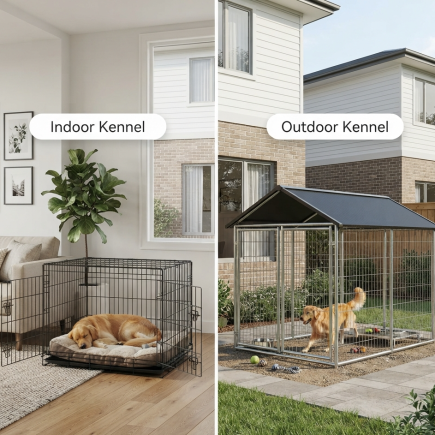
How Crate Type Affects Interior Space
Different crate styles offer different usable dimensions, even if the exterior measurements look similar.
Wire Crates
- Most accurate interior dimensions
- Excellent airflow
- Easy to size visually
- Ideal for training and home use
Plastic / Travel Crates
- Internal walls slope inward
- Usable space is slightly smaller
- Good for dogs who prefer enclosed environments
Furniture-Style Crates
- Designed for aesthetics
- Thick walls reduce internal room
- Should be checked carefully for usable dimensions
Selecting the right crate size is ultimately about matching the space to your dog’s natural posture, daily routine, and long-term needs. Once you’ve measured accurately and compared the dimensions carefully, the crate naturally supports smoother training, better rest, and a more predictable routine at home. With the right fit, the crate becomes an easy, dependable part of your dog’s environment, comfortable to use, simple to maintain, and aligned with the way your dog prefers to settle and relax.
FAQs
1. What should I do if my dog keeps lying against the crate walls instead of using the full space?
This usually means your dog prefers a more enclosed feeling. You can add a soft crate cover or place the crate in a quieter corner to increase security. If the crate is too open or bright, dogs often move toward the edges for reassurance.
2. How can I tell if my dog is uncomfortable in their crate despite choosing the right size?
Watch for subtle signs like shallow breathing, stiff posture, or hesitation when entering. Even in the correct size, uncomfortable bedding, placement, or noise can affect behaviour. Adjust the environment before assuming size is the issue.
3. What should I do if my dog outgrows their crate faster than expected?
If your dog is still growing, temporarily adjust comfort with bedding or dividers while planning for the next size up. Avoid cramped conditions, as even brief periods in a too-small crate can affect posture and behaviour.
4. Does adding bedding or a mat affect the internal space needed?
Yes, thick bedding can slightly reduce usable height and turning space. Choose a crate size with enough clearance so the dog can still stand and stretch comfortably after bedding is added.