






Finding the right spot for your dog’s crate can make a bigger difference than most people realise. A well-placed crate becomes a familiar retreat where your dog can relax, nap, and feel secure. But if the crate ends up in the wrong area, too noisy, too isolated, or too warm, your dog may avoid it altogether.
Key Factors to Consider Before Picking a Spot
1. Household Traffic Flow
Dogs feel more secure when they can observe family routines without sitting in the middle of the chaos. Choose a location that’s near activity, but not directly in the busiest walkway.
Ideal balance:
- Visible space
- Slightly tucked away
- No constant foot traffic
2. Light, Temperature, and Ventilation
Avoid placing the crate:
- In direct sunlight
- Against heaters, radiators, or fireplaces
- In front of cold drafts
- Beside loud appliances
- Under air-conditioning vents
A consistent, comfortable temperature helps dogs sleep deeply and stay relaxed.
3. Safety & Accessibility
Make sure the area is free from:
- Electrical cords
- Toxic plants
- Items that could be pulled into the crate
- Wobbly furniture
- Heavy objects that could fall
4. Emotional Comfort
Dogs feel reassured when they can see you. Choose a spot that gives them visibility, especially during training or early adoption stages.
Best Places to Put a Dog Crate in Your Home
1. Living Room or Lounge Area
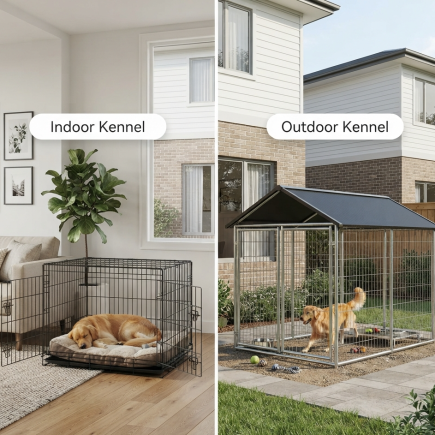
The living room is a natural choice because it’s where the family spends most of their downtime.
Why it works:
- Your dog feels included and calm
- Perfect for evening relaxation
- Good visibility without being isolated
Best placement ideas:
- Beside a sofa
- In a corner behind a plant or side table
- Next to a wall that provides a “den-like” feeling
Avoid:
- Kids’ play zones
- Direct heat or direct sunlight
- TV speakers if your dog is sound-sensitive
2. Bedroom
For many dogs, especially puppies or anxious companions, the bedroom is one of the most comforting locations.
Benefits:
- Reduces nighttime whining
- Builds trust and confidence
- Helps with early potty training since you can hear cues
Over time, you can shift the crate gradually to its long-term location if desired.
3. Kitchen or Utility Area
This space works well during the daytime, especially in homes with open-concept layouts.
Advantages:
- Dogs stay close to family activity
- Easy cleanup for young puppies
- Naturally cooler flooring
- Good visibility and supervision
Be cautious of:
- Ovens, stovetops, and heat sources
- High-activity periods that may overstimulate puppies
4. Home Office or Spare Room
A calm, low-traffic room helps dogs settle during work hours or quiet moments.
Best for:
- Dogs that love peaceful naps
- Owners who work from home
- Dogs who need a break from busier family spaces
This location can also be ideal for older dogs or those sensitive to noise.
5. Hallway or Landing
These areas are often overlooked but can work well with the right crate size.
Pros:
- Quiet, low-stimulation zones
- Doesn’t take up valuable living space
- Dogs can still watch movement without feeling overwhelmed
Cons:
- Too much passing traffic can disturb light sleepers
- Some hallways may feel cramped for large crates
6. Laundry Room
A laundry room is often quiet and out of the way, perfect for mid-day naps.
Why it’s useful:
- Comfortable distance from busy spaces
- Easy-clean flooring
- Calmer atmosphere
- Convenient sink access for water bowls
Just ensure appliances aren’t running frequently, as noise can stress some dogs.
7. Finished Basement
A finished basement can offer a cozy, temperature-controlled retreat.
Works well for:
- Dogs that prefer quieter spaces
- Families who need to keep the main floor clutter-free
Important: Avoid placing crates in unfinished, damp, or uninsulated basements.
Places to Avoid
Avoid placing the crate in areas that are:
- Completely isolated from family activity
- Near loud appliances (dishwashers, washing machines)
- Too warm or too cold
- Near hazardous items
- In rooms that feel unfamiliar or stressful for the dog
- Where sunlight shines directly inside the crate
Garages, attics, and storage rooms are generally poor choices because they feel lonely and disconnected from family life.
Special Crate Placement Tips Based on Dog Type
1. Puppies
- Keep the crate near your bed at night
- Use a quiet daytime location for naps
- Choose areas with easy cleanup
- Avoid over-stimulating spots
2. Adult Dogs
- Balance visibility and privacy
- Choose a comfortable, stable corner
- Consider a room where the family spends evenings
3. Senior Dogs
- Avoid stairs
- Choose a warm, draft-free location
- Ensure the crate is easily accessible
4. Anxious or Reactive Dogs
- Avoid windows overlooking busy streets
- Cover one or two sides of the crate for security
- Choose low-energy rooms
- Reduce visual triggers
Crate Placement for Small Homes or Apartments
Living in a compact layout doesn’t mean you’re limited.
Try:
- Under a console table
- Beside the sofa as a side table
- Under a staircase nook
- In a bedroom corner
- As part of a multi-functional furniture piece
Smaller spaces benefit from crates that double as décor, wood-style or furniture-style crates blend in naturally.
Should You Use More Than One Crate?
Sometimes, yes.
Multiple crates help when you want:
- A daytime crate near activity
- A bedtime crate near your sleeping area
- A “quiet retreat” for overstimulation moments
This setup is especially useful for puppies, multi-dog homes, or anxious dogs who appreciate choice.
Crate Placement Mistakes to Avoid
- Putting the crate in the busiest walkway
- Situating it too far from family life
- Ignoring temperature fluctuations
- Placing it behind doors that open into the crate
- Choosing a spot with overwhelming noise
- Using a drafty room
- Putting the crate where household scents (cleaners, candles) are too strong
How to Make Any Crate Location More Comfortable
- Use soft bedding that fits snugly
- Add a breathable crate cover to create a cozy den
- Keep water nearby for longer stays
- Include safe chew toys
- Avoid clutter around the crate
- Add a small mat or rug underneath to reduce sound and slipping
- Ensure the crate is stable, no wobbling
If your dog hesitates to enter the crate, try placing treats inside, feeding meals in the crate, or leaving the door open during the day.
Quick Checklist: Is This a Good Crate Location?
Your chosen spot should:
- Allow your dog to see you or hear your activity
- Be temperature-stable
- Feel quiet but not lonely
- Have enough space for easy crate access
- Be free from hazards
- Not block household walkways
- Feel naturally calm
If most of these fit, you’ve found the right place.
With the right placement, Dog Crates become calm, secure spaces your dog can rely on. A thoughtful spot makes settling easier and keeps your home routine smooth.
FAQs
1. How do I place the crate if my home has uneven flooring or slightly slanted surfaces?
If the floor isn’t perfectly level, the crate may wobble and make your dog uneasy. Use non-slip furniture pads or a thick mat underneath to stabilise the crate. Even small adjustments can make the crate feel secure and help your dog settle comfortably.
2. What’s the best place for a crate if my dog gets startled when people walk past unexpectedly?
Choose a spot where approaching footsteps are more predictable such as placing the crate facing the main room rather than having the entrance toward a hallway. This gives your dog a clear view of anyone approaching, reducing surprise and startle reactions.
3. How do I choose a crate location if my dog guards doorways or entrances?
Avoid placing the crate near thresholds, doorframes, or entry points where guarding behaviour is easily triggered. Instead, use a location along a solid wall where your dog doesn’t feel responsible for monitoring movement in and out of rooms.