












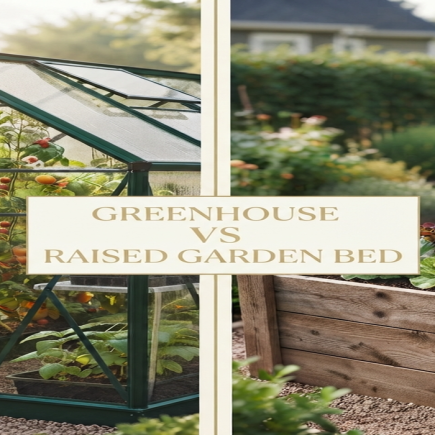







High tunnel and greenhouse both protect your plants and extend how long you can grow, and gardeners often use the terms loosely. But they are built for different jobs. One is an affordable way to add weeks to your season, and the other is a permanent, climate-controlled space for growing all year.
This guide answers the most common questions about high tunnels and greenhouses, comparing them across cost, climate control, durability and crops, so you can choose the right structure for your garden, your budget and your climate.
What Is the Difference Between a High Tunnel and a Greenhouse?
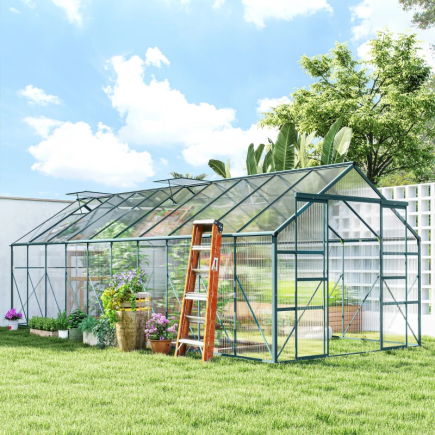
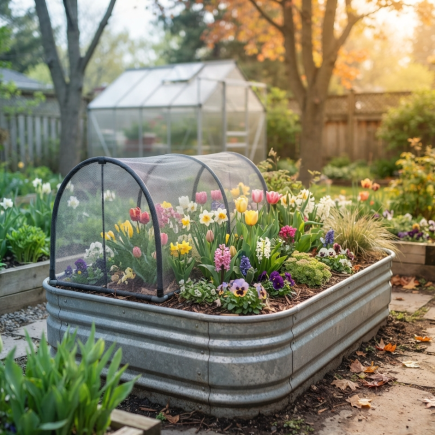
A high tunnel, also called a hoop house, is an unheated, plastic-covered structure that traps solar heat to extend the growing season. A greenhouse is a permanent, climate-controlled building with heating, cooling and ventilation that allows year-round growing.
In short, a high tunnel is a budget season extension, while a greenhouse is year-round climate control. The right choice depends on your climate, the crops you want to grow, and how much you want to spend to run it.
What Is a High Tunnel Used For?
A high tunnel is used to extend the growing season, letting you start earlier in spring and harvest later into fall by trapping solar heat and protecting crops from frost, wind and heavy rain.
It is the go-to structure for adding weeks or months to your normal growing window without the cost of climate control.
- Extends the season on both ends, spring and fall.
- Traps solar heat and shields crops from frost, wind and rain.
- Grows hardy, cool-season crops later into the colder months.
- Protects plants from pests and heavy weather.
Tip: If your goal is a longer season on a budget, a high tunnel almost always wins over a greenhouse.
What Is a Greenhouse Used For?
A greenhouse is used for year-round growing, holding a stable, controlled climate with heating, cooling and ventilation so you can grow whatever the weather outside, including tender and tropical plants.
It is the choice when you want full control over temperature and humidity, in any season.
- Enables true year-round growing, even in deep winter.
- Holds a consistent climate whatever the weather outside.
- Grows tropical plants, citrus, orchids and seedlings.
- Keeps tender plants alive through frost and cold snaps.
Tip: If you want to grow tomatoes in February or keep citrus alive through a cold snap, you need a greenhouse with real heating and ventilation.
How Do They Control Temperature and Airflow?
A high tunnel relies on passive ventilation through manual roll-up sides and solar heat, while a greenhouse actively controls temperature and humidity with heating, cooling and automatic vents.
This is the biggest practical difference in daily use, especially in extreme climates.
High Tunnel
- Uses passive ventilation through manual roll-up sides and doors.
- Relies on solar radiation for heat, with no built-in heating system.
- Needs hands-on monitoring to avoid overheating on sunny days.
Greenhouse
- Offers precise control with heating, cooling and automatic vents.
- Maintains steady temperature and humidity with little daily effort.
- Runs exhaust fans and vent openers that respond to the heat.
Tip: High tunnels take more daily attention to manage heat by hand, while greenhouses hold conditions steady on their own.
How Much Does a High Tunnel vs Greenhouse Cost?
A high tunnel costs roughly $2 to $8 per square foot, while a greenhouse costs about $15 to $25 per square foot as of 2026. High tunnels are cheaper to build and to run, since they use simple materials and no climate-control systems.
Budget is often the deciding factor, and the gap is significant.
High Tunnel
- Runs roughly $2 to $8 per square foot as of 2026.
- Lower material and setup costs, with no systems to buy.
- Minimal running costs, with no heating or cooling to power.
Greenhouse
- Runs closer to $15 to $25 per square foot as of 2026.
- Higher upfront cost for durable materials and a foundation.
- Ongoing energy costs to run heating, cooling and ventilation.
Tip: If staying on a tight budget matters most, a high tunnel is the most cost-effective way to grow more. A greenhouse costs more, but does far more.
Which Lasts Longer, a High Tunnel or a Greenhouse?
A greenhouse lasts longer overall because it is a permanent structure with a durable frame and glass or polycarbonate panels. A high tunnel frame lasts around 10 to 15 years, but its plastic cover needs replacing every 3 to 4 years.
High Tunnel
- Metal hoops covered with UV-resistant 6-mil greenhouse plastic.
- Frame lasts 10 to 15 years, cover replaced every 3 to 4 years.
- No permanent foundation, so it can be relocated if needed.
Greenhouse
- A permanent frame fitted with glass or polycarbonate panels.
- Built on a foundation such as a concrete slab or gravel.
- More durable and weather-resistant, but hard to move once built.
Tip: A high tunnel is the flexible, movable choice, while a greenhouse is a permanent investment that lasts many years.
What Can You Grow in Each One?
A high tunnel is best for hardy, cool-season crops and starting warm-season plants early, while a greenhouse can grow tender, tropical and precise-climate plants all year round. Matching the structure to your crops is one of the most important decisions.
High Tunnel
- Cool-season greens like lettuce, spinach, kale and radishes.
- An early start for tomatoes, peppers and cucumbers in spring.
- An extended harvest of many vegetables into fall.
Greenhouse
- Tropical plants, herbs and vegetables right through winter.
- Orchids, citrus trees and plants needing precise conditions.
- Tender plants kept alive during cold snaps and frost.
Tip: Hardy, seasonal vegetables thrive in a high tunnel, while tender, tropical or year-round plants need a greenhouse.
High Tunnel vs Greenhouse: Quick Comparison
A high tunnel wins on budget and flexibility, while a greenhouse wins on climate control and year-round growing. This table sums up how they compare.
| Factor | High Tunnel | Greenhouse |
| Main purpose | Season extension | Year-round growing |
| Climate control | Passive, manual airflow | Heating, cooling, auto vents |
| Structure | Metal hoops and plastic film | Permanent frame, glass or panels |
| Foundation | None, movable | Slab or gravel, fixed |
| Cost (2026) | About $2 to $8 per sq ft | About $15 to $25 per sq ft |
| Growing setup | Crops in the ground | Benches, pots and trays |
| Best for | Hardy seasonal crops | Tender and tropical plants |
Tip: Match the structure to your climate, crops and budget. A high tunnel for affordable season extension, or a greenhouse for full control and year-round growing.
Which One Should You Choose?
Choose a high tunnel for affordable season extension and hardy crops. Choose a greenhouse for year-round growing, tender plants and full climate control. Match your situation to one of these and the decision becomes clear.
Choose a High Tunnel If You:
- Want to extend your growing season on a budget.
- Grow hardy, cool-season crops or start plants early.
- Prefer growing directly in the ground over large beds.
- I want a structure you can relocate if needed.
- Like low maintenance with no systems to run.
Choose a Greenhouse If You:
- I want to grow year-round, including through winter.
- Grow tender, tropical or precise-climate plants.
- I want automated heating, cooling and ventilation.
- Prefer a permanent, durable structure.
- Are ready to invest more upfront and in running costs.
Making Your Growing Decision
The high tunnel versus greenhouse question comes down to your climate, your crops and your budget. A high tunnel is an affordable, flexible way to extend your season and protect hardy crops, while a greenhouse is a permanent, climate-controlled space for year-round growing and tender plants.
FAQs
A high tunnel, or hoop house, is an unheated structure covered with plastic that uses solar heat to extend the growing season. A greenhouse is more permanent and can use heating, cooling and ventilation for year-round growing and better climate control.
A high tunnel is generally cheaper than a greenhouse. In 2026, high tunnels may cost about $2 to $8 per square foot, while greenhouses can cost around $15 to $25. High tunnels also have lower running costs because they usually do not require heating or cooling systems.
A high tunnel can support growing through much of the year in mild climates, but it is not ideal for true year-round growing in cold regions. Without insulation or heating, it mainly extends spring and fall and protects hardy crops from frost, wind and rain.
A greenhouse generally lasts longer because it uses a permanent frame with glass or polycarbonate panels. A high tunnel frame can last 10 to 15 years, but its plastic cover may need replacement every 3 to 4 years. Greenhouses usually offer greater long-term durability.
Permit requirements vary by location, size and permanence. High tunnels may be exempt in some areas, while permanent greenhouses with foundations may require approval. Check local building codes, zoning rules and permit requirements before installing either structure.