




















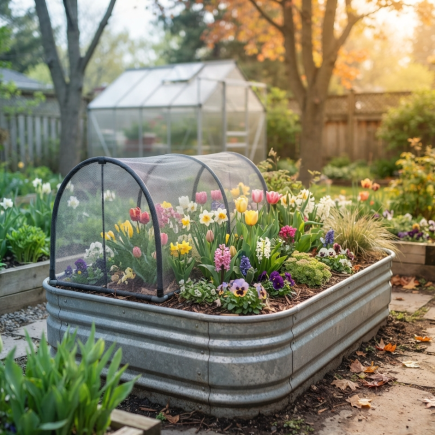











Raised garden beds provide ideal growing conditions with loose soil, steady moisture, and rich organic matter. Those same conditions also allow weed seeds to germinate quickly and establish strong root systems. In warm soil, some weed species can sprout within just a few days. The most effective way to control weeds is not aggressive digging or random pulling. It is a structured removal system that eliminates existing weeds while preventing future growth.
Below are 10 practical steps arranged in the correct order for efficient and lasting control.
Step 1: Cut Back Heavy Growth Before Pulling
When weeds are tall or dense, pulling immediately creates resistance and increases root breakage. Cutting first reduces bulk and exposes the root crown for cleaner extraction.
What to do:
- Use sharp pruning shears or a hand sickle.
- Cut weeds flush with soil level.
- Remove flowering tops immediately.
- Clear thick foliage to expose root bases.
- Work section by section for control.
Tip: Always remove seed heads first to prevent adding thousands of new seeds to the soil.
Step 2: Lightly Moisten the Soil Before Root Removal
Dry soil grips roots tightly and causes snapping, especially with taproots and rhizomes. Slight moisture loosens soil particles and allows deeper extraction.
How to prepare:
- Water lightly 30 to 60 minutes before weeding.
- Avoid working in muddy or compacted soil.
- Test moisture by squeezing a handful; it should crumble.
- Focus moisture around heavy weed clusters.
- Allow surface water to settle before digging.
Tip: Slightly damp soil improves full root removal and reduces repeat growth.
Step 3: Identify the Root Type Before Removing
Different weed species require different removal techniques. Misidentifying the root system is the main reason weeds return.
Common root structures:
- Fibrous shallow roots that pull easily.
- Horizontal rhizomes that spread underground.
- Tuber systems that regenerate from fragments.
- Crown forming weeds that regrow from the base.
Tip: Deep taproots that require vertical lifting, which often spread more aggressively in beds where gardeners are unsure how deep should be a raised bed soil for proper root control.
Step 4: Use the Correct Tool for Precision
Raised beds benefit from minimal soil disturbance, especially when you grow plants closely together and want to protect established root systems.
Best tools for raised beds:
- Hand fork for small weeds near vegetables.
- Narrow digging knife for taproots.
- Garden fork for loosening rhizomes.
- Stirrup hoe for tiny surface seedlings.
- Kneeling pad for steady close control.
- Avoid aggressive digging that flips soil layers.
Tip: Precision tools reduce root breakage and prevent activating buried weed seeds.
Step 5: Remove and Clear Debris Immediately
Leaving uprooted weeds on moist soil allows re-rooting and seed dispersal. Clearing the area fully ensures a clean reset.
After pulling:
- Shake soil back into the bed.
- Inspect holes for broken root pieces.
- Collect weeds in a container.
- Remove debris from the growing area.
- Dispose of mature or seeded weeds properly.
- Dry perennial roots before composting if needed.
Tip: Do not leave pulled weeds sitting in the bed overnight.
Step 6: Block Light to Suppress New Germination
Most weed seeds require light exposure to germinate. Blocking sunlight significantly reduces new weed growth in raised beds.
Light suppression methods:
- Lay plain brown cardboard over cleared soil.
- Overlap edges to prevent light gaps.
- Water cardboard to settle it in place.
- Cover with 2 to 3 inches of organic mulch.
- Thicker mulch layers outperform thin surface coverage.
Tip: Add compost above the barrier, similar to layering a raised bed properly to maintain soil structure and suppress unwanted growth.
Step 7: Close Bare Soil with Dense Planting
Bare soil acts as an invitation for weed colonization. Dense planting shades the surface and reduces available germination space.
Dense planting techniques:
- Interplant lettuce or radish between larger crops.
- Use low herbs as living ground cover.
- Rotate crops to maintain canopy coverage.
- Avoid leaving empty harvest spaces unplanted.
- Leaf coverage limits light reaching soil.
- Aim for overlapping foliage within four to six weeks of planting.
Tip: Fill seasonal gaps with fast maturing vegetables if you want to grow vegetables continuously without leaving exposed soil.
Step 8: Protect Bed Edges from Lawn and Grass Invasion
Raised beds commonly fail along the borders, especially if you build raised bed structures without installing a proper edge barrier during setup.
Edge control steps:
- Install a barrier 6 to 8 inches deep.
- Remove visible runners immediately.
- Keep grass trimmed near bed edges.
- Maintain clear boundary lines.
- Inspect borders monthly during peak growth.
- Controlling edges prevents repeat infestations.
Tip: Most reinfestations begin at the borders, not the center of the bed.
Step 9: Maintain Weed-Resistant Pathways
Pathways often serve as weed seed reservoirs that spread inward to beds.
Effective pathway setup:
- Lay cardboard as a base layer.
- Add 3 to 4 inches of wood chips or gravel.
- Compact pathway material evenly.
- Replenish pathway coverage annually.
- Stable pathways reduce seed migration.
- Keep pathway materials thick and compacted to reduce germination.
Tip: This becomes even more important if your bed was installed level on slope ground, where runoff can carry weed seeds into the growing area.
Step 10: Perform Weekly Five Minute Inspections
Early removal is the most efficient weed control method. Small seedlings are easy to remove before roots establish deeply.
Weekly maintenance routine:
- Walk the bed slowly.
- Remove sprouts under 2 inches tall.
- Check corners and shaded spots.
- Re-cover exposed soil immediately.
- Monitor edges and pathways.
- Consistent monitoring prevents seasonal overgrowth.
Tip: Five minutes weekly prevents hours of heavy weeding later.
Quick Reset Plan for a 4 by 8 Raised Bed
| Task | Time Estimate |
| Cut surface growth | 10 minutes |
| Loosen and pull roots | 20 minutes |
| Clear debris | 5 minutes |
| Apply mulch layer | 15 minutes |
A full reset can be completed in about one hour when steps are followed in sequence.
Clean Bed Is a Controlled Bed
Weed control in a Raised Garden Bed is not about force, it is about sequence. When cutting, loosening, lifting, clearing, and suppressing are done in the right order, weeds lose their advantage and your vegetables regain growing space without unnecessary soil disturbance. A raised bed thrives on structure, and weed management should follow the same principle.
FAQs
Work with narrow hand tools and loosen soil vertically rather than sideways to avoid cutting nearby plant roots. Hold the base of the weed close to the soil line and lift slowly instead of yanking. Backfill any small gaps immediately to protect surrounding root systems from air exposure.
Avoid vinegar or salt solutions near vegetables, as they can harm soil biology and nearby crops. Instead, rely on physical removal and light-blocking methods like cardboard and mulch. Spot-treat only isolated areas if absolutely necessary and rinse surrounding soil lightly afterward.
Regrowth usually happens when small root fragments remain or when buried seeds are exposed to light. Reduce soil disturbance during weeding and inspect holes for leftover pieces. Apply mulch immediately after clearing to limit new germination cycles.
Early morning or late afternoon provides cooler soil conditions and better visibility of small seedlings. Avoid midday heat, which dries soil quickly and increases root snapping. Weeding after light irrigation improves full root extraction and reduces repeat effort.