

















Choosing the right chair for your workspace directly affects how you feel at the end of the day, relaxed or exhausted. The right seating supports your posture, reduces unnecessary strain, and helps you focus better.

These two names are often used interchangeably, but they are built with different ideas in mind. One focuses more on plush comfort and visual presence, while the other emphasises everyday ergonomic practicality. Understanding these distinctions helps you select seating that actually aligns with your working style, not just how the chair looks in the room.
Quick Comparison Overview
| Feature | Executive Chair | Office Chair |
| Visual tone | Formal, statement look | Neutral, functional look |
| Build weight | Heavier frame | Lighter frame |
| Seating feel | Deep cushioning | Balanced firmness |
| Room match | Larger, private rooms | Compact or shared spaces |
| Presence | Dominant focal element | Blends into workstations |
Understanding the Core Difference
Comfort and Ergonomic Support
Comfort and ergonomics work together to decide how your body feels during long sitting hours. Executive and office chairs are both ergonomic, but they support different working styles.
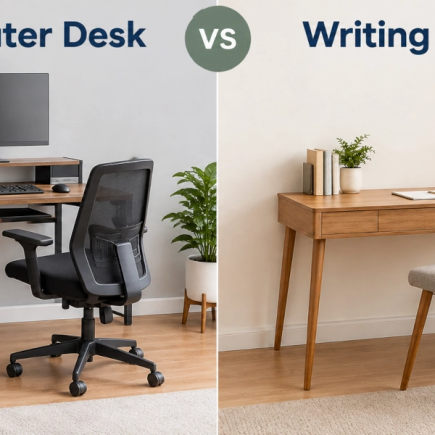
Office Chair – Active Work & Posture Support
- Keeps your back upright during typing and screen use
- Encourages neutral spine alignment
- Supports frequent reaching and desk interaction
- Designed for users who change position often
Executive Chair – Relaxed Full-Body Support
- Thick cushioning offers soft, relaxed seating
- High back supports shoulders, neck, and upper back
- Suitable for reclining during thinking, calls, or meetings
- Better for steady sitting rather than constant movement
Adjustability and Personalisation
The way a chair adjusts determines how naturally it fits your body and work habits. Good adjustability reduces strain and helps you maintain a comfortable position through different tasks. Both chairs offer adjustments, but the intent behind their settings is different.
Office Chair with extensive fine adjustments
- Multiple points of adjustment for customised seating
- Ideal for shared desks where users change frequently
- Supports various keyboard and monitor heights
- Allows regular small tuning throughout the day
Executive Chair with comfort-centred adjustment simplicity
- Prioritises reclining smoothness and supportive tilt
- Settings typically adjusted once and left unchanged
- Thick cushioning naturally shapes sitting position
- Ideal for longer uninterrupted seated periods
Materials and Upholstery Feel
The material of a chair shapes how it feels against your body throughout the day. It influences breathability, softness, and overall seating experience. Different materials also create a distinct look and atmosphere in your workspace.
Office Chair with breathable seating materials
- Commonly uses Mesh Chair or fabric for airflow
- Designed to reduce heat build-up during long sitting
- Feels light and ventilated against the back
- Suits users who prefer cooler seating surfaces
Executive Chair with richly padded upholstery
- Thicker layers of cushioning throughout seat and back
- Smooth upholstery enhances premium look and feel
- Ideal for formal office aesthetics
- Designed to feel soft, dense, and supportive
Size and Space Considerations
Different chairs suit different room sizes. The right choice depends on desk size, free space around the chair, and how open or compact the workspace is.
Office Chair – Best for Compact & Shared Spaces
- Fits easily in smaller rooms
- Slides comfortably under most desks
- Works well in open-plan offices
- Leaves more walking and storage space
Executive Chair – Best for Large Personal Rooms
- Needs more space for wider frame and reclining
- Looks proportionate with big executive desks
- Suits private cabins or personal work areas
- Feels visually balanced in spacious rooms
Mobility and Movement Style
Chairs differ not only in comfort but also in how easily they move and how stable they feel during work. The right mobility level should match how active or still you remain while working.
Office Chair – Frequent Movement Friendly
- Lightweight frame allows quick repositioning
- Easy to roll between desk areas and equipment
- Suitable for multitasking and collaborative tasks
- Supports users who change sitting posture often
Executive Chair – Stable, Steady Seating
- Heavier construction reduces unnecessary rolling
- Feels firm and grounded during sitting
- Ideal for focused work, meetings, and discussions
- Best for users who prefer calm, still posture
Aesthetic Expression of the Workspace
A chair doesn’t just provide seating; it sets the tone of the room. Its style can make a space feel minimal and functional or bold and formal. The overall design of the chair often becomes part of the visual identity of your workspace.
Office Chair for modern functional aesthetics
- Blends easily without overpowering the room
- Supports uniform seating layouts
- Complements contemporary minimal environments
- Visually light and practical
Executive Chair for formal premium aesthetics
- Becomes a natural focal point near main desk
- Conveys formality and executive presence
- Pairs well with rich décor and large furniture
- Adds bold personality to the room
Making the Right Choice
Choosing between an Executive Chair and an Office Chair is ultimately about your work rhythm:
Think about:
- How long do you generally sit continuously?
- How often do you move during work?
- Do you prefer firm support or plush padding?
- How large is your room and desk area?
An Office Chair favours active days full of multitasking and frequent posture changes. An Executive Chair suits calm, steady, longer seated sessions with deep cushioned support. Your chair is part of your everyday health. The right choice supports your back, preserves your energy, and makes your workspace somewhere your body feels at ease rather than strained.
FAQs
1. Which chair is better for frequent posture changes?
People who constantly shift, stretch, or move benefit from lighter chairs. Office chairs are usually easier to adjust and reposition, while executive chairs suit users who sit in one position longer.
2. Which chair suits mixed computer work and meetings?
If your day combines typing and discussions, match the chair to the dominant activity. Office chairs suit computer-heavy tasks, while executive chairs feel better for longer conversations and planning sessions.
3. Which chair is best for people who lean back often?
If you naturally recline while thinking, taller backs and head support help. Executive chairs generally offer deeper recline and plush support, making relaxed leaning more comfortable.