





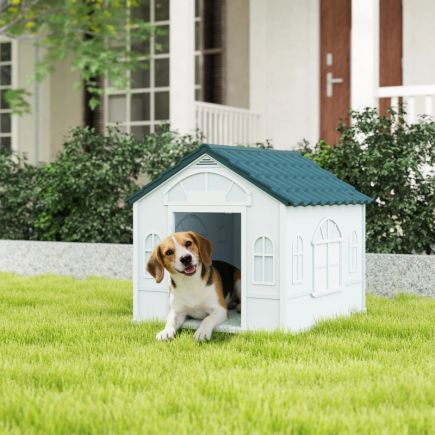

Every dog needs a space of its own somewhere safe to rest, play, and stay out of trouble when you cannot watch them every second. Two solutions come up more than any other: the dog playpen and the dog crate. Both keep your pup secure, but they take opposite approaches. A playpen gives your dog an open area to move around in, while a crate offers a snug, enclosed den. Choosing between them shapes your dog’s comfort, your training, and your daily routine.
The right answer depends on your dog’s age, size, and temperament, plus your home and how long your pup is left alone. Below, we compare PawHut dog playpens and crates across everything that matters: space, security, training, portability, and cost so you can pick the dog playpen or dog crate that fits your dog and your life.
1. Playpen vs. Crate: Understanding the Basics
Both options provide a safe space for your dog, but they are designed for different purposes. Knowing how each one works makes it easier to choose the right fit.
- Playpens are open enclosures with room to move.
- Crates are enclosed spaces with a locking door.
- Playpens encourage play and exercise.
- Crates create a calm, den-like environment.
Best pick: Choose a playpen for freedom or a crate for a secure resting space.
2. Space and Freedom to Move
Space is one of the biggest differences between these two options. Playpens give dogs more room to explore, while crates focus on comfort and security.
- Playpens provide more room to walk and play.
- Panels can be arranged into different shapes.
- Crates allow dogs to stand, turn, and lie down.
- Compact sizing helps dogs feel secure.
Best pick: A playpen offers the most room for daily movement.
3. Security and Containment
If keeping your dog safely contained is your priority, the level of security matters. Crates provide full enclosure, while playpens suit most well-behaved dogs.
- Crates have enclosed sides and locking doors.
- Steel crates suit strong and anxious dogs.
- Playpens have open tops.
- Tall panels improve security.
Best pick: A crate provides the highest level of security.
4. Setup, Portability, and Storage
Both are practical to store and transport, but each has different strengths. Your choice depends on how often you move or travel with it.
- Playpens fold flat for storage.
- Most assemble without tools.
- Folding crates collapse quickly.
- Wheeled crates move easily indoors.
Best pick: Playpens travel better, while wheeled crates are easier to move at home.
5. Indoor and Outdoor Use
Where you plan to use the enclosure can make the decision much easier. Playpens are more versatile, while crates are mainly designed for indoor use.
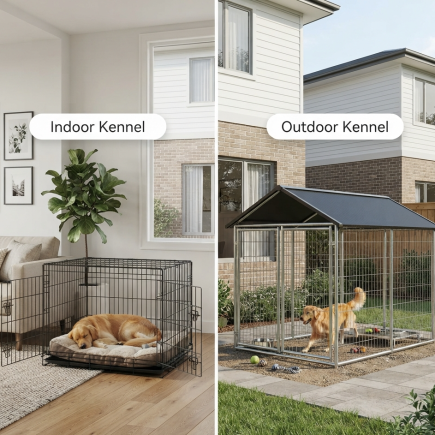
- Playpens work indoors and outdoors.
- Outdoor models create large exercise areas.
- Crates are best for sleeping and resting.
- Furniture crates blend into home décor.
Best pick: A playpen is the better all-around choice for different spaces.
6. Training, Puppies, and Daily Routine
Each option supports a different part of your dog’s routine. Many owners use both together for the best results.
- Crates help with house training.
- They provide a quiet resting space.
- Playpens give puppies room to play.
- Many owners use both every day.
Best pick: Crates excel for training, while playpens are ideal for daytime freedom.
7. Choosing the Right Size
Choosing the correct size keeps your dog comfortable and safe. Both playpens and crates are available for every breed.
- Crates are chosen by length.
- Dogs should stand and turn comfortably.
- Playpens vary by panel size and height.
- Taller panels suit active jumpers.
Best pick: The right size matters more than the enclosure type.
8. Materials, Durability, and Cleaning
The material affects both durability and maintenance. Steel models generally provide the best long-term performance.
- Crates come in metal, steel, or wood.
- Many include removable trays.
- Playpens often use galvanized steel.
- Steel lasts longest for heavy use.
Best pick: Crates are easier to clean, while steel playpens are built for outdoor durability.
Quick Comparison at a Glance
Short on time? This table sums up the whole decision in one view.
| Factor | Dog Playpen | Dog Crate |
| Enclosure | Open-top exercise pen. | Fully enclosed den with a door. |
| Space | Larger area to walk and play. | Snug – room to stand and turn. |
| Freedom | Room to roam, stretch, and potty. | A calm space to rest and sleep. |
| Best duration | Longer daytime periods. | Shorter stays, sleeping, travel. |
| Containment | Great, though open-topped. | Fully secure and escape-proof. |
| Main use | Daytime play and containment. | House-training, den, travel. |
| Price range | ~$66–$520 | ~$54–$370 |
Best pick: Room to play and roam points to a playpen; a secure, cozy den for rest and training points to a crate.
Can You Use Both?
Here is what many experienced dog owners land on a playpen and a crate work beautifully as a team, not rivals.
- Crate your dog at night and for travel, then use a playpen for daytime play while you are busy or out.
- Some modular crates even double as a compact playpen, giving you flexibility in one product.
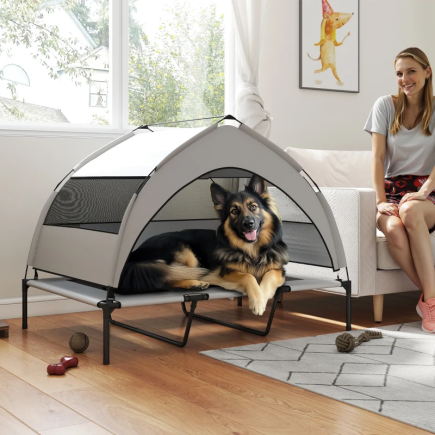
For whole-room control, a Pet Gate pairs well with either, and a comfy Elevated Dog Bed inside the crate or pen makes it a place your dog actually wants to be.
Best pick: Using both gives your dog a secure den and a play space the most complete setup for most homes.
Making the Right Choice for Your Dog
Dog playpens and dog crates solve the same goal in different ways: a playpen gives your dog room to move, play, and stay contained for longer stretches, while a crate offers a snug, secure den that is ideal for training, rest, and travel. Weigh your dog’s size and temperament, how long they are left alone, and where the enclosure will live, and the right fit becomes clear. Browse all dog playpens, crates, kennels, and pet essentials to build the perfect space for your puppy or adult dog.
Explore Dog Essentials
FAQs
A dog playpen is an open-top enclosure of connected panels that gives your dog a fenced area to move, play, and stretch in. A dog crate is a fully enclosed cage or den with a door, sized for a dog to stand, turn, and rest.
It depends on how long the puppy is alone. A crate is excellent for house-training and short periods, since dogs avoid soiling where they sleep. A playpen suits longer daytime stretches, giving a puppy room to play, eat, and use a potty pad.
Yes. Most metal playpens work both indoors as a play zone and outdoors in a yard or garden, and many fold flat with straps for camping or RV trips. Galvanized steel playpens are built for larger outdoor runs and resist rust in the weather.
Not when it is sized correctly. A crate should let your dog stand, turn around, and lie down comfortably, and its snug size taps a dog’s natural den instinct for security. Used positively and never for punishment, a properly sized crate becomes a calm, safe retreat your dog chooses on its own.
Absolutely, and it is a popular setup. A crate provides a secure sleeping den and travel space, while a playpen gives daytime room to play. Some modular crates even convert into a playpen. Pairing the two, sometimes with a pet gate, offers the most flexible way to keep your dog safe and comfortable.