







A straightforward guide to aluminum, steel, wicker, wood, and more so you buy once and enjoy it for years.Buying patio furniture is an investment. The last thing you want is to spend money on a set that starts rusting, cracking, or fading after a single season. The material is the single biggest factor in how long your outdoor furniture will last more than the brand, the price tag, or the style.
Canadian weather puts outdoor furniture through a lot. Summer UV exposure, rain, humidity, and freezing winters all take their toll. This guide breaks down every common patio furniture material so you know exactly what to expect before you buy.
All Materials at a Glance
Not sure where to start? Here is a side-by-side look at how the most common patio furniture materials compare across the factors that matter most for outdoor use.
| Material | Lifespan | Maintenance | Rust/Rot Risk | Best For |
| Aluminum | 15–25 yrs | Very Low | None | All climates |
| Steel | 10–20 yrs | Low | Low (coated) | Windy areas |
| PE Rattan / Wicker | 10–15 yrs | Low | None | Comfort, style |
| Teak Wood | 20–30 yrs | Moderate | None (oiled) | Premium look |
| Acacia Wood | 8–12 yrs | Moderate | Low | Budget wood |
| Plastic / Resin | 5–10 yrs | Very Low | None | Low budget |
Tip: If you live in a region with harsh winters or heavy rainfall, prioritize aluminum or powder-coated steel. Both handle Canadian weather better than most other materials.
1. Aluminum
Aluminum is consistently the top-rated patio furniture material for good reason. It does not rust, it does not rot, and it handles everything from summer heat to winter cold without complaint. It is also lightweight, which makes rearranging and storing easy.
What to Watch For
Very thin aluminum pieces can dent more easily than steel. Look for furniture described as “heavy gauge” or “cast aluminum” for the most solid construction. Cast aluminum is thicker and holds its shape better than tubular aluminum frames.
- Does not rust, no coating or treatment required.
- Lightweight and easy to move or store seasonally.
- Powder-coated finish adds color and extra weather protection.
- Cast aluminum is heavier and more durable than tube aluminum.
- Lifespan: 15 to 25 years with basic care.
Tip: Aluminum is the safest material choice for most Canadian backyards. It handles freeze-thaw cycles better than wood or steel and needs almost zero maintenance.
- Cast aluminum frame rust-free and built to last through Canadian seasons.
- Hollow-carved design dries quickly after rain with no waterlogging.
- Adjustable foot pads keep the set stable on uneven surfaces.
- Umbrella hole in the table for easy shade addition.
- Compact and elegant great for balconies, patios, and backyard corners.
2. Steel
Steel is heavier and stronger than aluminum, which makes it a great option for windier outdoor spaces. A well-built steel set will not tip or shift in a gust. It is a common choice for dining sets, lounge chairs, and frames for wicker furniture.
What to Watch For
If the coating chips or scratches down to bare metal, rust will develop at that spot. Touch up any chips with outdoor spray paint as soon as you notice them. Also check that welds are clean and tight; these are the spots most likely to let moisture in.
- Heavier than aluminum ,stays in place on windy patios and decks.
- Powder-coated finish is essential check that it is fully applied on all surfaces
- Touch up chips quickly to prevent rust from spreading.
- Galvanized steel offers extra rust protection in humid or coastal areas.
- Lifespan: 10 to 20 years with basic maintenance.
Tip: Steel is a solid choice if you want a furniture set that will not move around in the wind. Just keep an eye on the coating and address chips early.
3. PE Rattan and Wicker
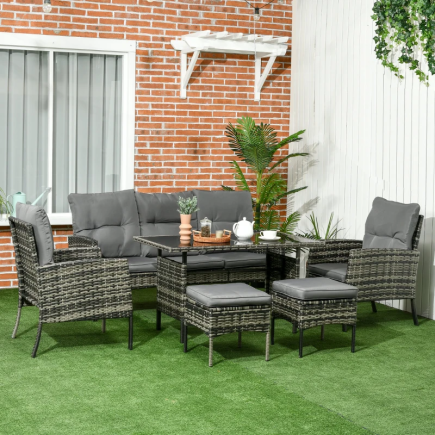
PE rattan, also called all-weather wicker or synthetic rattan, is one of the most popular materials for patio furniture today. It gives you the look of natural wicker without any of the weather sensitivity. The wicker weave wraps around a steel or aluminum frame, combining the durability of metal with a softer, more comfortable visual.
PE Rattan vs. Natural Rattan
Natural rattan and wicker are plant-based materials that absorb moisture and break down outdoors. PE rattan is made from high-density polyethylene (HDPE), which is UV-resistant, water-resistant, and does not crack or fade the way natural materials do. If you see furniture described simply as “wicker” without “all-weather” or “PE,” check the material details carefully before buying.
- All-weather PE rattan handles rain, UV, and humidity without cracking.
- Wraps around a metal frame, check whether the frame is aluminum or steel.
- Lightweight and available in many styles and colors.
- Easy to clean with mild soap and water.
- Lifespan: 10 to 15 years for quality PE rattan.
Tip: If your furniture starts to show signs of wear, it’s essential to address any damage early. If necessary, you can repair rattan furniture with simple tools, such as resin or glue, to prevent further deterioration and prolong its life.
4. Teak Wood
Teak is the gold standard of outdoor wood furniture. It contains natural oils and silica that make it highly resistant to moisture, insects, and rot without any treatment. Well-maintained teak furniture can last 20 to 30 years outdoors longer than almost any other material.
Maintenance
Left untreated, teak weathers to a silver-grey color over time. Many people prefer this natural look.
- Naturally resistant to rot, moisture, and insects, no chemical treatment is needed.
- Lasts 20 to 30 years with proper care , one of the longest lifespans available.
- Weathers to an elegant silver-grey if left untreated.
- Apply teak oil annually to maintain the original warm-brown tone.
- Higher price point , best for buyers who want long-term value.
Tip: Teak is the most expensive option upfront, but when you calculate cost per year of use, it is often the most economical choice for a permanent outdoor setup.
5. Acacia Wood
Acacia is a hardwood that performs well outdoors at a more accessible price than teak. It has a similar warm, natural appearance and holds up reasonably well through seasonal changes. It is a popular choice for dining tables, benches, and accent pieces.
Best Use Cases
- Attractive natural wood grain similar to teak at a lower price.
- Oil every season to prevent cracking and maintain water resistance.
- Cover or store indoors during Canadian winters for best longevity.
- Avoid leaving it wet for extended periods dry it off after heavy rain.
- Lifespan: 8 to 12 years with consistent seasonal care.
Tip: Acacia furniture is a smart middle ground if you want real wood without the teak price. Just commit to oiling it once a year and it will hold up well.
6. Plastic and Resin
Plastic and resin furniture is completely weatherproof and requires almost no maintenance. It will not rust, rot, or absorb water. For casual use on a covered deck or in a low-traffic space, it gets the job done at the lowest price point available.
- Fully weatherproof , no rust, no rot, no water absorption.
- Lightest and easiest to store at end of season.
- UV exposure causes fading and brittleness over time.
- Look for UV-stabilized resin or high-density polyethylene (HDPE) for better durability.
- Lifespan: 5 to 10 years, longer in shaded or covered settings.
Tip: Plastic furniture is a fine short-term solution, but if you are setting up a patio you want to enjoy for many years, the other materials on this list will serve you better.
How Canadian Weather Affects Each Material
Most outdoor furniture guides are written for mild climates. Canada is different. Summers bring intense UV, humidity, and rain. Winters bring freezing temperatures, snow, and freeze-thaw cycles that can crack, warp, or corrode materials that look fine in milder conditions.
UV and Heat
Prolonged UV exposure bleaches and degrades many materials. Plastic fades fastest. Natural rattan cracks. Wood dries out and splits without oiling. Aluminum and PE rattan handle UV the best and neither fades or degrades significantly under direct sun.
Rain and Humidity
Any untreated metal will rust. Any porous wood will swell, absorb moisture, and eventually crack. Aluminum, PE rattan, and properly sealed teak all resist moisture effectively. Steel is fine as long as the powder-coat stays intact.
Freezing Temperatures
Freeze-thaw cycles are especially hard on wood and cheap plastic. Water gets into cracks, freezes and expands, and widens the damage with every cycle. Aluminum and PE rattan are unaffected by freezing. For wood furniture, it is worth investing in quality covers or storing pieces indoors between October and April.
- Best materials for Canadian year-round outdoor use is aluminum and PE rattan.
- Wood furniture: Cover or store during winter months.
- Steel: Inspect the powder coat every season and touch up chips.
- Plastic: Fine in shaded or covered spots, degrades faster in full sun and cold.
Shop Patio Furniture That Is Built to Last
Aosom Canada carries a wide selection of outdoor furniture across all the materials covered in this guide aluminum sets, PE rattan sectionals, acacia wood dining sets, and more. All orders include free shipping across Canada.
FAQs
Aluminum is the most reliably weather-resistant material for most climates. It does not rust, handles freeze-thaw cycles well, and needs almost no maintenance. For a warmer climate with heavy sun, PE rattan over an aluminum frame is also an excellent choice.
No. Aluminum does not rust. It may oxidize slightly over time, which can cause a slight dulling of the finish, but this does not affect the structure. A simple wipe-down is enough to keep it looking good.
It depends on the type. Natural wicker should not be left outside permanently, it absorbs moisture and deteriorates. All-weather PE rattan (also called synthetic wicker) is designed for outdoor use and handles rain and UV exposure well. Always confirm which type you are buying.
Look for powder-coated or galvanized finishes. These protect the metal from moisture. If the coating is scratched or chipped, rust can develop at that spot. Touch up any damage quickly with outdoor metal paint to prevent it from spreading.
Aluminum is the best choice for leaving outdoors year-round in Canada. PE rattan also handles cold and freeze-thaw cycles well. For wood and steel furniture, investing in quality covers or storing pieces indoors between November and April will significantly extend the lifespan.