






A dog playpen should feel like a safe retreat, not a holding area. What you place inside directly affects your dog’s comfort, behaviour, and overall safety. A thoughtfully arranged playpen can help reduce stress, discourage destructive habits, and create a calm space where your dog feels secure. When the setup is balanced and uncluttered, it supports healthy routines and encourages your dog to relax rather than feel confined.

This blog focuses on practical, real-world items that actually work for daily use, especially when your dog is inside the pen without constant supervision.
The Absolute Essentials: Non-Negotiable Items for Every Playpen
Before we get to the fun stuff, we need to cover the basics. These are the fundamental items every playpen needs to ensure your dog is comfortable, hydrated, and clean.
A Comfortable Bed or Matting
Your dog needs a designated chill zone. However, the type of bedding you choose depends heavily on your dog’s age and chewing habits.
- For Puppies & Chewers: If you have a young puppy or a dog that loves to destroy things, a plush foam bed might be a bad investment. Not only is it a waste of money if they rip it apart in five minutes, but the stuffing and zippers can pose serious choking hazards. Instead, start with old towels or durable blankets. They are easy to wash and safer if chewed.
- For Adults & Non-Destructive Dogs: Once your dog is past the teething phase, you can upgrade to a more supportive orthopedic bed.
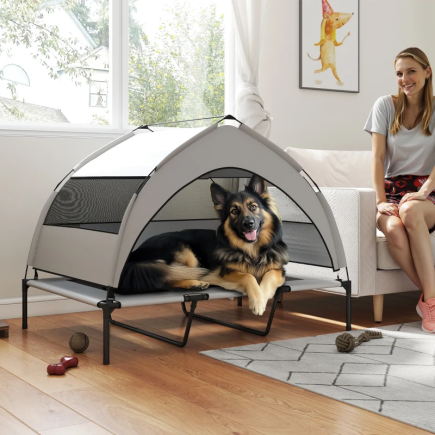
- The Durable Middle Ground: If you want something sturdier than a towel but tougher than a plush bed, look for chew-resistant mats or elevated dog beds.
Water Bowl
- Add a water bowl that stays secure inside the playpen
- Choose a design that attaches firmly or has a weighted base to prevent tipping
- Keep the bowl elevated or fixed to avoid spills and wet bedding
- Ensure fresh, clean water is always available
- Use a bowl that is easy to remove and clean regularly
Potty Area (For Puppies)
- A designated bathroom spot is essential if your puppy isn’t fully house-trained or will spend longer periods in the playpen.
- Standard puppy pads can cause confusion. Their soft texture feels similar to rugs or bedding, and they often shift around during use.
- A more structured option is a low-sided litter-style setup.
- Use a shallow plastic storage container to clearly define the potty zone.
- Fill it with dog-safe litter, such as recycled paper pellets.
- The firmer texture helps puppies tell the difference between sleeping and bathroom areas.
- This setup stays neater, is easier to clean, and often supports faster potty training by reinforcing clear boundaries.
Enrichment and Fun: Keeping Your Dog Engaged
A bored dog is a destructive dog. If you put your dog in a pen with nothing to do, they will find something to do, usually involving barking or chewing on the pen itself. You need to provide legal entertainment.
Safe and Engaging Toys
Not all toys are created equal, especially when unsupervised. Aim for a mix of textures and purposes:
- Chew Toys: Durable rubber toys are essential for teething puppies and power chewers. They satisfy the natural urge to gnaw without destroying your furniture.
- Puzzle Toys: Mental exercise is just as tiring as physical exercise. Food-dispensing toys or puzzle feeders make your dog work for their snacks, keeping them occupied for significantly longer than a standard squeaky toy.
- Comfort Toys: Some dogs love a soft plushie to cuddle with. Just be careful, if your dog is a shredder, skip the soft toys to avoid the risk of them swallowing squeakers or stuffing.
Long-Lasting Chews and Treats
For times when you need your dog to settle down for a longer stretch, high-value chews are your best friend.
- Bully Sticks: These are fully digestible and can last a decent amount of time.
- Frozen Treats: Stuff a hollow rubber toy with peanut butter, yogurt, or wet dog food and freeze it. This can keep a dog busy for 30 minutes or more, providing a soothing activity that promotes calmness.
Safety First: What NOT to Put in a Dog Playpen
- Small or breakable toys: Items that can be swallowed, splinter, or shatter, including cheap plastic toys and cooked bones
- Collars, harnesses, or leashes: Tags and buckles can catch on playpen wires, creating a serious choking risk
- Reachable hazards outside the pen: Electrical cords, curtains, shoes, toxic plants, or any item a dog can pull through the panels
A well-set-up Dog Playpen creates balance. Your dog gets comfort, mental stimulation, and clear boundaries in one space. By choosing safe bedding, stable water solutions, appropriate enrichment, and removing hidden risks, the pen becomes a place your dog can relax in, not resist. Small choices inside the pen make a big difference in your dog’s behaviour, safety, and overall wellbeing.
FAQs
1. Can a dog feel anxious inside a playpen even if it’s set up correctly?
Yes, anxiety can still happen if the transition is sudden. Gradually introduce the playpen during calm moments and keep early sessions short. Familiar smells and predictable routines usually help the dog settle more comfortably over time.
2. How can I tell if the playpen setup is too crowded?
If your dog struggles to turn around freely or frequently bumps into items, the space is likely overcrowded. A good setup always leaves a clear central area for easy movement and rest.
3. How long can a dog stay comfortably in a playpen at one time?
There is no fixed time that suits every dog. Comfort depends on age, energy level, and prior activity. Most dogs settle better when the playpen is used in shorter, predictable periods rather than long, uninterrupted stretches.