










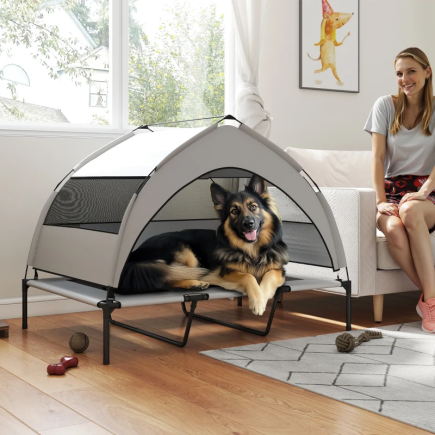


Choosing between a dog crate and a dog kennel can feel overwhelming if you’re not sure how they differ or which one suits your dog’s needs. Although both are containment tools, their purposes, environments, and long-term benefits are entirely different. A crate supports structured indoor routines, while a kennel provides expansive outdoor comfort.

Understanding these distinctions helps you choose the setup that aligns with your home, your lifestyle, and your dog’s habits.
What Is a Dog Crate?
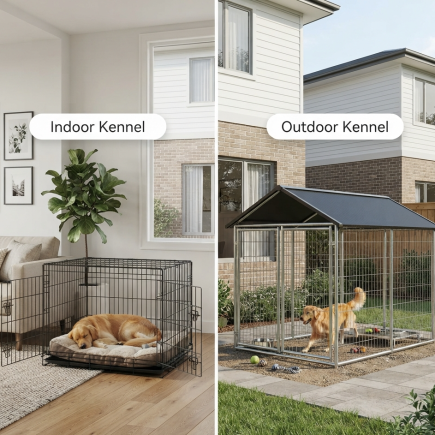
A dog crate is a compact indoor enclosure created for structured rest, travel safety, and predictable boundaries. It acts as a secure personal corner where a dog can unwind without distractions, especially during routines that require calmness or transitions.
Characteristics of a Dog Crate
- Compact and enclosed: Offers a small, personalised resting zone.
- Indoor placement: Works best within living areas, hallways, or bedrooms.
- Lightweight build: Often made of wire, plastic, or fabric for easy repositioning.
- Flexible usage: Suitable for naps, bedtime routines, and household calm periods.
- Portable: Can be carried or folded for appointments or trips.
A crate’s purpose revolves around controlled indoor rest and moments that require stillness or structure.
What Is a Dog Kennel?
A dog kennel is an outdoor living enclosure that allows a dog to move, observe, and relax within a protected area. It offers significantly more space than a crate and is built for durability and environmental exposure.
Characteristics of a Dog Kennel
- Expansive layout: Provides room for mild movement, stretching, or pacing.
- Outdoor integration: Designed to sit in a yard or outdoor designated area.
- Sturdy construction: Made with reinforced frames and weather-tolerant materials.
- Zoned interior: May include sheltered areas and open sections.
- Semi-permanent: Usually installed in a fixed outdoor space.
A kennel supports secure outdoor engagement, allowing a dog to experience fresh air, space, and natural surroundings safely.
Crate vs Kennel: Distinct Differences
| Feature / Aspect | Dog Crate | Dog Kennel |
| Primary Purpose | Indoor boundary management and resting spot | Outdoor living area for secure, contained space |
| Usage Style | Short, routine-based intervals | Longer outdoor durations, activity cycles |
| Design & Placement | Compact, enclosed for indoor use | Spacious, outdoor installation |
| Construction | Lightweight, portable materials | Reinforced, weather-resistant construction |
| Environmental Feel | Calm, quiet, controlled indoor climate | Airy, natural outdoor environment |
| Mobility & Setup | Portable, easy to move and store | Fixed installation, requires ground prep |
| Comfort Elements | Cushions, soft resting surfaces | Shade panels, raised floors, weather protection |
| Maintenance & Durability | Easy cleaning, moderate lifespan | Regular upkeep, high durability outdoors |
| Behaviour & Activity | Supports minimal movement, ideal for rest | Allows movement, light pacing, and exploration |
| Space Needs | Fits in small indoor spaces | Requires outdoor space with planning for shade and drainage |
| Owner Convenience | Helps with indoor routines and transitions | Easier outdoor supervision and separation |
When to Choose a Dog Crate
A crate is perfect when your dog benefits from predictable indoor patterns and needs a consistent place to rest or reset during daily activities.
Best Situations for Crate Use
- Routine building: Helps puppies understand resting schedules and bedtime cues.
- Indoor boundaries: Useful during cleaning, guest visits, or focused tasks.
- Travel safety: Prevents sudden movement in vehicles and enhances comfort on trips.
- Calm transitions: Provides a familiar spot when the household becomes noisy or busy.
- Behaviour shaping: Helps discourage habits like wandering, jumping, or chewing.
- Temporary limitation: A practical option during recovery periods requiring reduced movement.
A crate is suited for dogs that thrive with consistent indoor expectations.
When to Choose a Dog Kennel
A kennel is ideal when your dog requires secure outdoor interaction, enjoys additional space, or benefits from controlled freedom outside.
Best Situations for Kennel Use
- Energy release: Provides room for moderate activity and natural alertness.
- Unfenced yard: Offers safe containment without restricting outdoor access entirely.
- Outdoor comfort: Works well for dogs that enjoy fresh air and environmental variety.
- Multi-dog households: Allows structured placement if dogs require separation outdoors.
- Busy routines: Helpful when owners need to complete yard work or outdoor chores safely.
- Weather protection: Many kennels include roofing, sheltered panels, or raised platforms.
A kennel is ideal for dogs whose behaviour and exercise needs align with controlled outdoor time.
Pros and Cons of Dog Crates
Pros
- Creates predictable indoor boundaries
- Ideal for secure travel and transport
- Helps guide puppies through sleep-wake patterns
- Supports temporary settling during heightened excitement
- Offers a reliable location during indoor tasks
Cons
- Limited area restricts physical movement
- Not suited for dogs needing activity breaks
- Inaccurate sizing reduces comfort
- Some dogs require gradual familiarity
Pros and Cons of Dog Kennels
Pros
- Provides spacious stepping room
- Encourages outdoor interaction safely
- Built for prolonged durability
- Supports structured time outside during multitasking
- Suitable for households with more than one dog
Cons
- Requires dedicated yard space
- Needs seasonal upkeep
- Too large for indoor environments
- Weather exposure requires proper setup
Cost, Maintenance & Longevity
Dog Crate
- Cost: Generally lower
- Maintenance: Quick cleaning and bedding refresh
- Longevity: Moderate lifespan
- Adjustments: May need resizing as dogs grow
Dog Kennel
- Cost: Higher due to size and materials
- Maintenance: Seasonal checks for stability and comfort
- Longevity: Designed for long-term outdoor use
- Adjustments: Optional upgrades for weather or flooring
Common Mistakes to Avoid
Crate Mistakes
- Using bedding unsuitable for heavy chewers
- Placing near loud appliances or heavy foot-traffic
- Ignoring latch security
- Using the crate during periods requiring activity
Kennel Mistakes
- Setting up in direct sun with no shade
- Choosing insufficient height for larger dogs
- Ignoring ground slope or drainage
- Selecting materials that can’t withstand outdoor conditions
Breed & Behaviour-Based Recommendation Table
| Dog Type | Dog Crate Recommendation | Dog Kennel Recommendation |
| Small Breeds | Offers dependable indoor comfort and structured resting | Suitable for brief, monitored outdoor exposure |
| Medium Breeds | Works well when indoor routines are consistent | Effective when the environment allows more outdoor time |
| Large Breeds | Helps during indoor cool-down periods or rest cycles | Supports natural movement and spacious outdoor needs |
| Energetic Dogs | Assists with structured rest after activity | Provides room for pacing, viewing, and mild outdoor engagement |
| Senior Dogs | Encourages stable, predictable resting patterns | Needs cushioned, supportive flooring for comfort outdoors |
Dog Crates and Dog Kennels serve entirely different needs. Crates create reliable indoor boundaries for rest, travel, and controlled transitions, while kennels offer safe outdoor comfort, space, and enriched surroundings. By understanding how each setup influences daily routines and behaviour, you can choose the enclosure that best supports your dog’s comfort, safety, and overall well-being.
FAQs
1. Is it okay to switch between a crate and a kennel depending on the day?
Yes, as long as your dog understands the purpose of each space. Gradually introduce both environments and maintain consistent routines so your dog recognizes when to rest indoors and when outdoor time is appropriate.
2. My dog digs or scratches in the crate; what should I do?
This behaviour usually indicates boredom, stress, or discomfort with the surface. Add raised flooring, rotate toys, and increase supervised exercise time to reduce frustration and overexcitement.
3. Is a crate better for multi-dog management or kennel?
Kennels are more effective because they offer room for separation, designated zones, and safer interaction control. Crates are individual spaces and not practical for managing multiple dogs at once.
4. For overnight use, is a crate or kennel better?
A crate is generally safer for overnight rest indoors. A kennel can work overnight only when fully weather-protected and comfortable, depending on your outdoor environment.